Barcelona
2025-06-29
Day One
After arriving at the railway station, I took the metro to my accommodation. The moment I stepped out of the station, I was enveloped by the lush canopy of plane trees. Since it was a Sunday, I had expected the streets to be quiet with most shops closed. But to my surprise, there were still plenty of people walking around, giving the city a relaxed yet vibrant feel.
The hostel I stayed at had a great vibe: comfortable, friendly, and full of life. They regularly host activities, serve affordable breakfast and dinner, and even have a rooftop pool. Unfortunately, I had plans every day and didn’t get to join any of the events. But next time (and I’m sure there will be a next time), I’ll definitely stay there again.
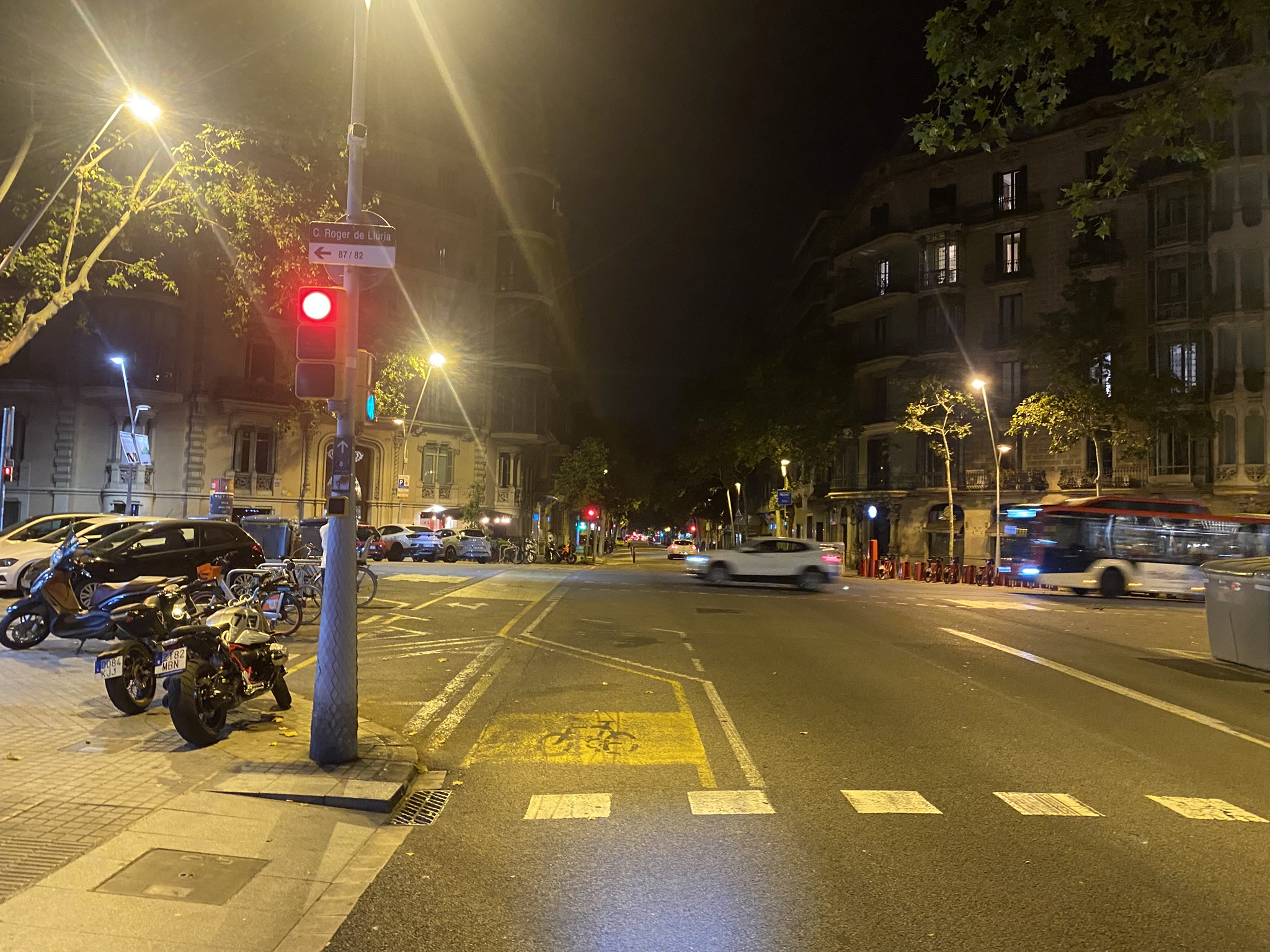
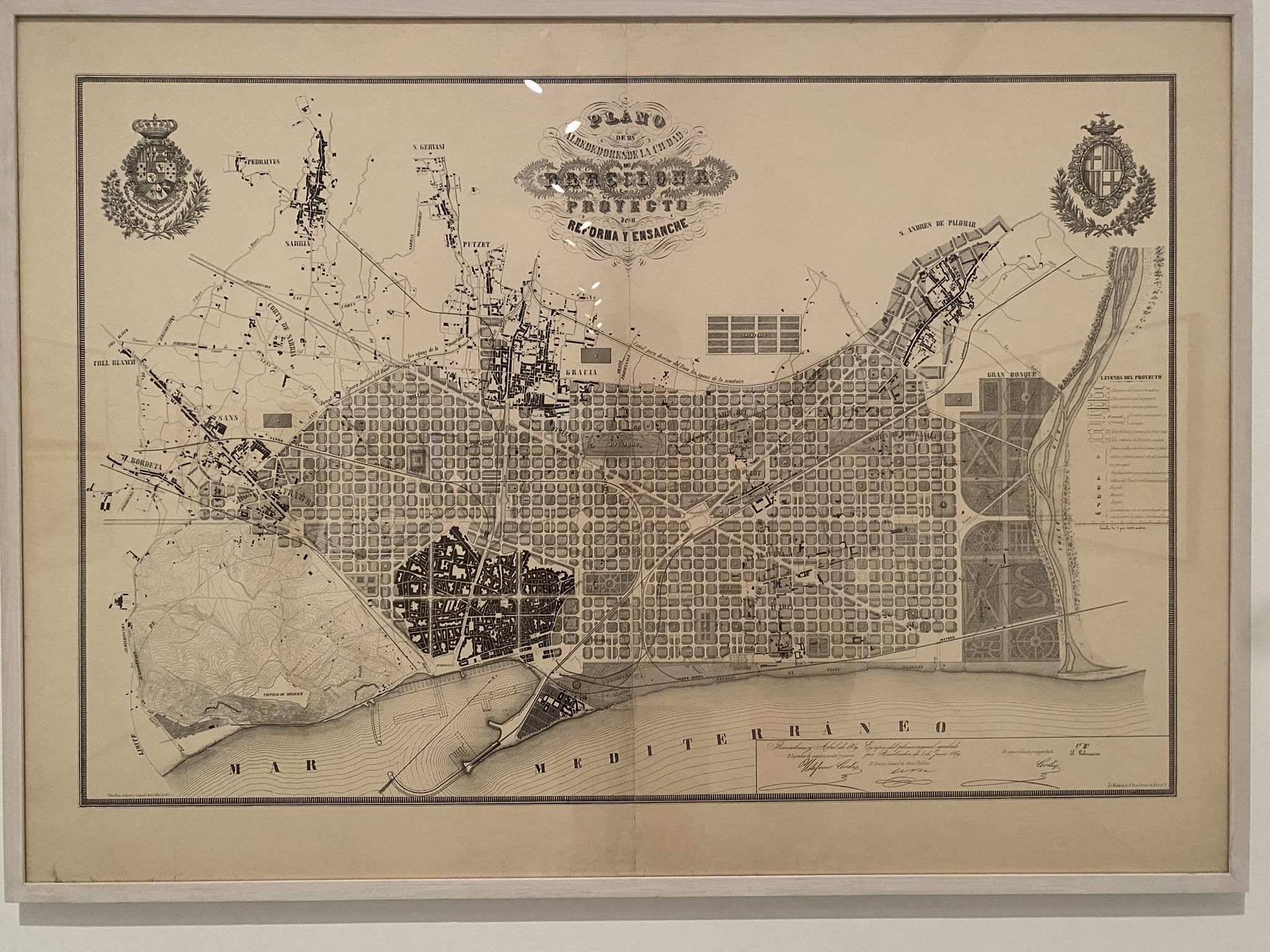
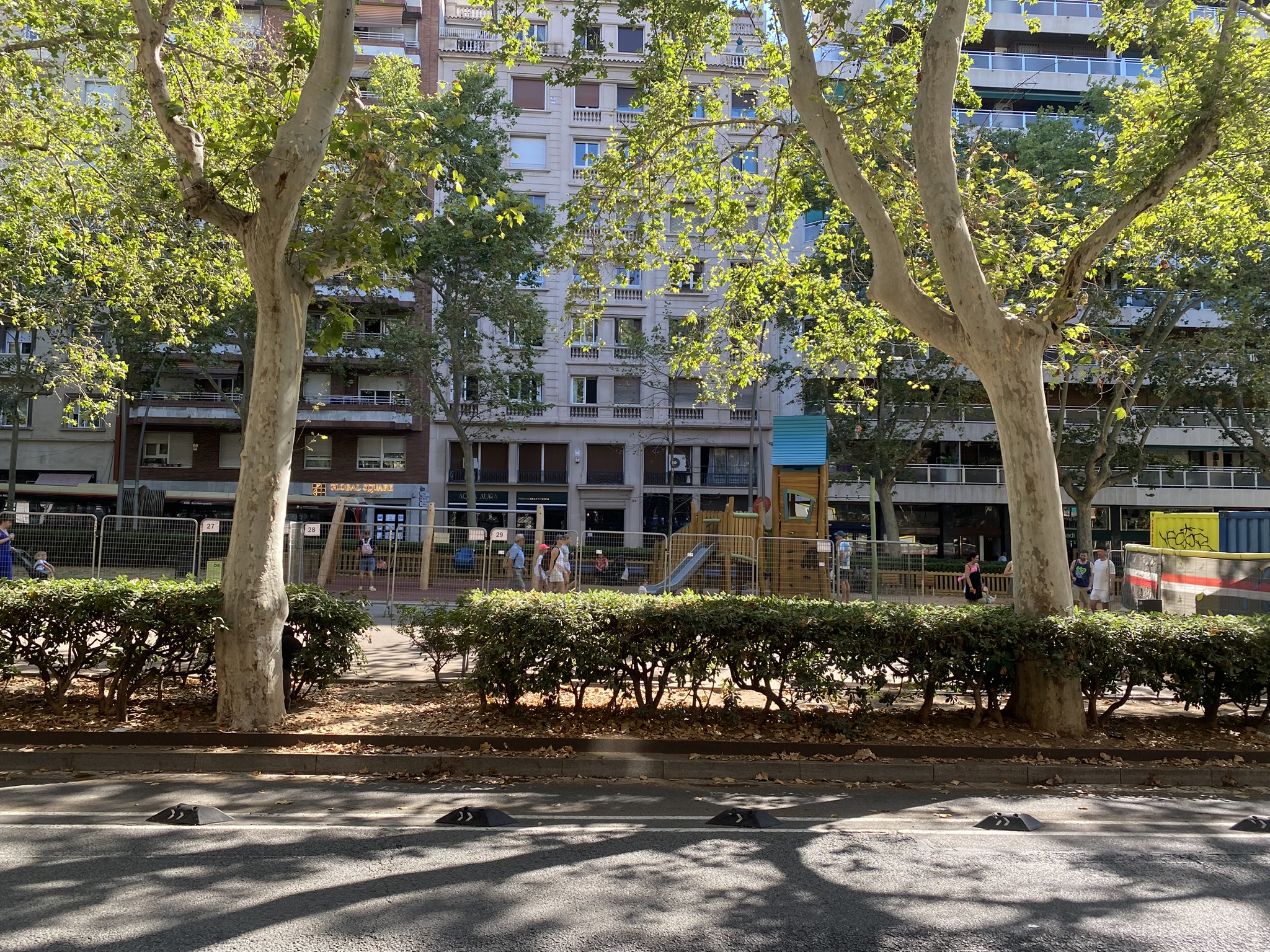
Since check-in wasn’t until 3 PM, I dropped off my luggage and wandered around the neighborhood. Barcelona’s grid-like city planning is famous, but what stood out to me even more was how walkable everything felt. The streets are wide, yet most are designated as one-way, leaving generous space for pedestrians and bikes. There are continuous bike lanes, shaded benches under the trees, and play areas for children scattered throughout the city.
Thanks to the regularity of the grid blocks, entire streets can easily be closed off for community activites. It’s a city that feels alive on the street level. The only thing I struggled with was the bike lane design. The traffic signals weren’t always intuitive, and riding on the left side felt odd to me at times.
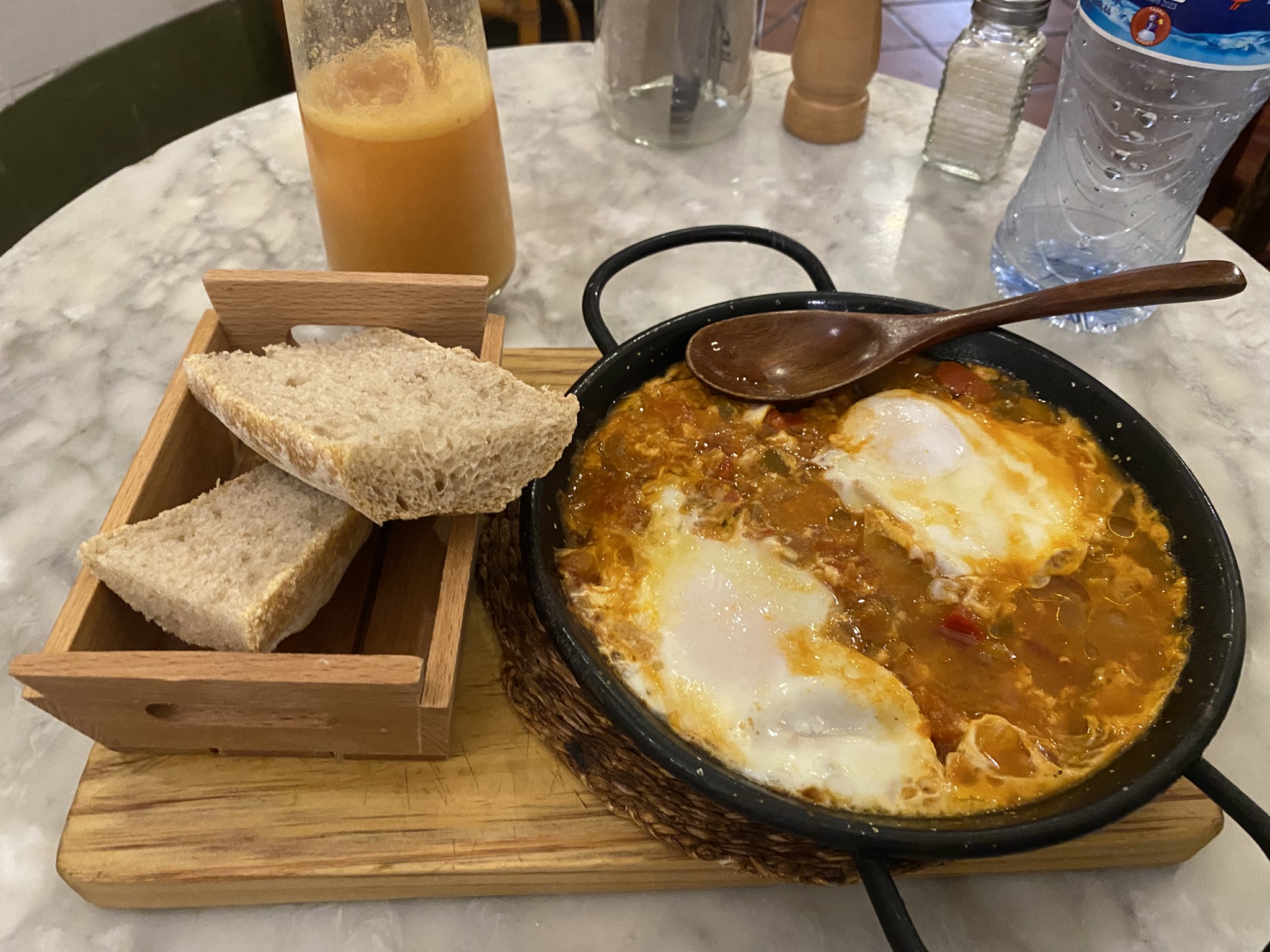
For lunch, I went to Billy Brunch Headquarters and had a delicious smoothie made with strawberry, banana, and orange, along with a flavorful shakshuka. I usually roll my eyes at the whole “brunch aesthetic” and its bourgeois vibes. But I have to admit, the food was genuinely great, and the waitress was super accommodating.
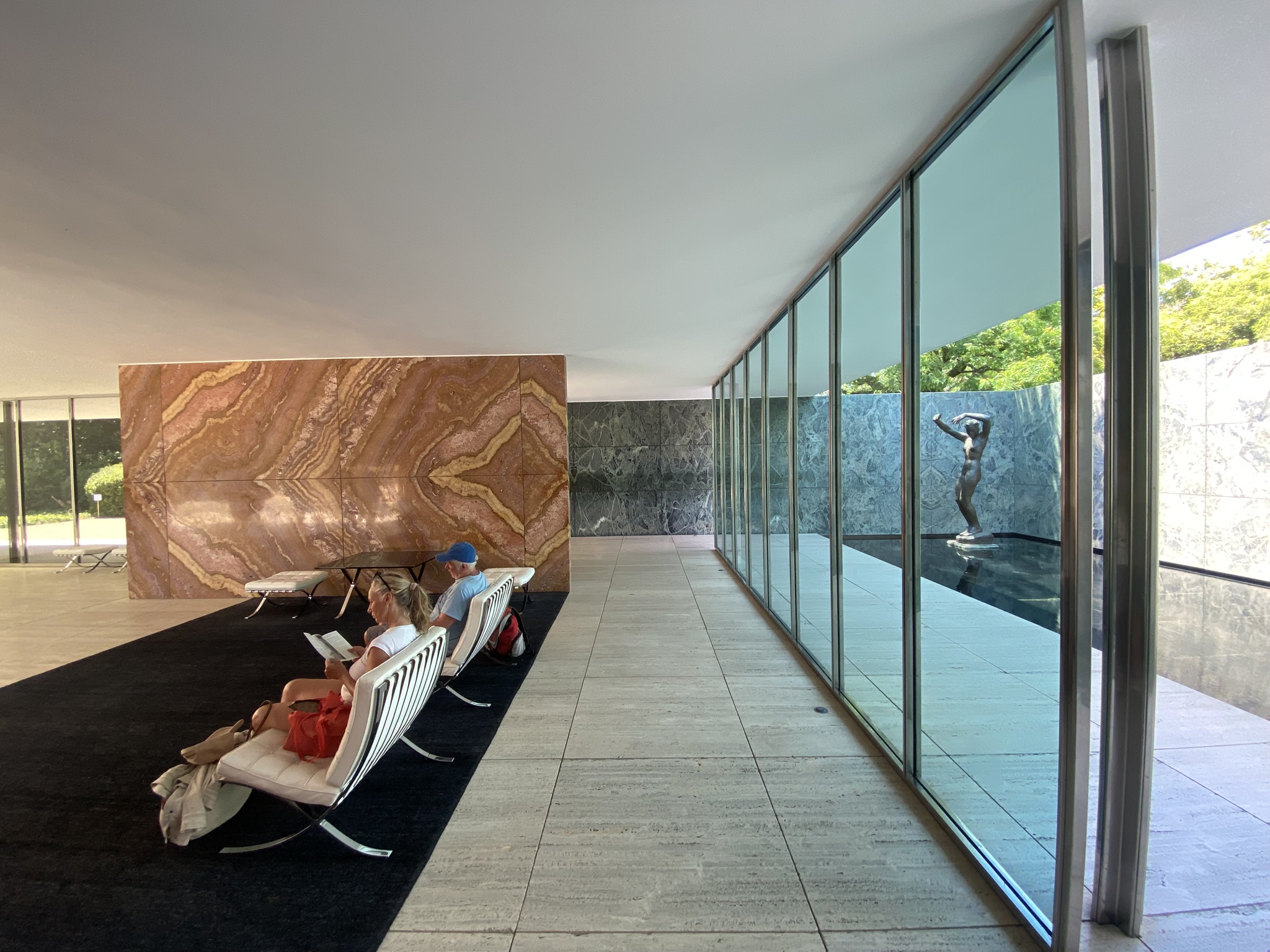
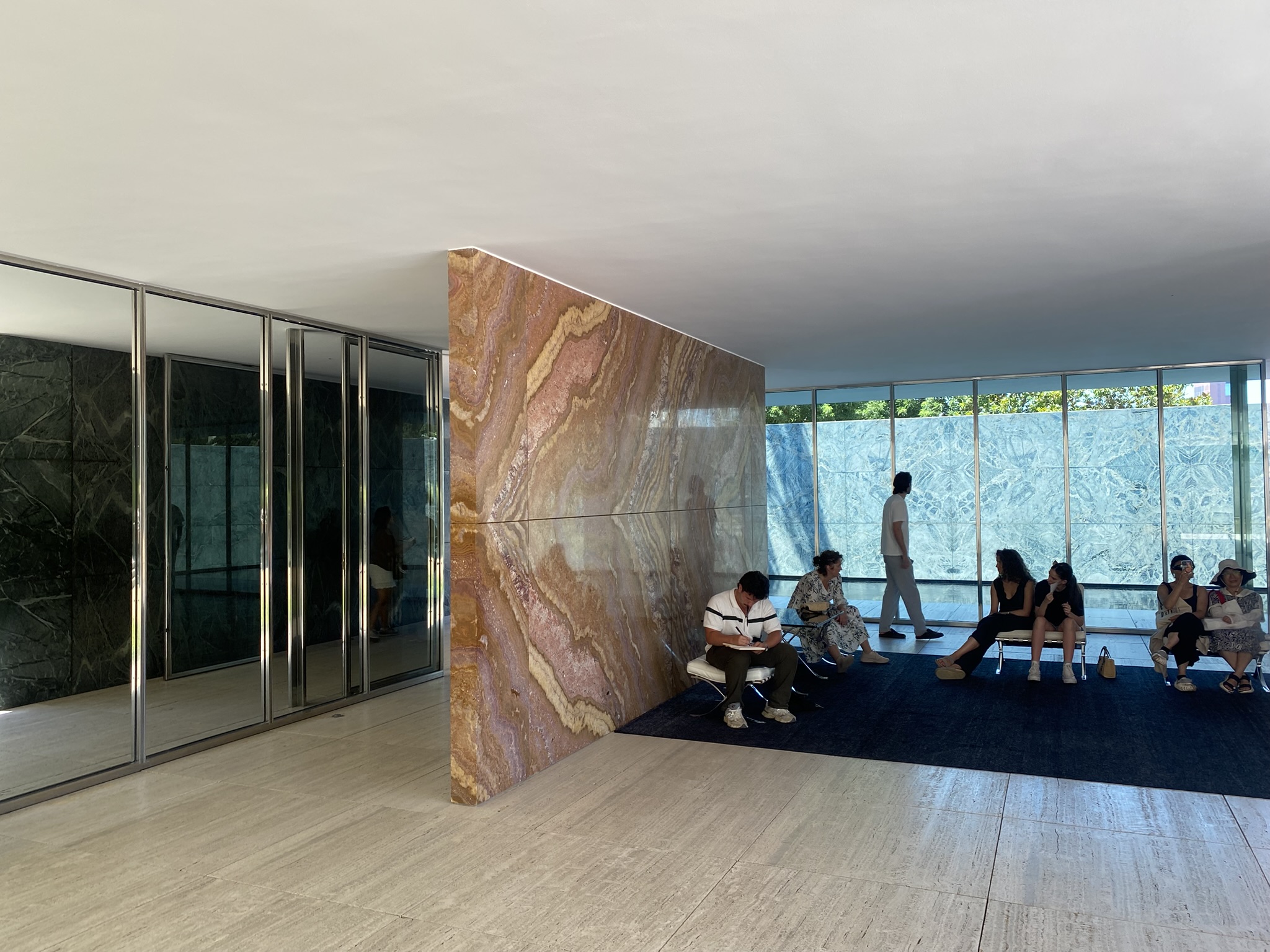
After a short break , I made my way to what was, for me, the most anticipated destination of the trip: Mies van der Rohe Pavilion.
Exiting the metro, the view opened up dramatically. Ahead stood a grand, palatial building atop Montjuïc Hill, while remnants of the World Expo and Olympic Games lined both sides。 Among them, the Mies Pavilion. As one of Mies van der Rohe’s most iconic works, the original structure was dismantled after the 1929 exhibition, but was later faithfully reconstructed.
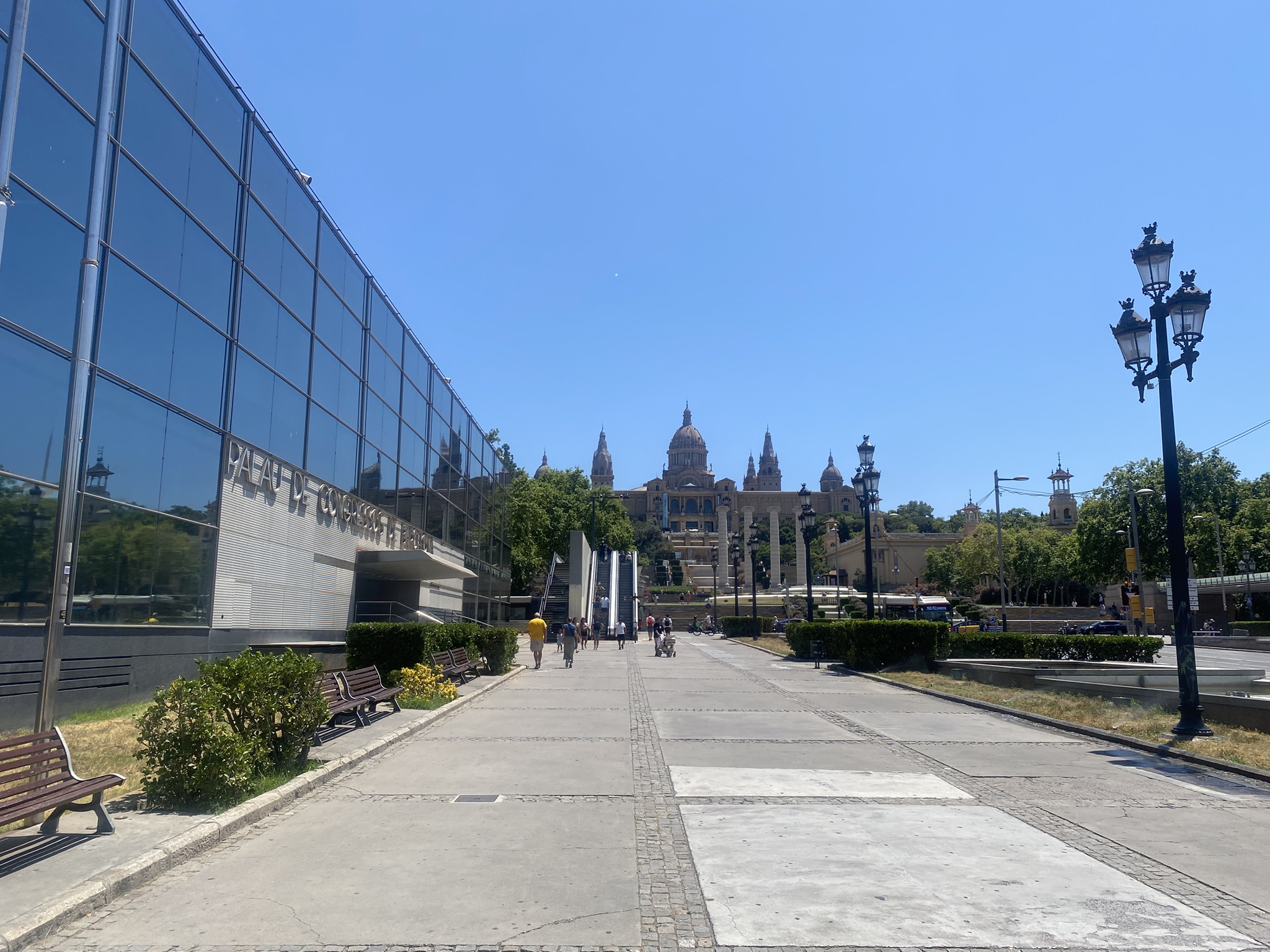
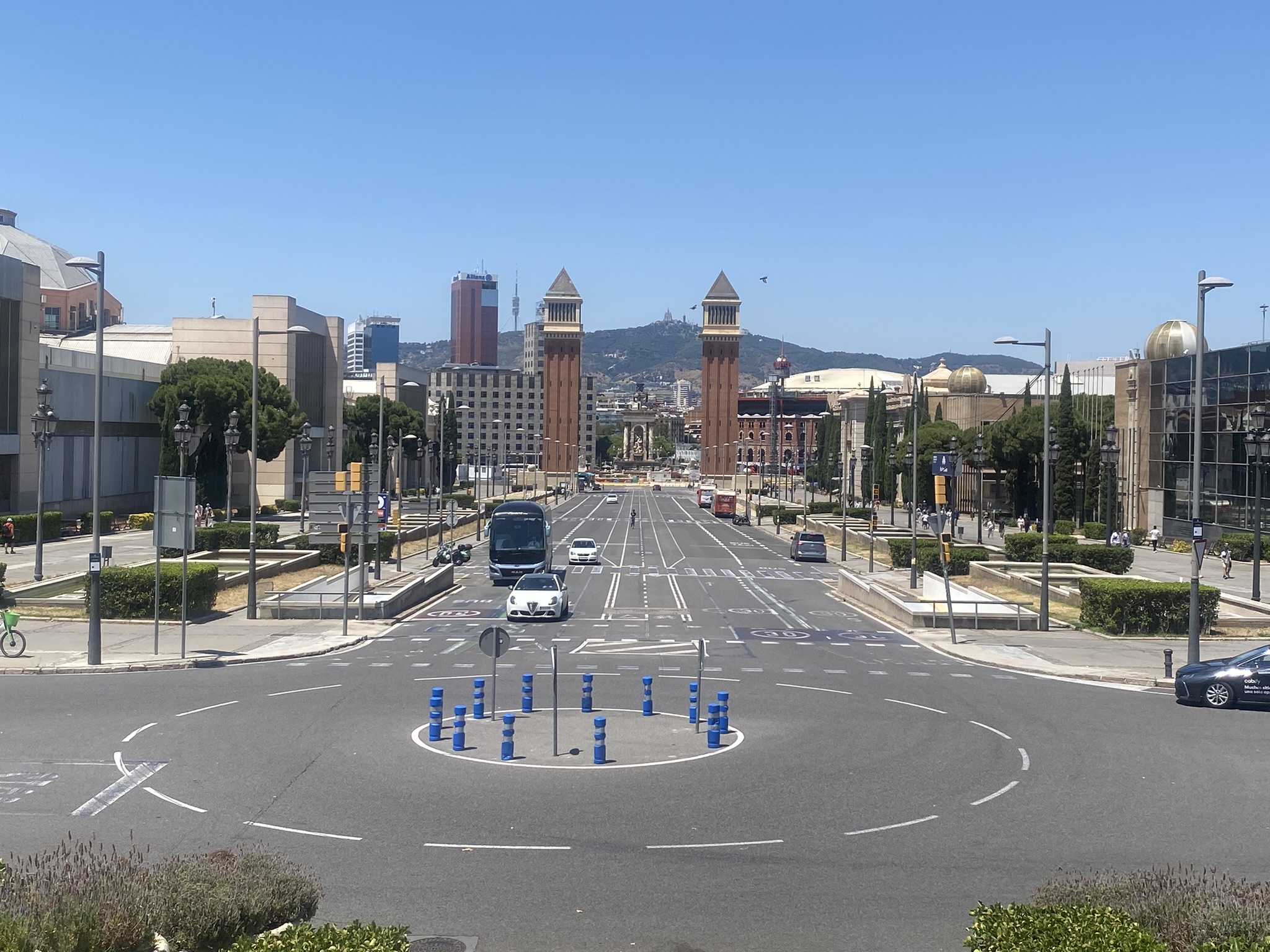
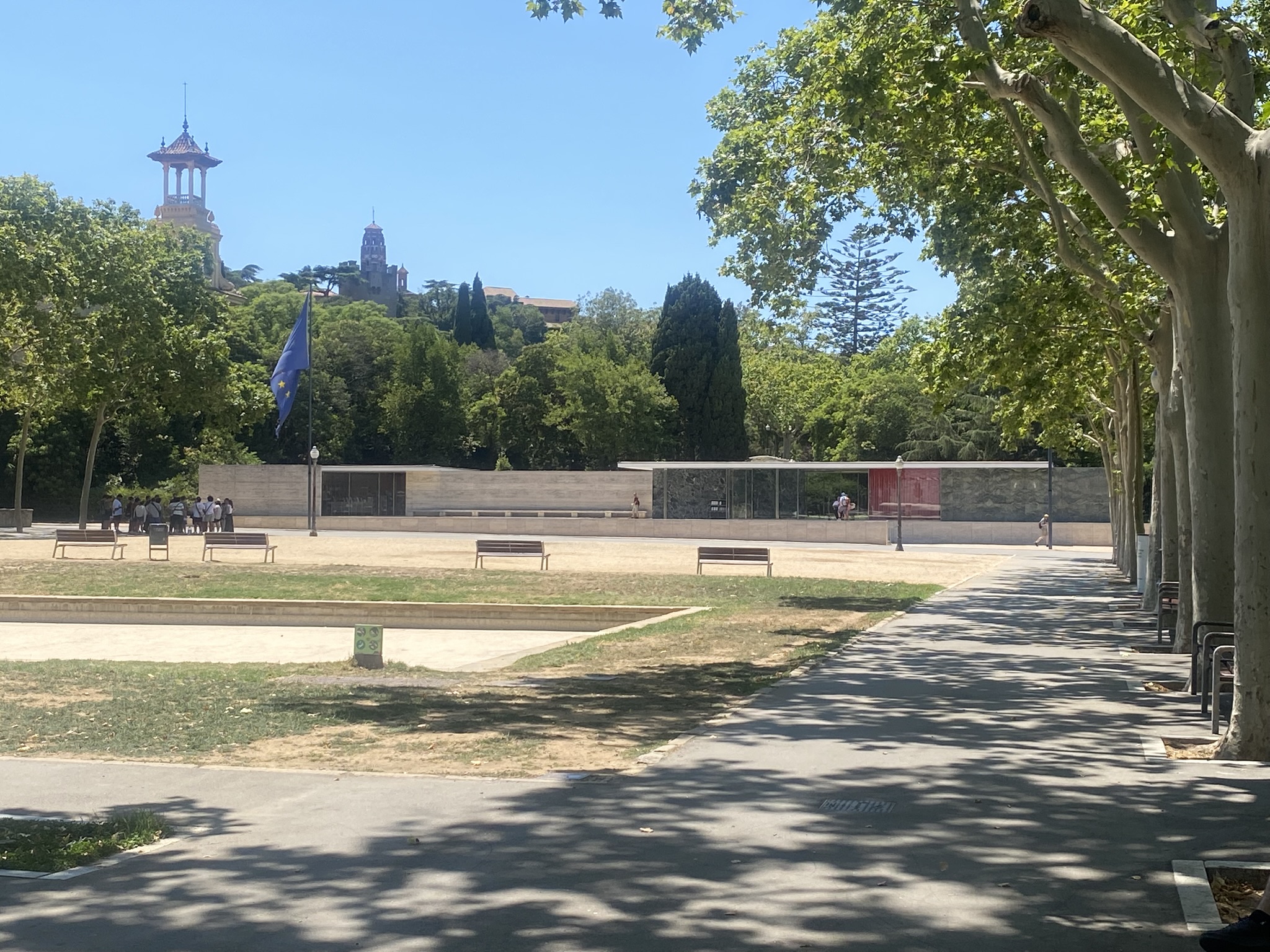
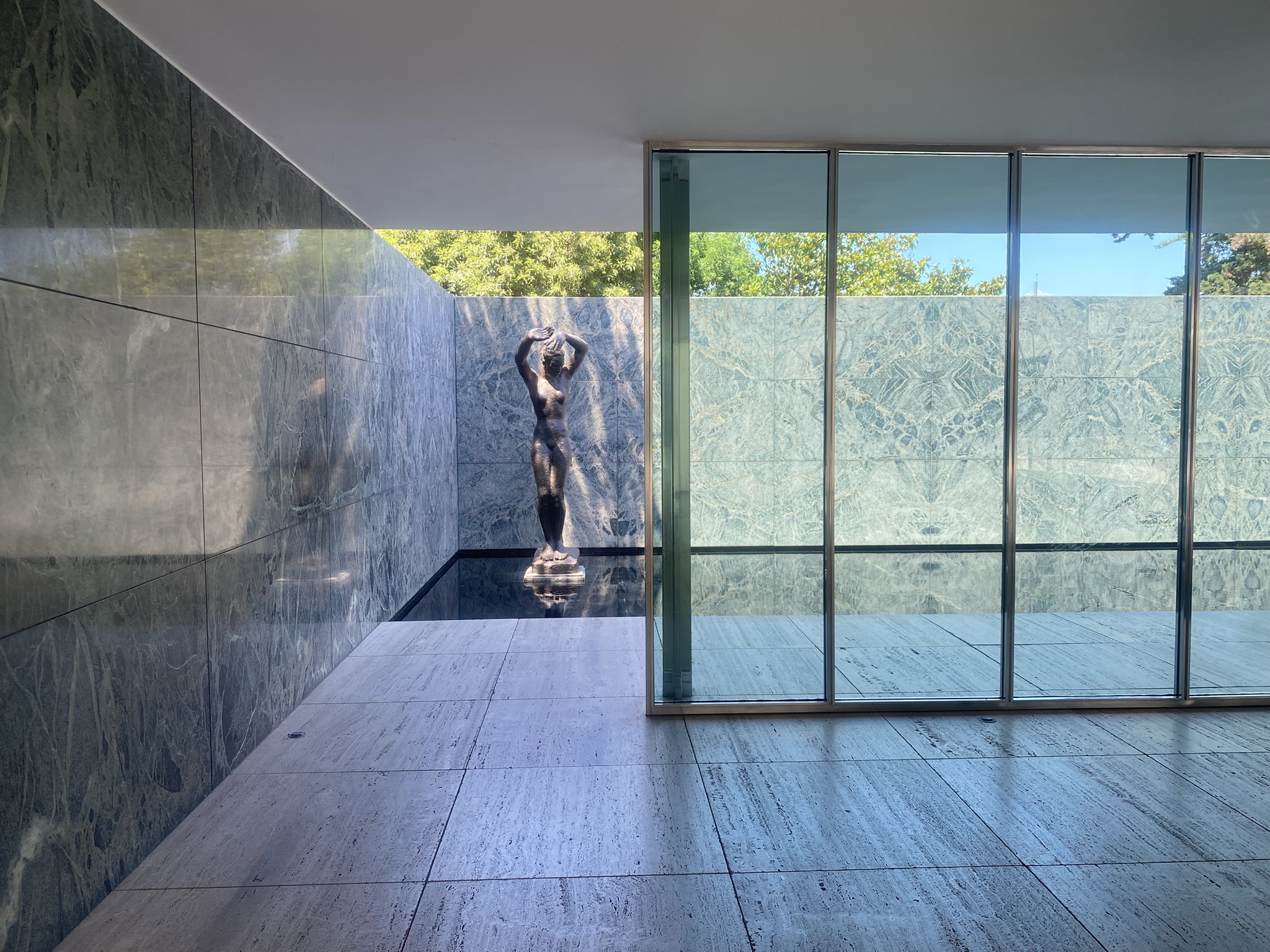
I’ve drawn that floor plan countless times in architectural history classes. Its clarity and simplicity etched into my mind. Walking into the space, everything felt uncannily familiar. From the atmosphere to the materiality, from the play of light to the spatial proportions, it was exactly how I had studied it so many times before.
It was early afternoon, and the pavilion was relatively quiet. A few professionals were sketching architectural details on site. Soon I met a group of first-year architecture students from the University of Buffalo who were there to do field sketches as part of a Southern Europe study trip. I hope that years from now, they’ll still carry this same enthusiasm for architecture.
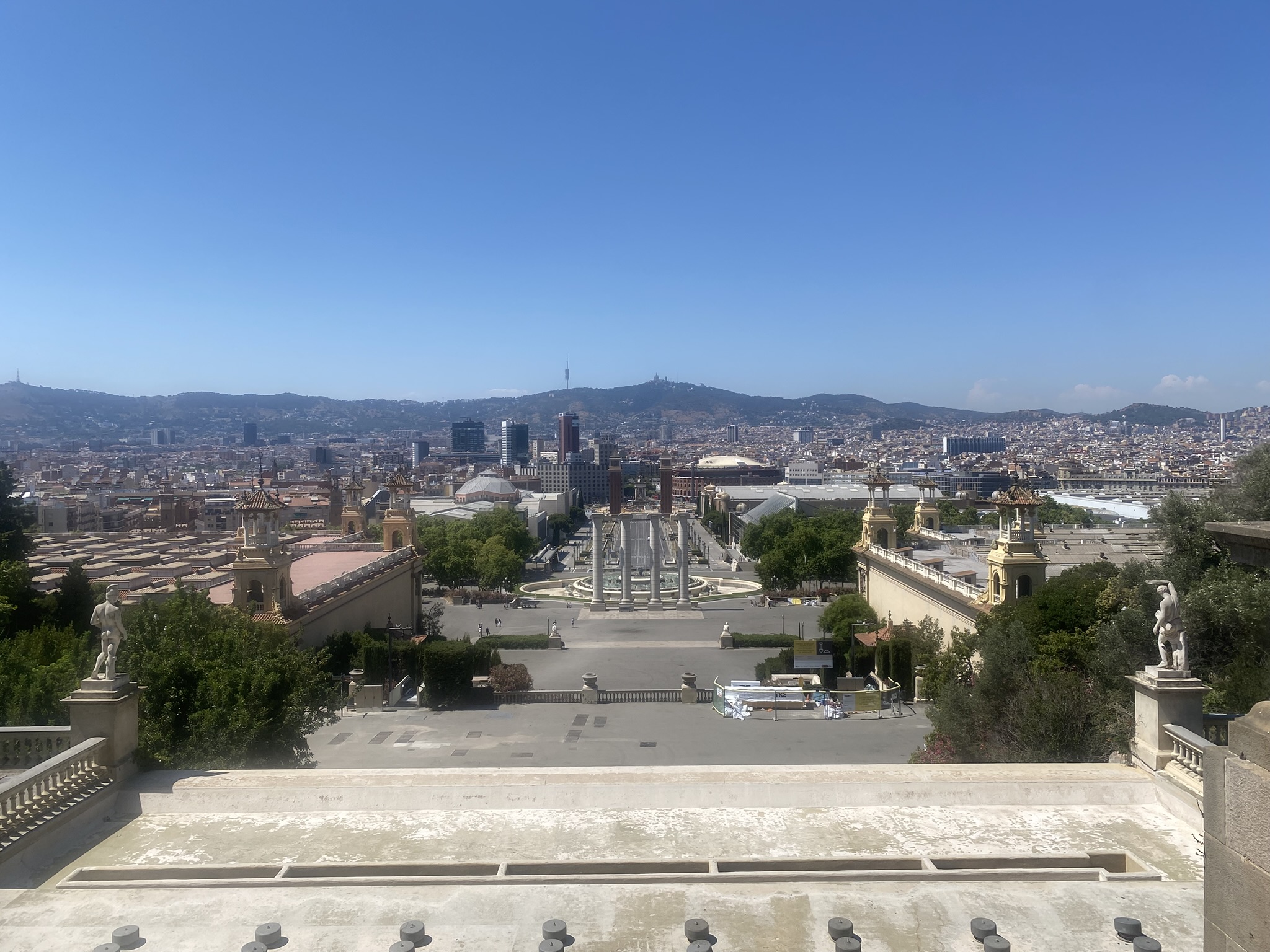
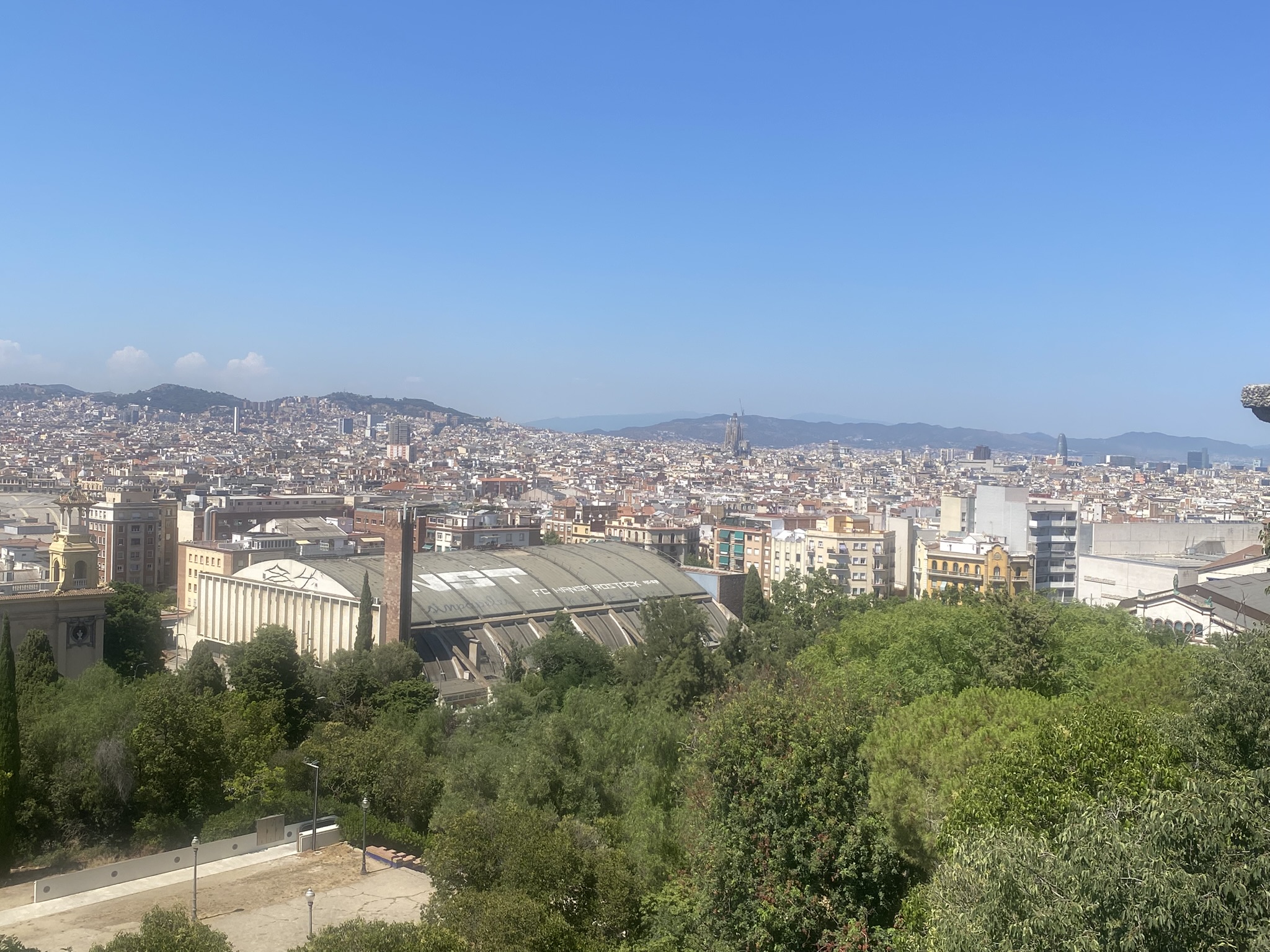
Although I hadn't done any research about the mountain beforehand, the view in front of me sparked my curiosity, and I decided to hike up and see where it led. When I reached the top, I discovered that it was actually an art museum , though unfortunately, it was closed for the day, as it was Sunday. Still, the climb was more than worth it. From this high vantage point, I had a panoramic view of the entire city of Barcelona, and I could even catch a glimpse of the distant coastline. It turned out to be a surprisingly rewarding detour.
After a short rest back at the hostel , I set out for dinner. Being a coastal city, Barcelona offers a wealth of fresh seafood, so I casually picked a restaurant on Google Maps and headed out.
On the way, I passed by a grand arch-like structure bustling with tourists. As I turned into a smaller alley, a striking glass building caught my eye - El Born Center for Culture and Memory. It turns out this was originally a 19th-century market hall, later abandoned after the market relocated. During its renovation, medieval archaeological ruins were discovered beneath it, prompting the site to be transformed into a museum. Inside, I saw an expansive excavation site, almost like a Catalan version of the Terracotta Warriors. It’s both a cultural exhibition space and a public passageway, seamlessly blending everyday urban life with the layers of historical memory beneath it.
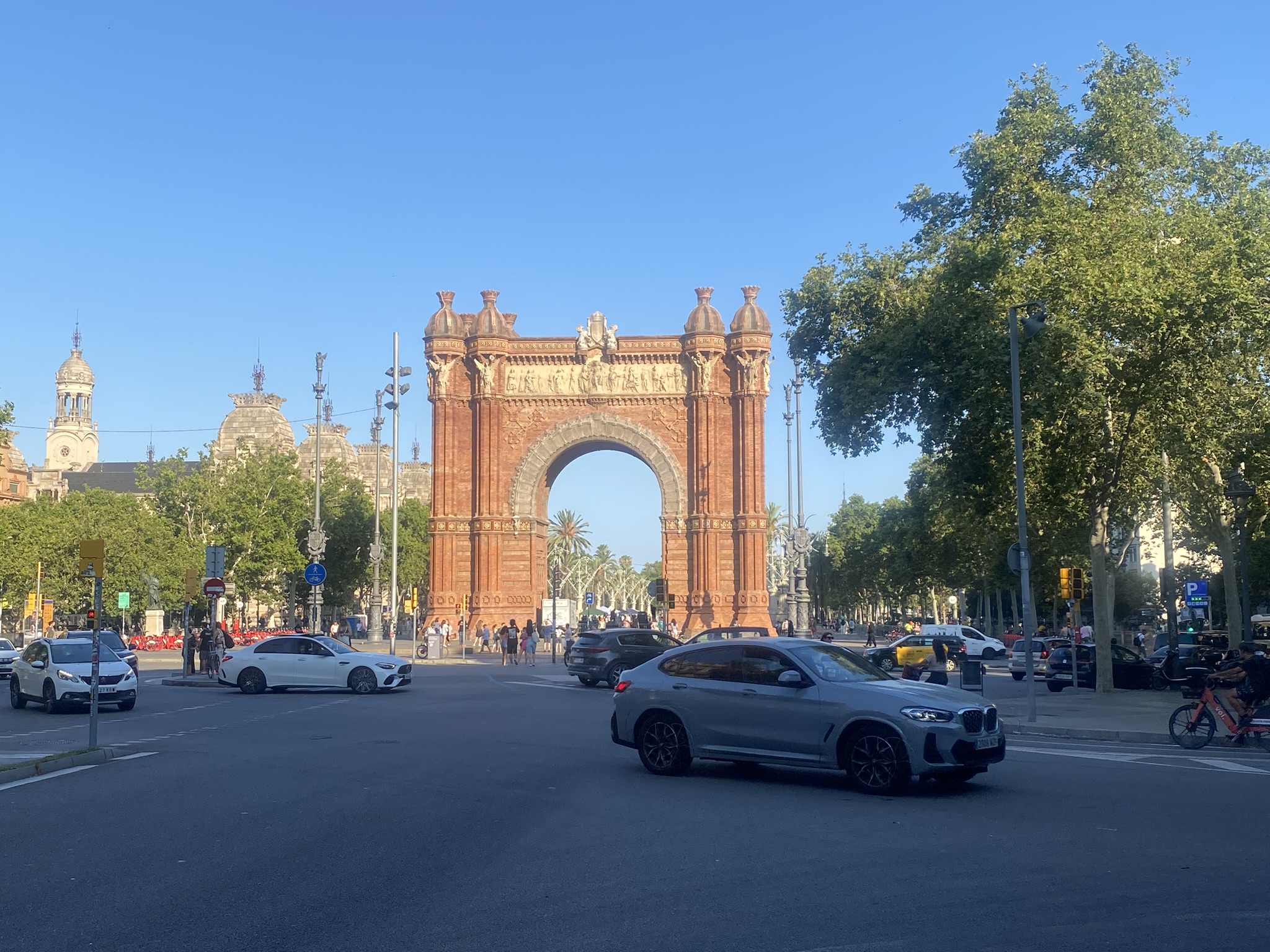
As I exited the museum, I stumbled upon a street parade, apparently part of a local celebration. People dressed in eccentric costumes marched through the streets, carrying fireworks and open flames. It was loud, chaotic, and bursting with energy:a festive spectacle I hadn’t expected at all.
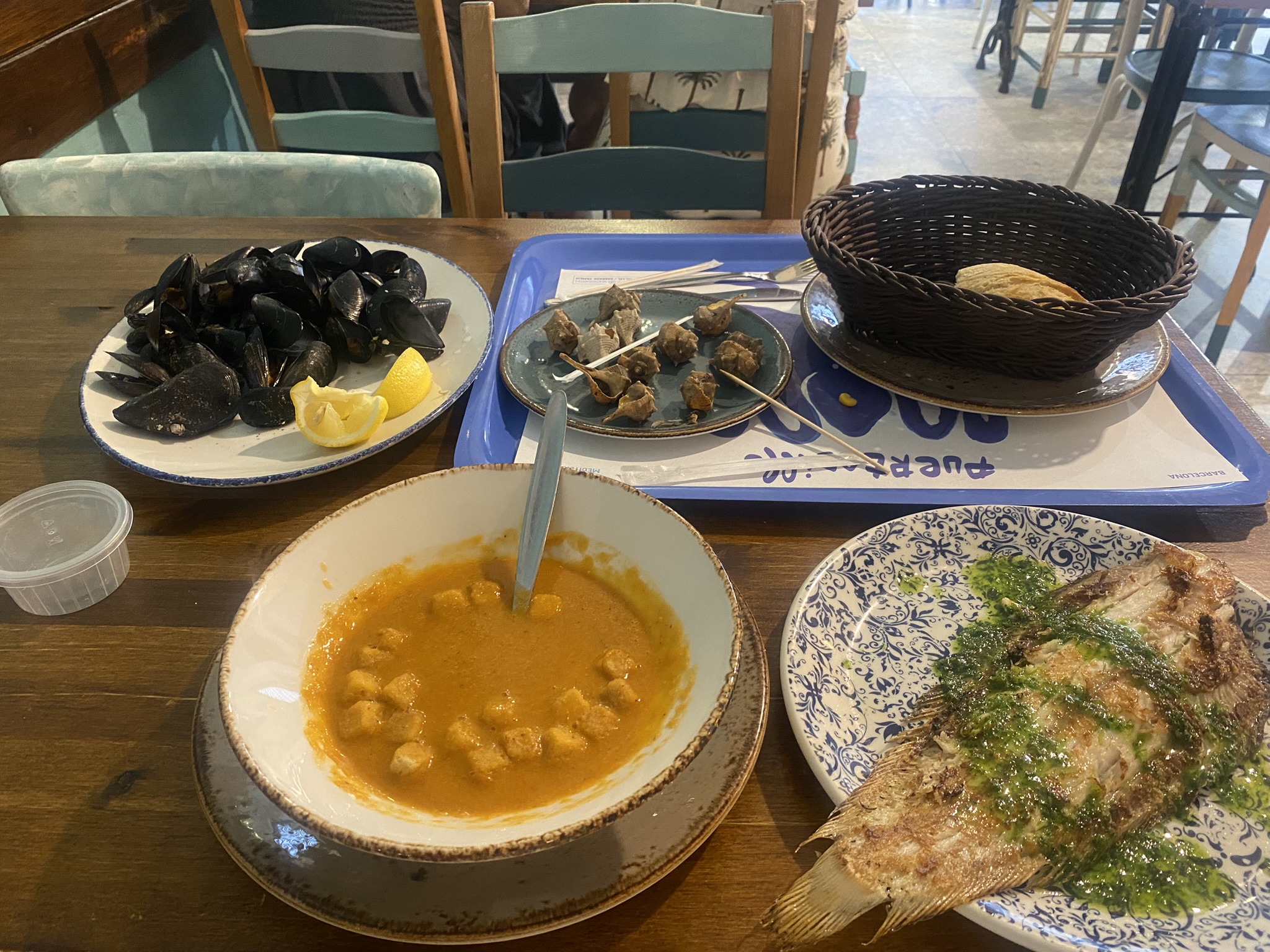
After that, I headed to Puertecillo Born for dinner. The dining process was quite unique: You start by selecting your seafood, a starter (like lobster soup or a salad), bread, and drinks at the counter. Then the kitchen takes over and cooks everything on the spot. Surprisingly, the price wasn’t nearly as high as I expected: under 30 euros for a truly satisfying meal. The place was filled with Korean diners and a few Chinese guests as well, likely thanks to some solid social media recommendations. It seems to be one of those rare local gems that’s made its way onto the Asian foodie map.
Day Two
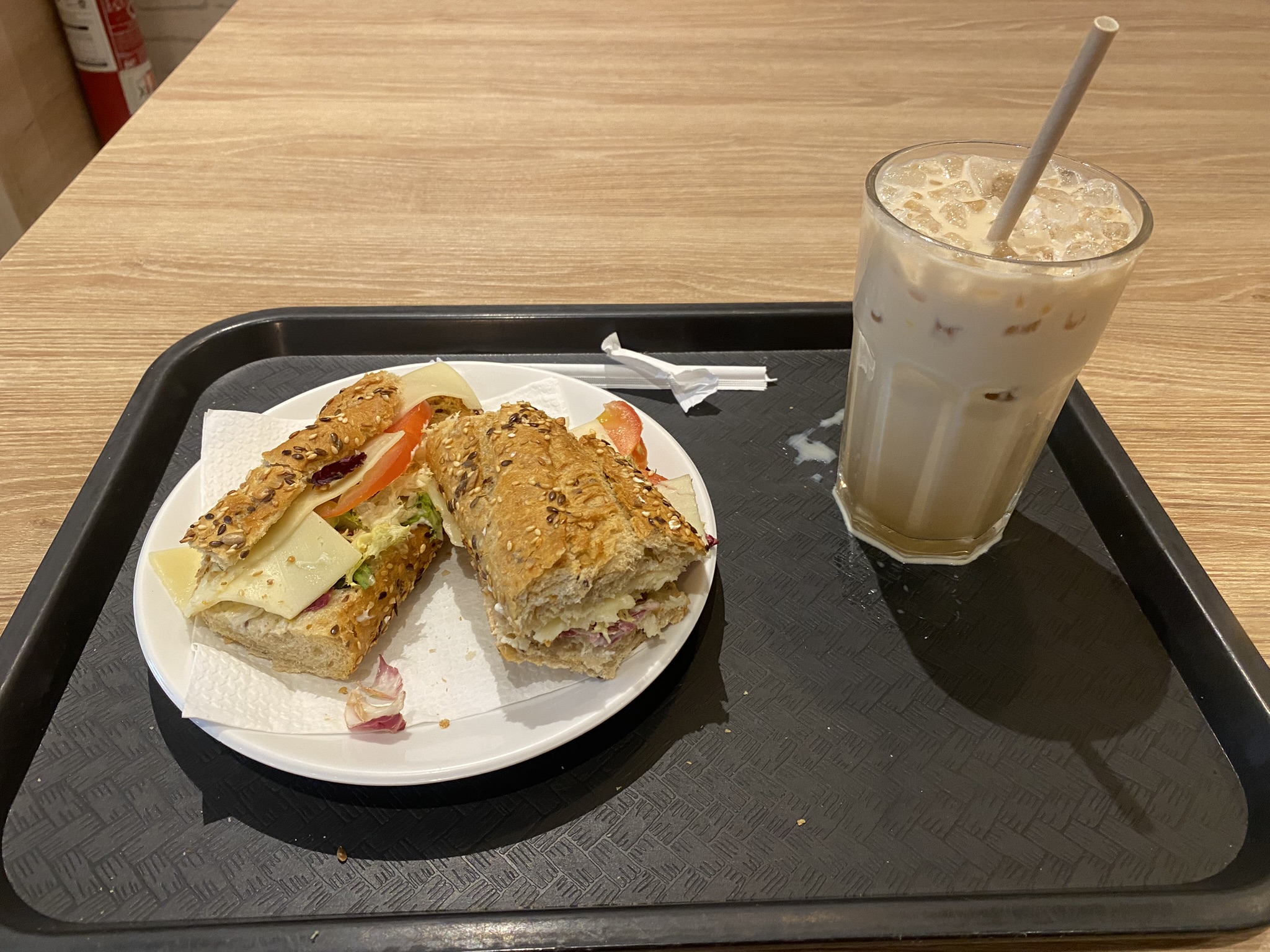
After getting up way too early the day before and not resting properly, I ended up sleeping in until 11 a.m. at the hostel . When I finally headed out, I grabbed lunch at one of those chain cafés Vivari you see everywhere in the city (rumor has it they’ve been bought by Chinese owners). To my surprise, the sandwich I had was incredibly good: crispy, nutty bread; perfectly salted ham and cheese; and fresh, juicy vegetables. Even now, I’m still puzzled by the kind of food magic that made something so ordinary taste that amazing.
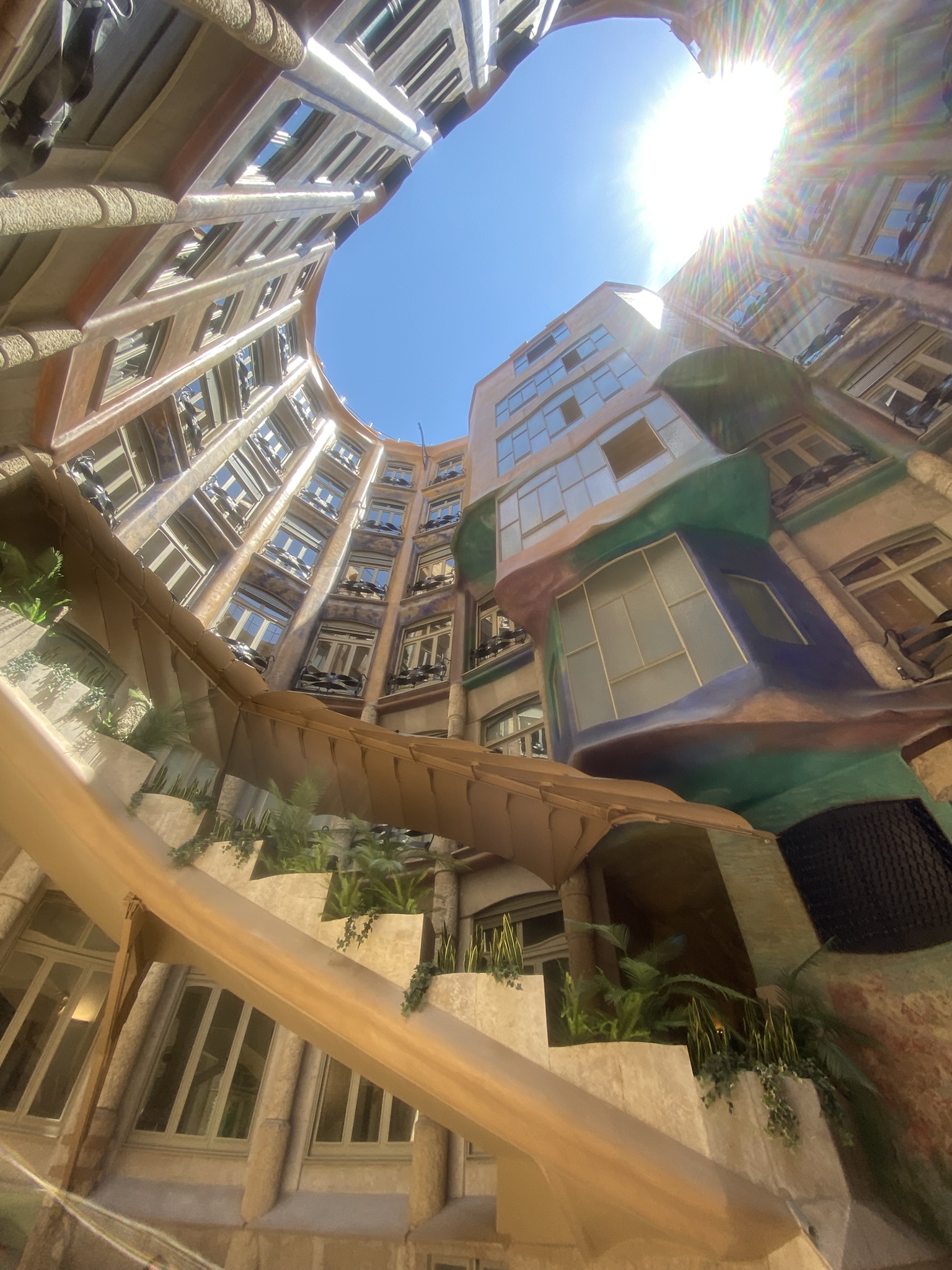
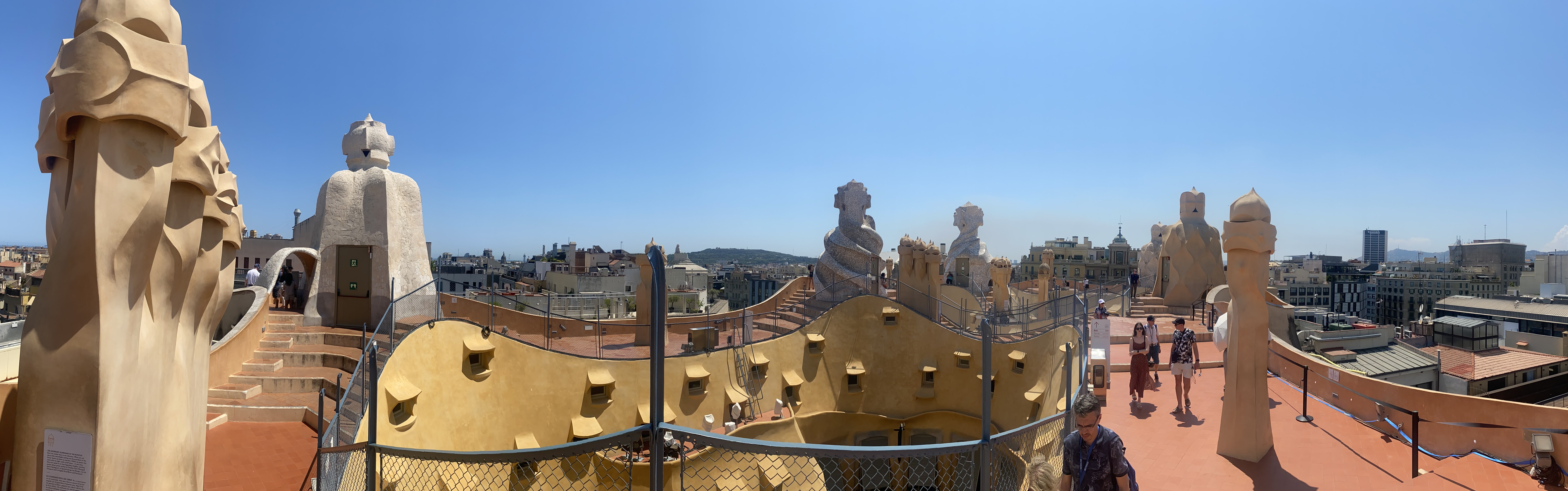
After lunch, I headed to one of Gaudí’s most iconic works: Casa Milà. Seeing its surreal rooftop and fluid, organic floor plans, so often featured in textbooks, was truly striking in person.
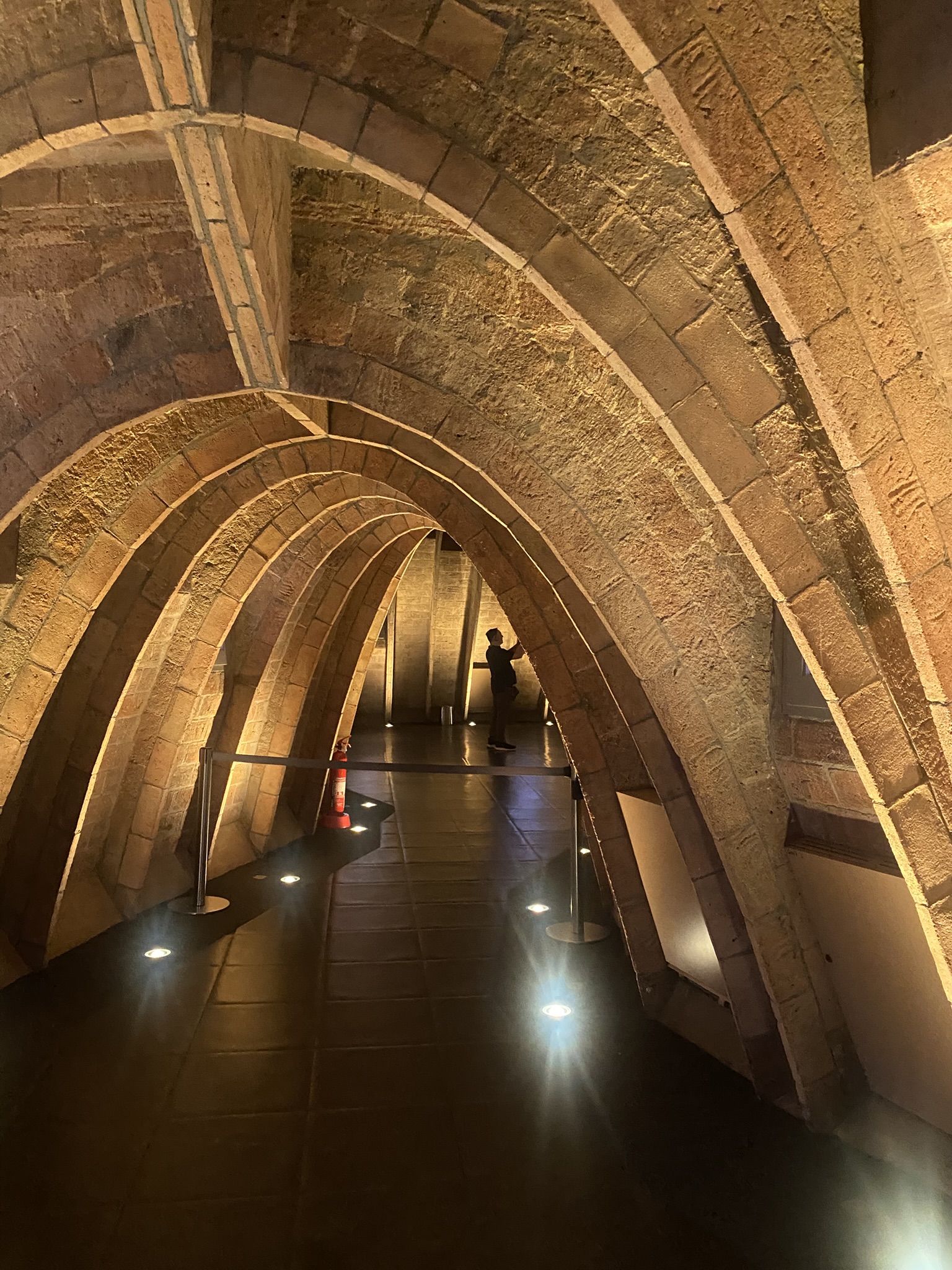
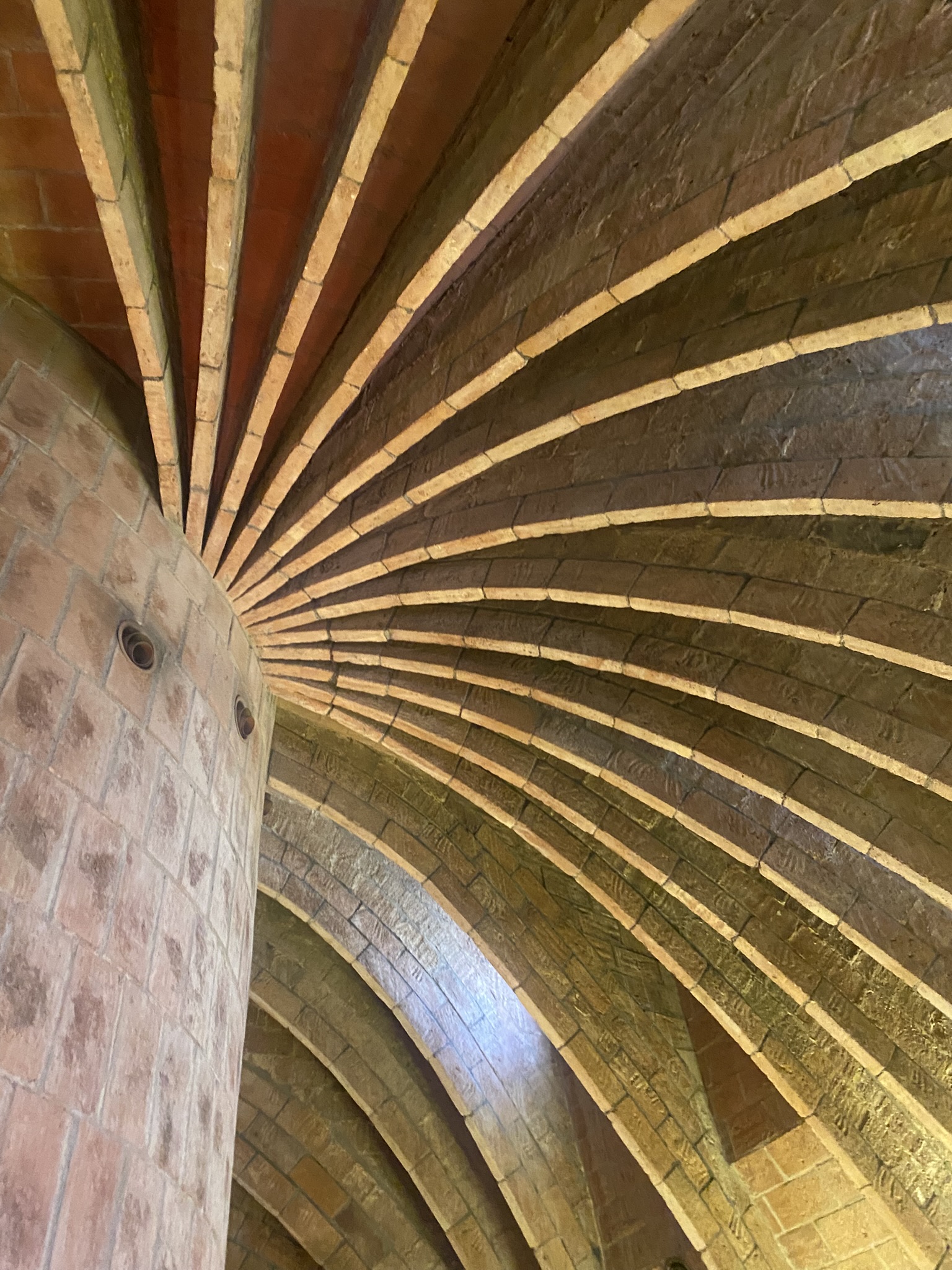
Only one former residential unit is open to the public, but what surprised me the most was something I had never seen in any book or photo: a brick-vaulted attic space. It’s now been transformed into an architectural model gallery, and the elegance of its arched structural design was absolutely exquisite: a hidden gem.

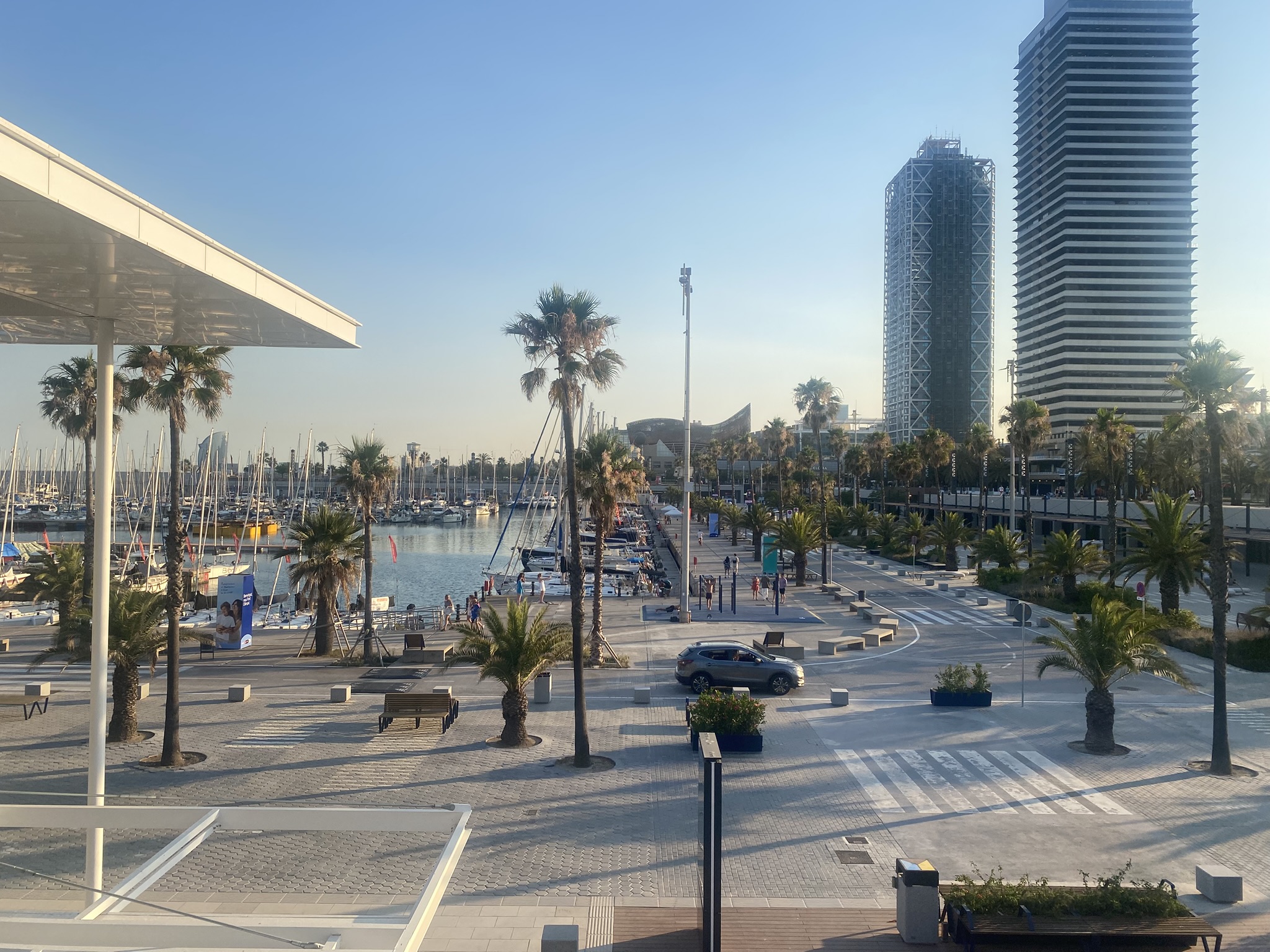
After the visit, it was still broad daylight , and not knowing exactly what to do next, I decided, somewhat aimlessly, to head toward the beach. I foolishly put on flip-flops and started walking… which turned out to be a terrible decision. By the end of it, I had several stubborn blisters on my feet that would haunt the rest of my trip. Thankfully, the coastline was absolutely stunning: brilliant sunshine, crystal-clear water, soft golden sand, and scattered tourists either lounging peacefully or playing in the surf.

I walked along the shore all the way until dusk and, to my surprise, stumbled upon a building by Álvaro Siza - Delegació Territorial AEMET, a local weather office. A quiet architectural encounter that made the journey feel a little more complete.
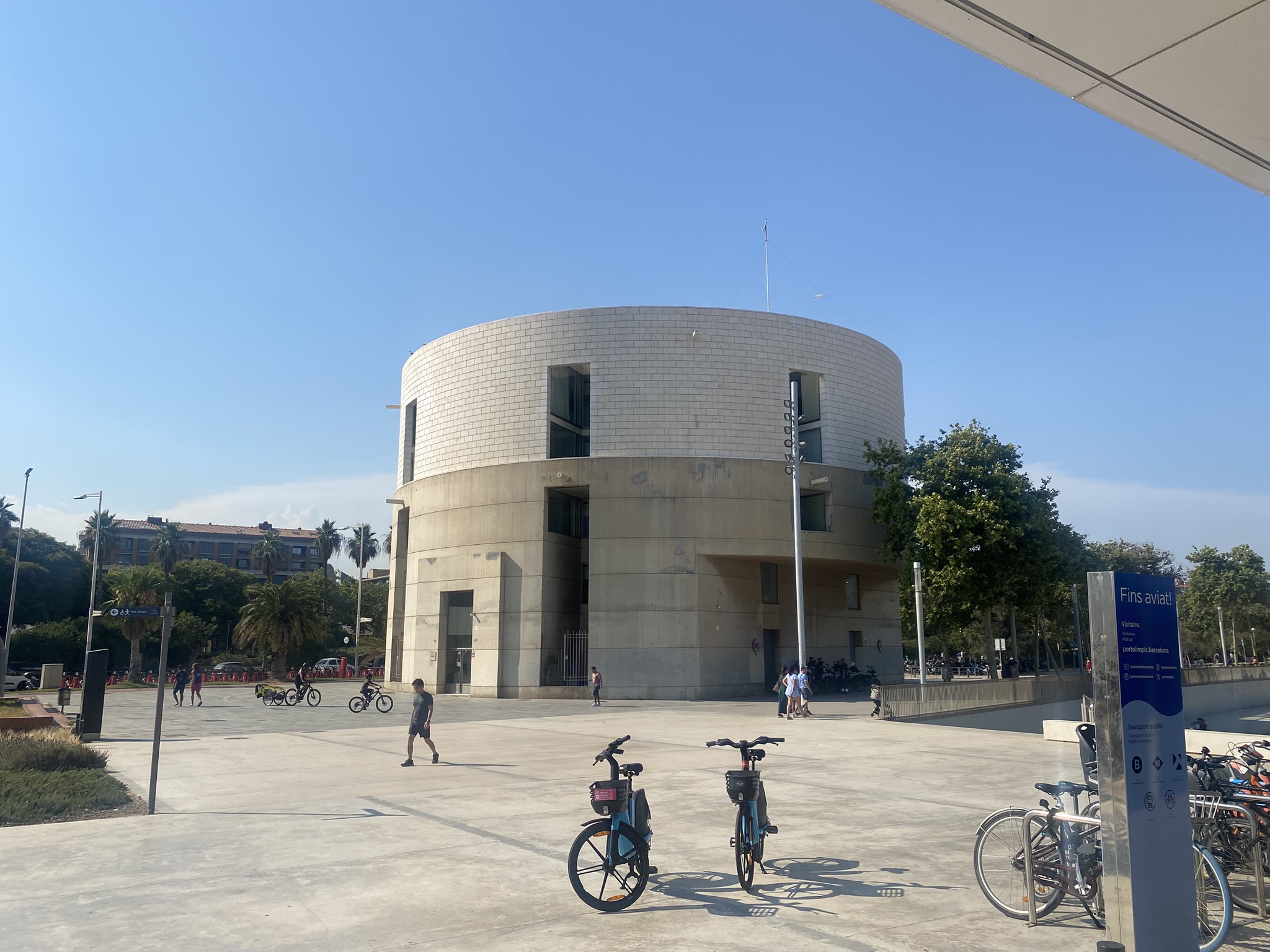
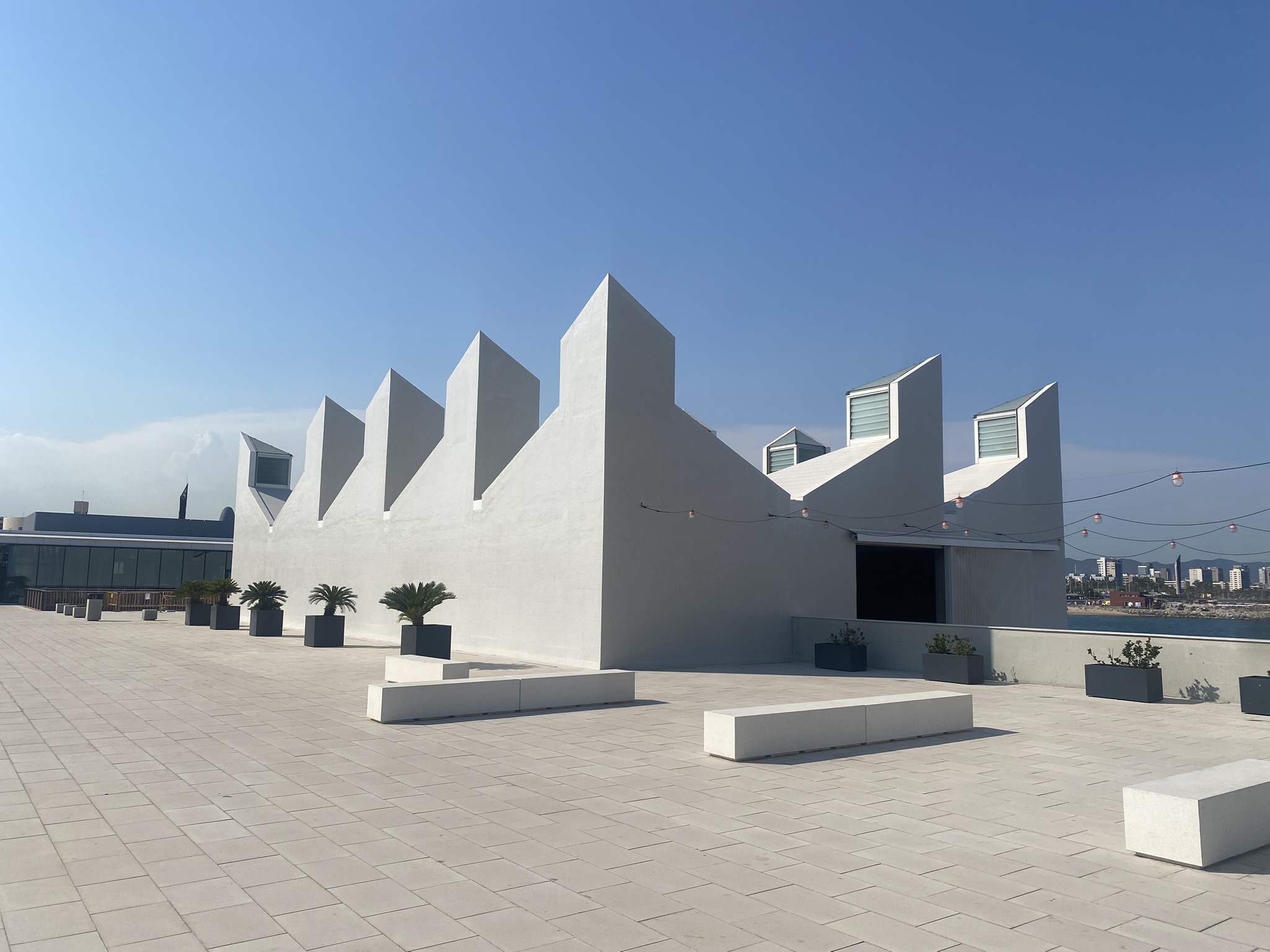
At the very end of the promenade, I stumbled upon a public water sports facility: Centre Municipal de Vela de Barcelona. The rental process wasn’t exactly tourist-friendly, especially since online booking wasn’t an option, so I had to show up in person.
I ended up renting a kayak for an hour. Technically, they don’t offer lessons, just equipment, but a kind (and handsome) Spanish guy at the front desk gave me a quick crash course on how to paddle. And so, I found myself alone on the water at dusk, drifting under the golden sky, clearing my mind, letting the sun and sea carry me.
It was probably one of the quiet highlights of the entire trip—though sadly, there was no one around to take a photo of me :(
After wrapping up the kayaking, I returned to the shore. The evening sky had started to glow in soft shades of pink, and more locals began to arrive at the beach to work out, filling the place with a laid-back but energetic vibe. Fit, good-looking guys were out in full force: playing beach volleyball, jogging, cycling, all basking in the golden light. It honestly felt like I had stumbled into a live-action commercial for the Mediterranean lifestyle.
Day Three
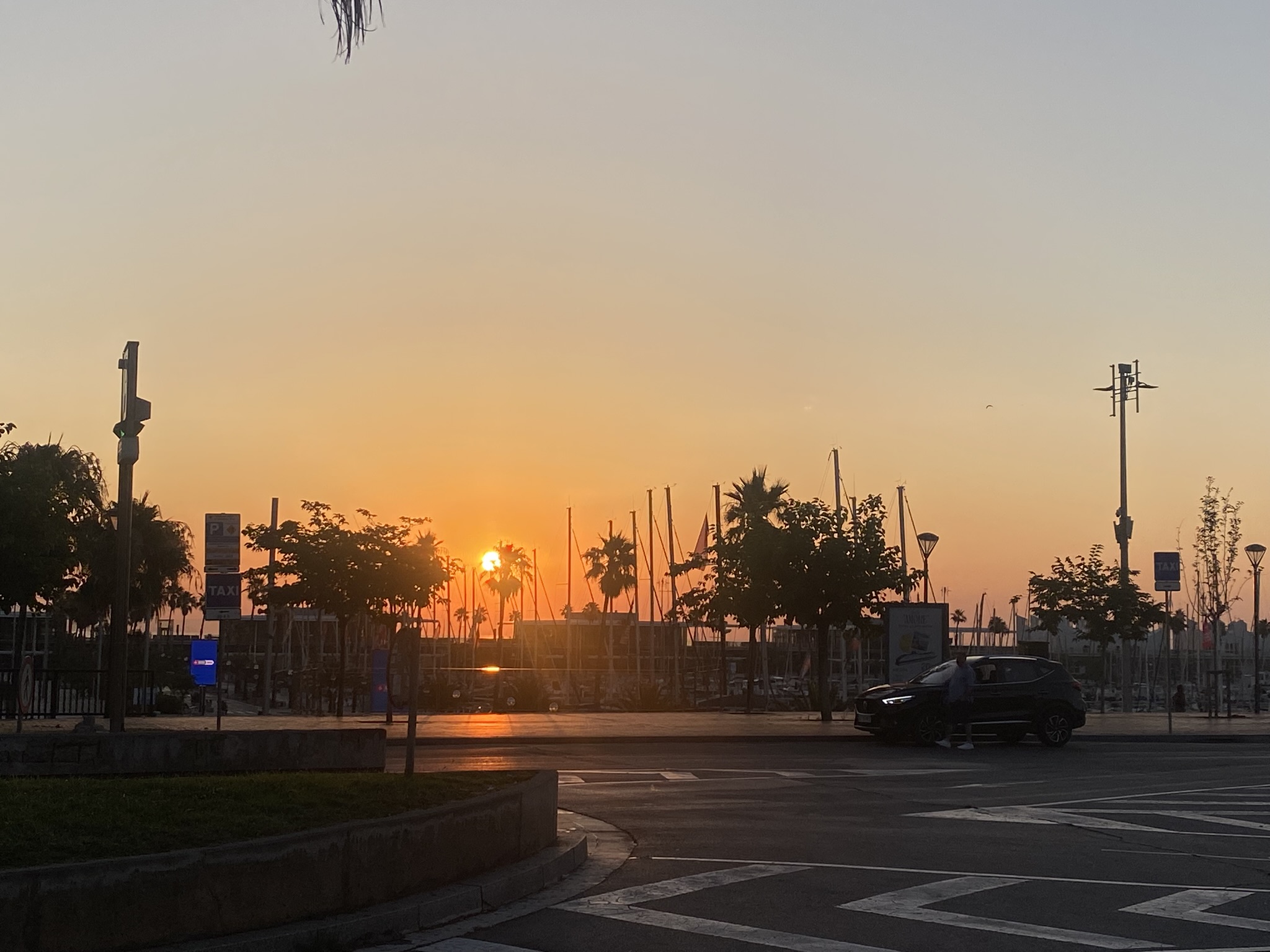
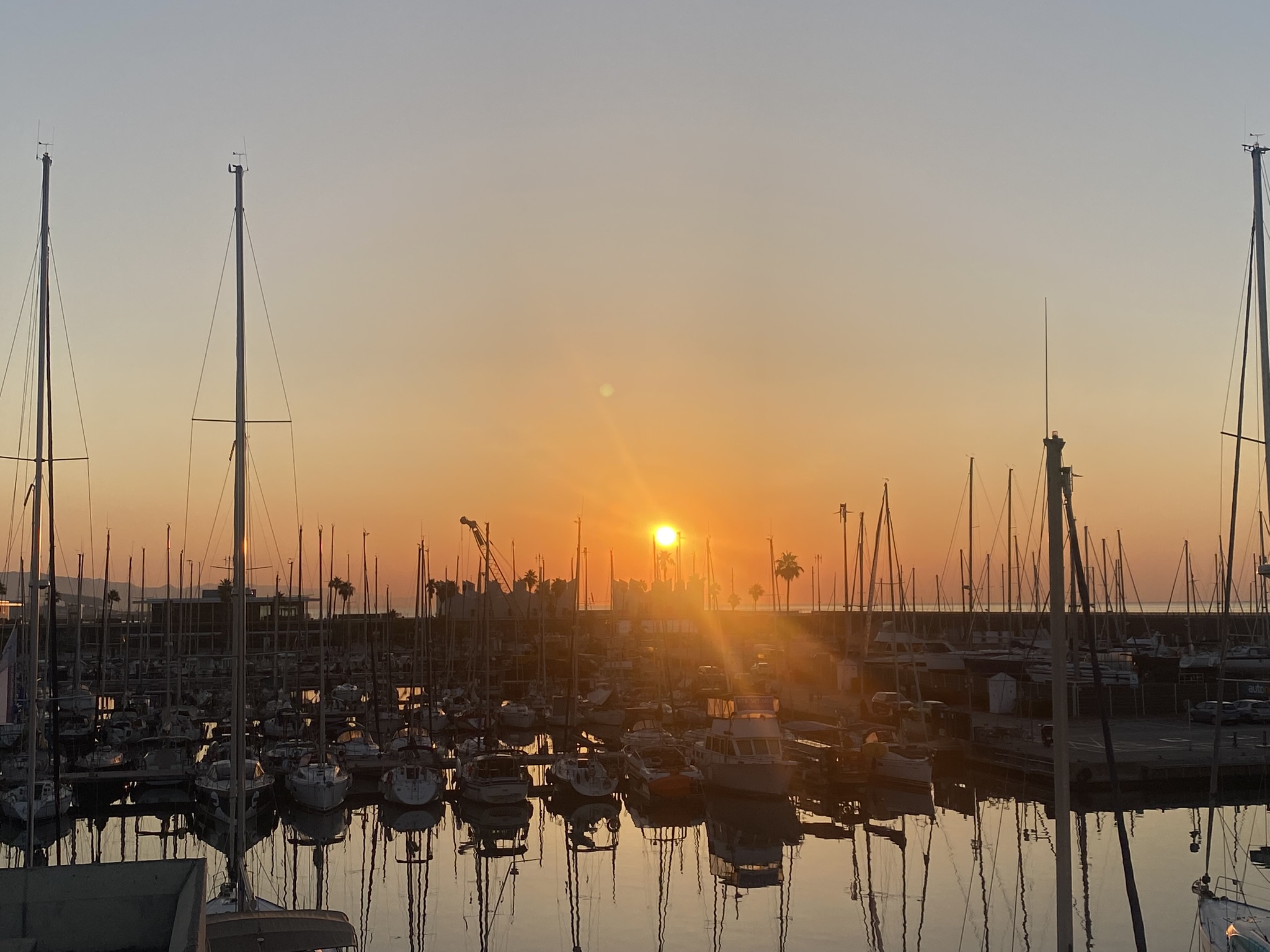
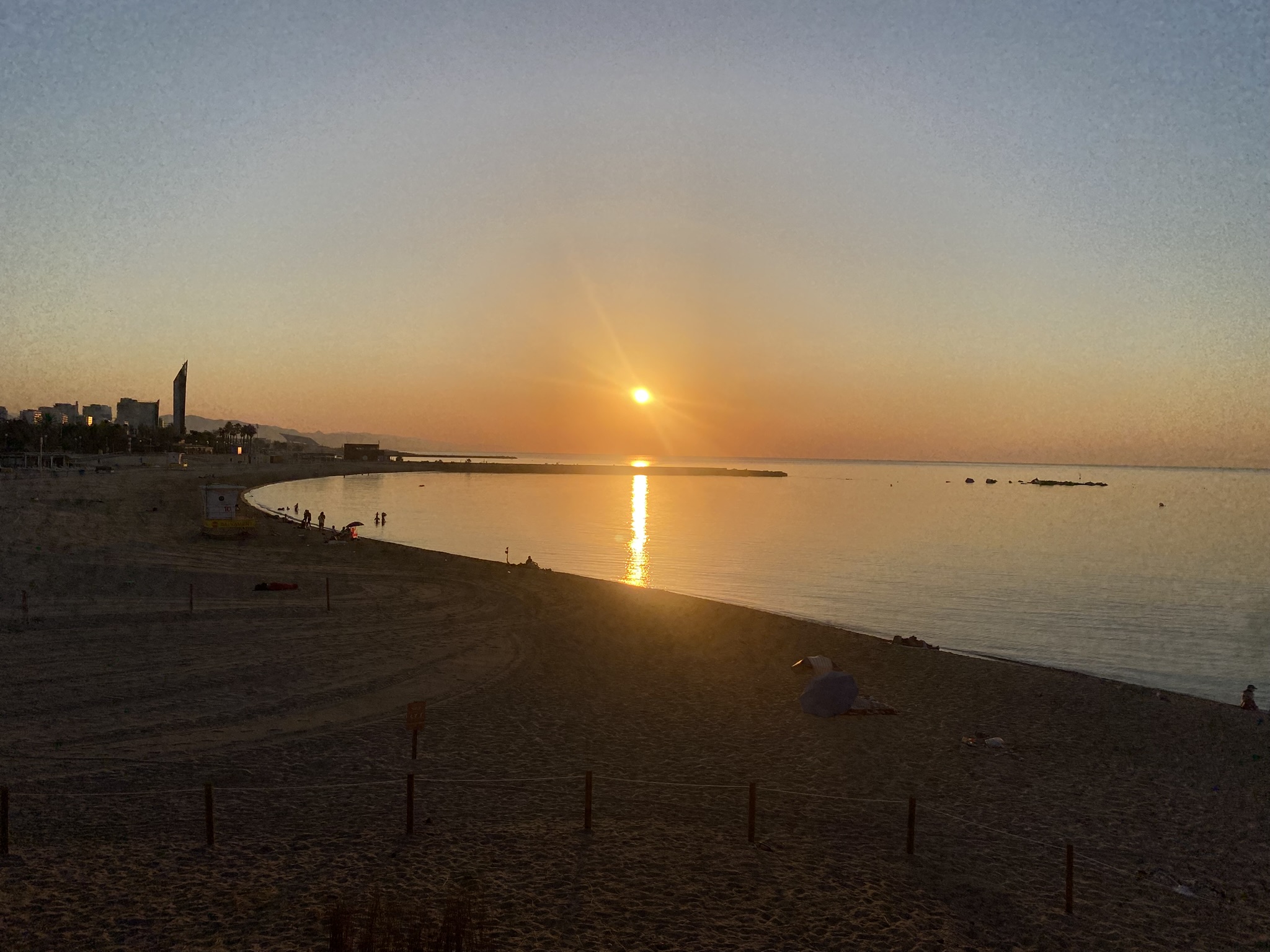
I'll skip the details of the night out, but as dawn approached and I was still wandering the city, a thought suddenly struck me: if the beach doesn't offer sunsets, surely it must offer sunrises. So I hopped on a bus and headed back to the shore . I arrived just a little too late to catch the sun breaking over the horizon, but soon enough, golden light began to spill across the sand. I lay back in a beach chair, alone, quietly soaking in the warmth and stillness of the moment.
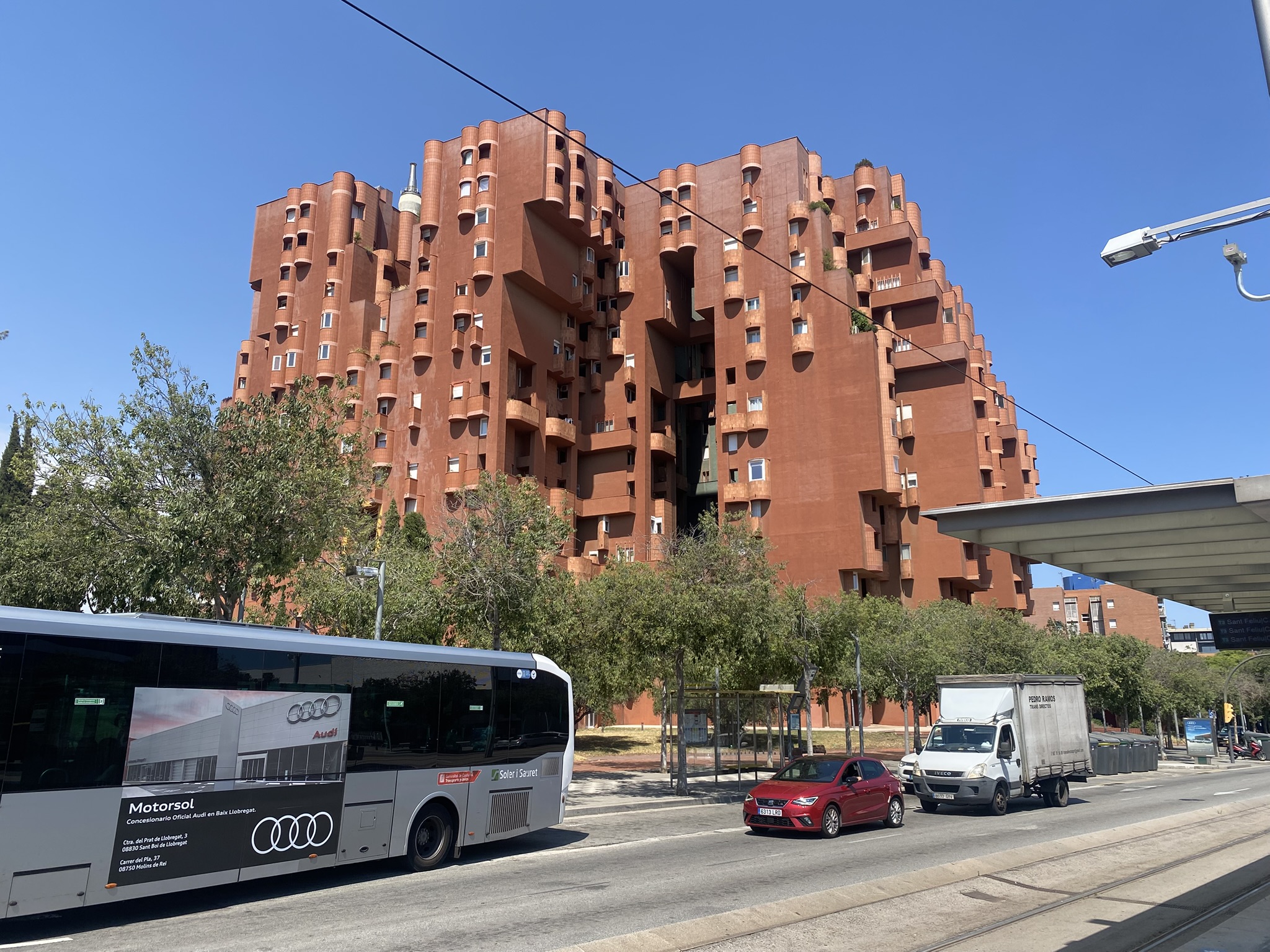
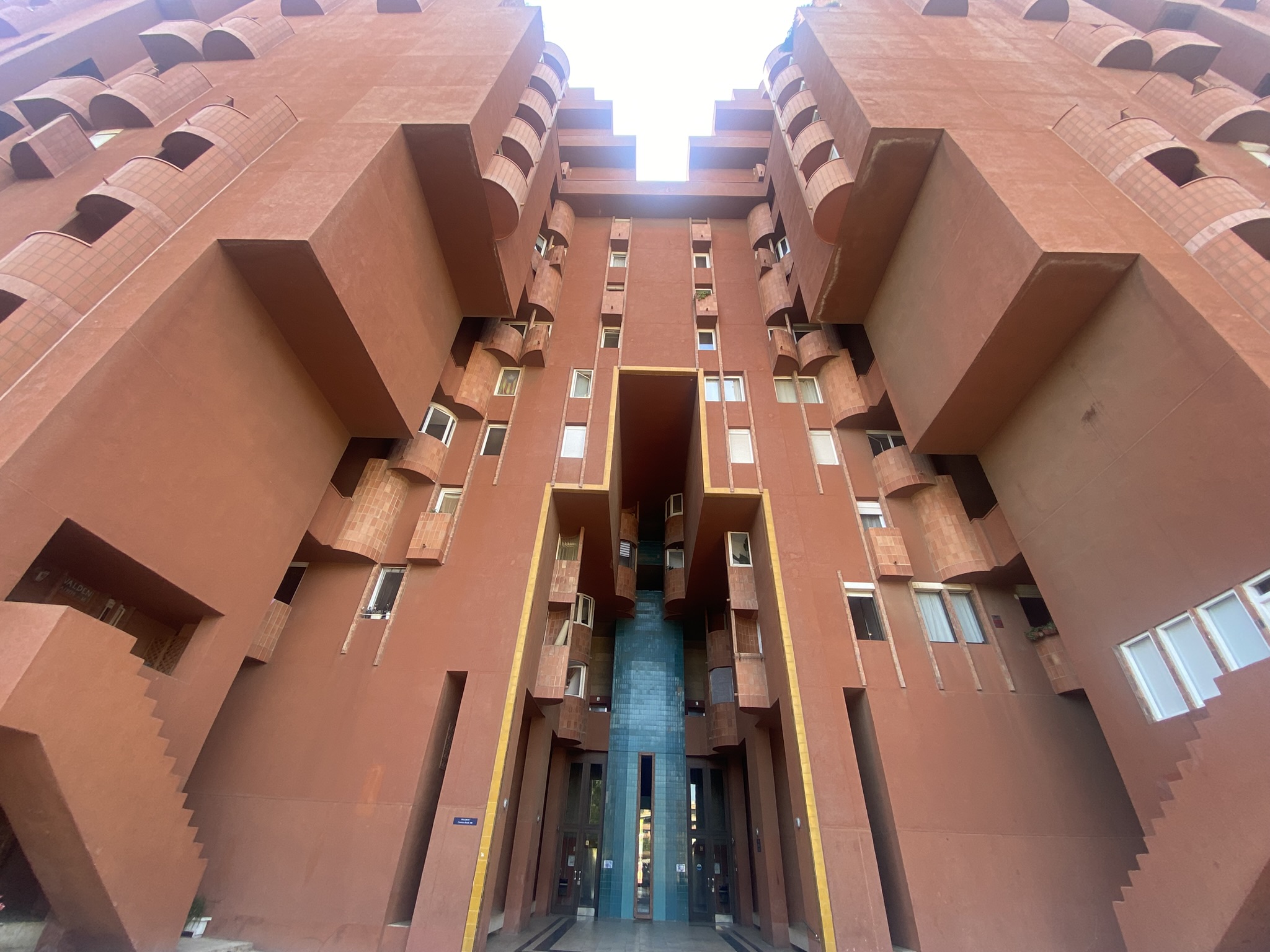
After catching up on some sleep at the hostel, I set out to visit a few more architectural sites I was curious about. This time, I headed to the outskirts of Barcelona to see Walden 7, one of Ricardo Bofill’s most iconic works, which is still a functioning residential complex today. Originally, I just planned to walk around the exterior. But once I arrived, I couldn’t resist trying to sneak a peek inside. Unfortunately, after a brief standoff with the security guard, I had to admit defeat. Later, I learned that you can actually book a guided tour through the official website,led by resident volunteers. And since Barcelona will be named the World Capital of Architecture next year, the building is rumored to open to the public. So… I’ll definitely be back.
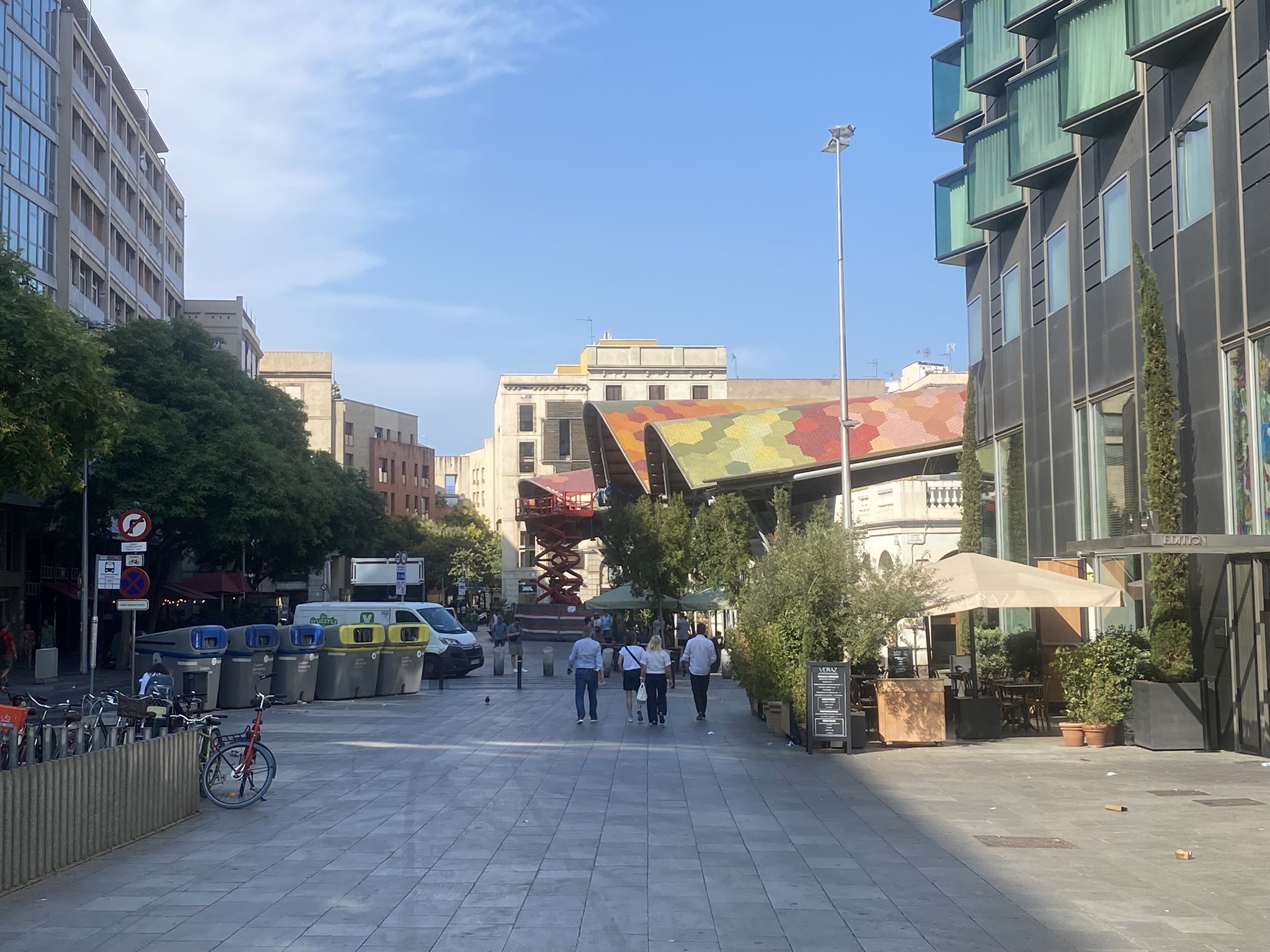
After a short rest back at the hostel , I headed out to visit a project I had long wanted to see: Mercat de Santa Caterina, a well-known market renovation. But when I arrived, I felt… slightly deceived by the photos. The actual building is quite small. I have no idea how they managed to make it look so grand in all those architectural photos. That said, once I walked around to the back, I was much more drawn to the way they handled the wooden façade. Subtle, tactile, and honestly more compelling than the roof everyone talks about.

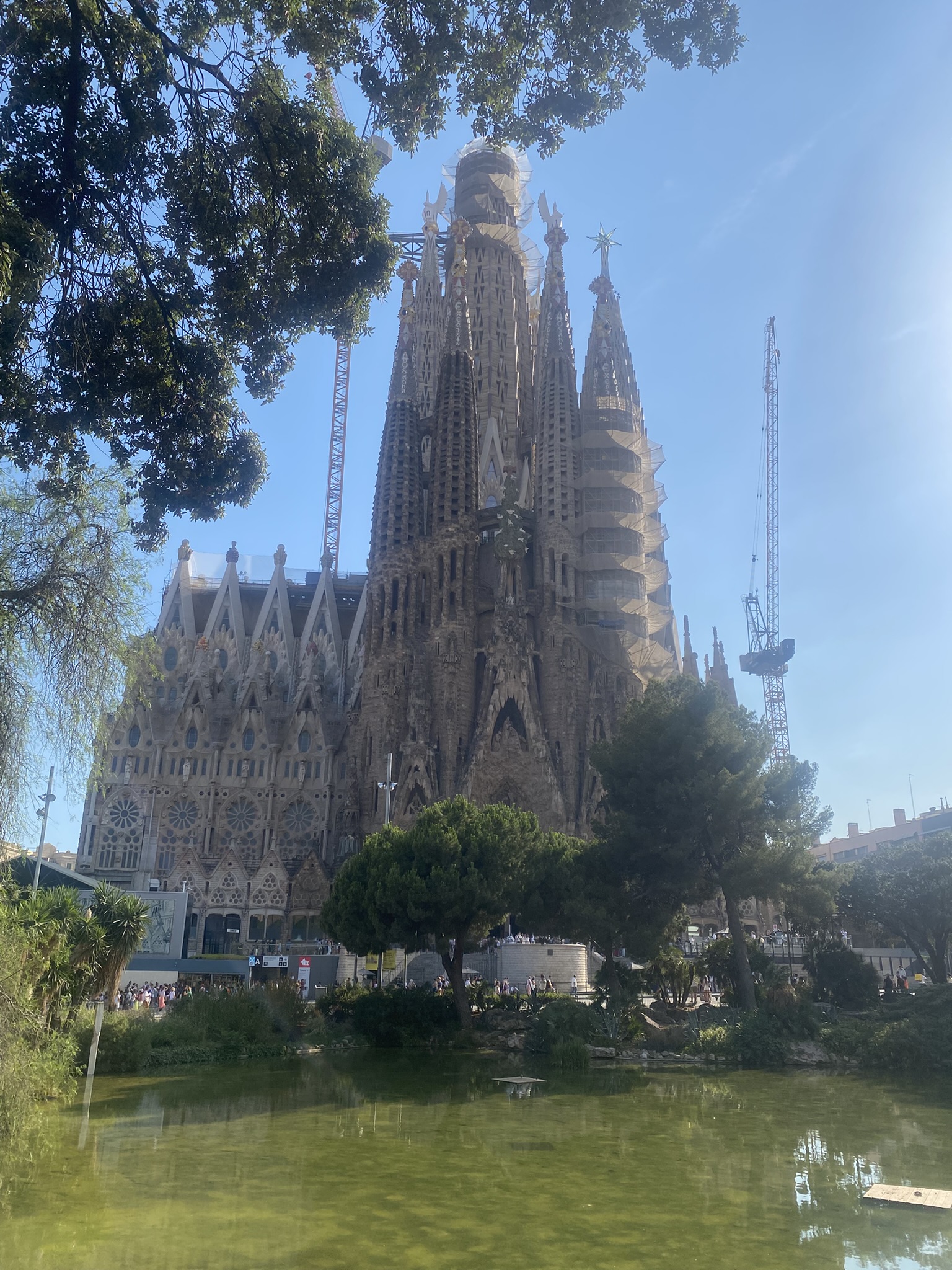
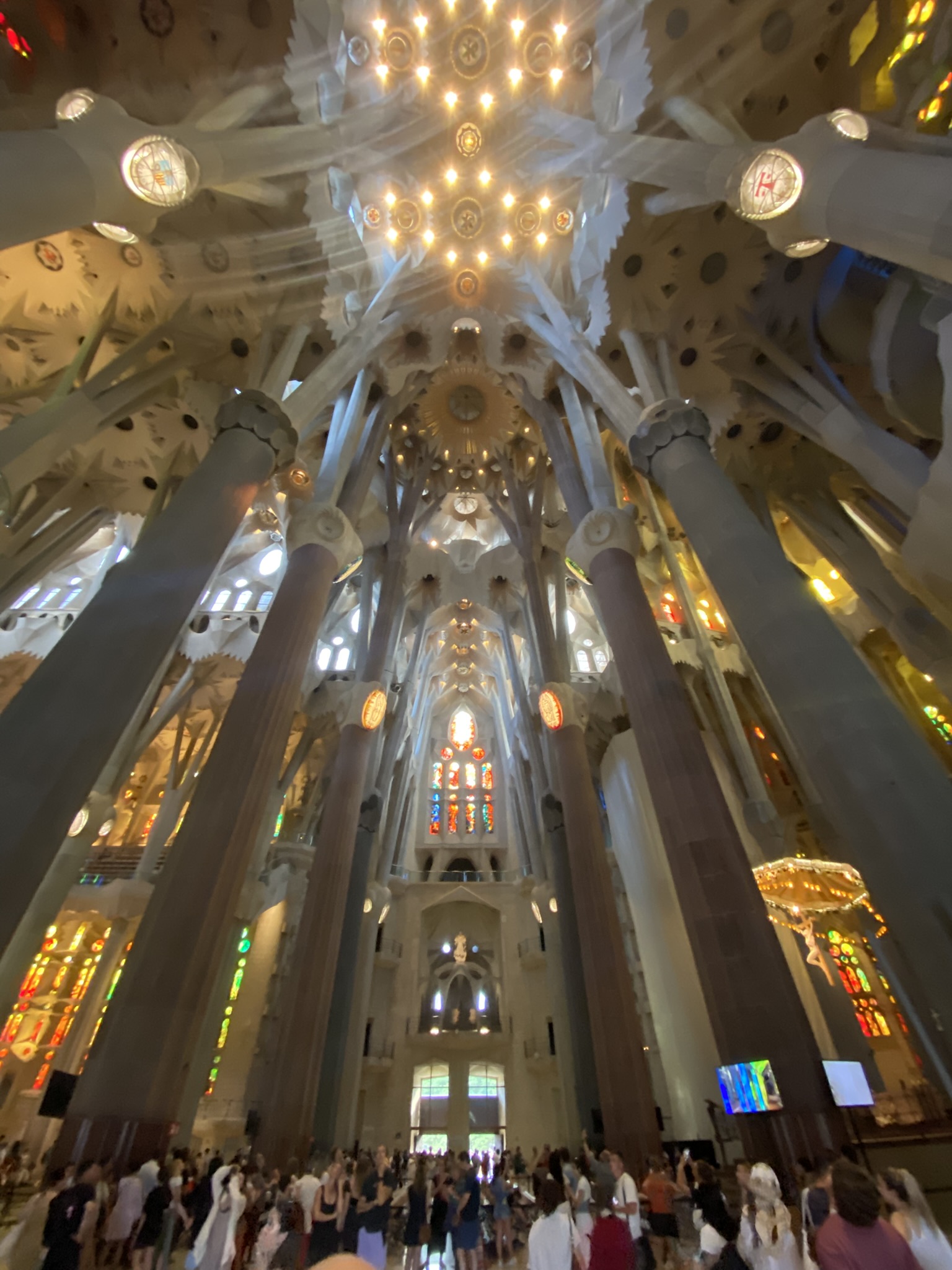
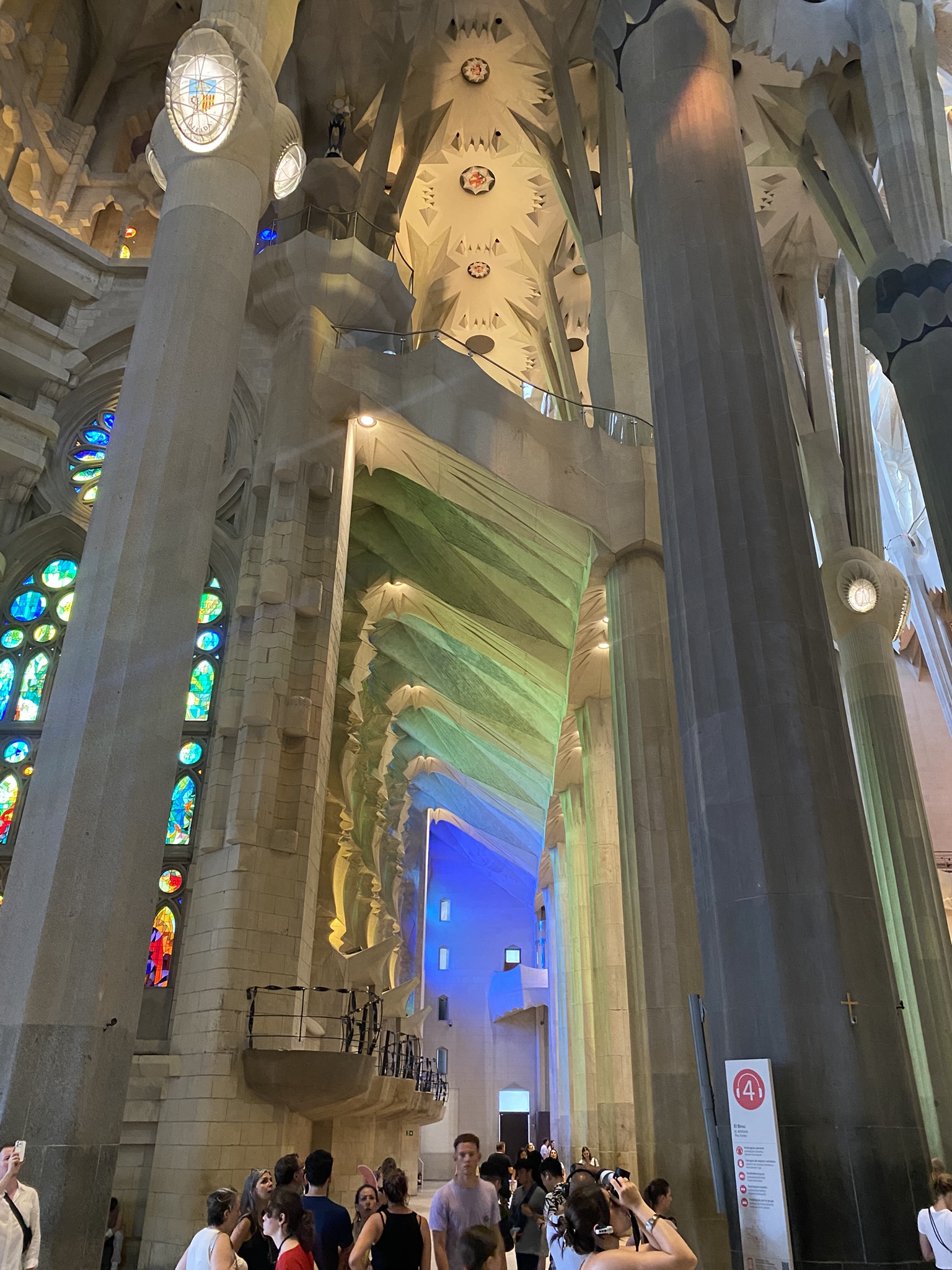
After that, I tried to bike over to the Sagrada Família, but I still hadn’t quite figured out how Barcelona’s bike lanes work. I barely made it in time, arriving at the very last minute to see Gaudí’s most iconic work and the symbol of the entire city: Basílica de la Sagrada Família.
I joined a guided tour led by a local, but to be honest, I’ve grown a bit numb to churches with similar forms and atmospheres. Plus, I’m personally not a fan of overly ornate architecture, so the building didn’t really resonate with me. As if that weren’t enough, it had been sunny all day except during our visit, when clouds covered the sun, completely dulling the light through the stained glass. There was no air conditioning, and I hadn’t brought any water. I felt like I was going to evaporate. The moment the tour ended, I made a quick exit.

For dinner, I once again relied on Google Maps and found a highly rated local spot: Gelida, which turned out to be another culinary highlight of my Barcelona trip.
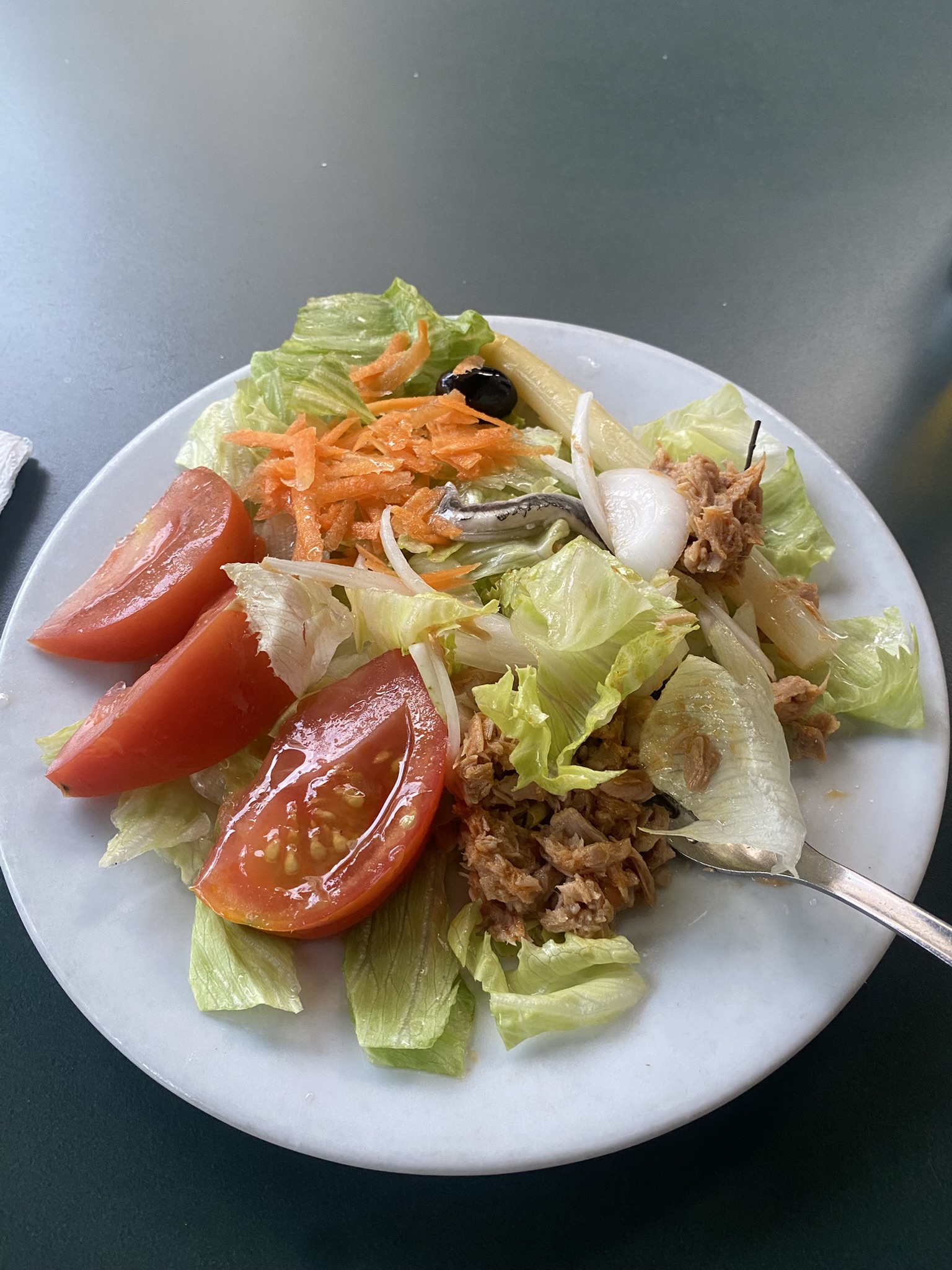
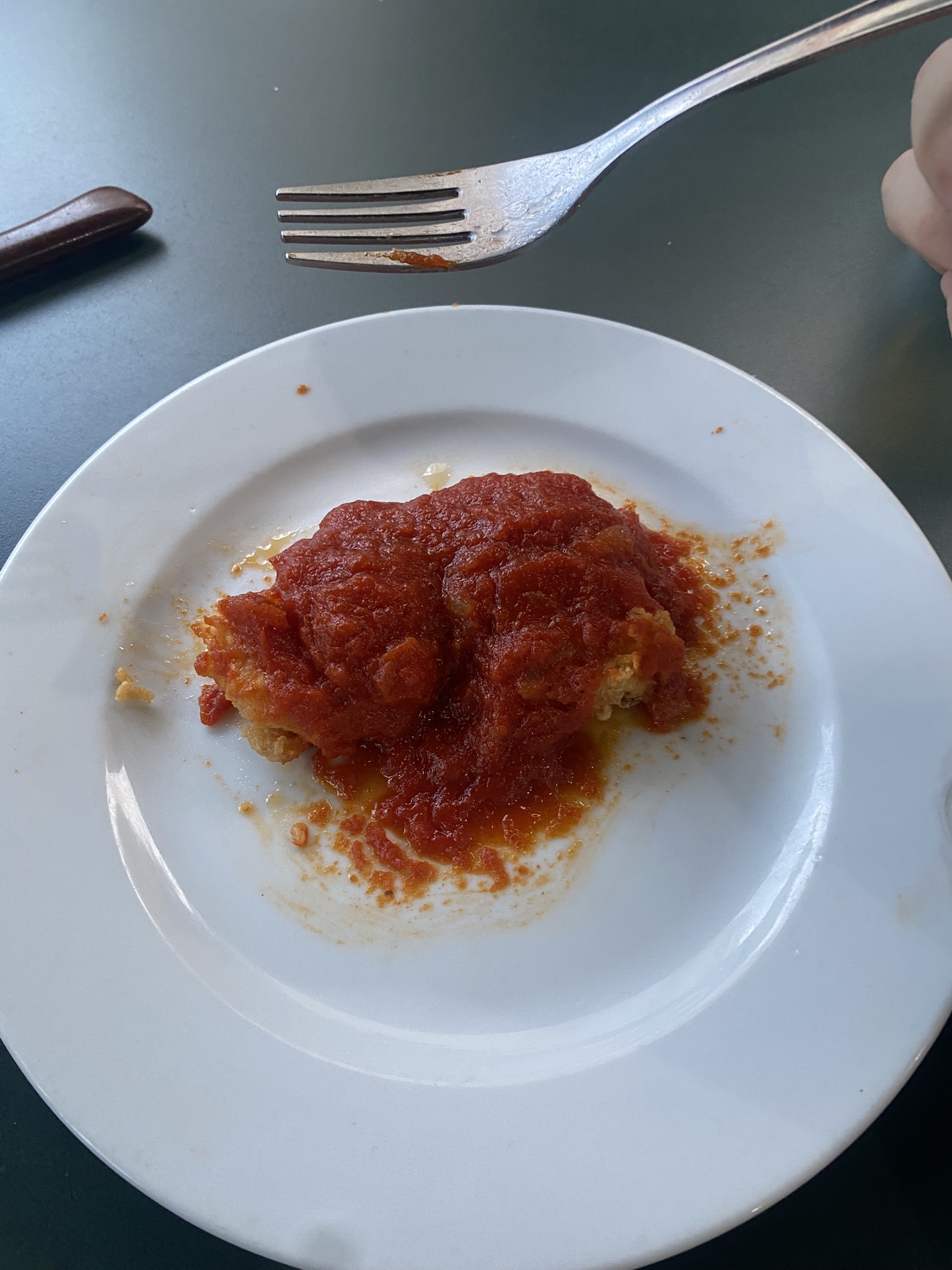
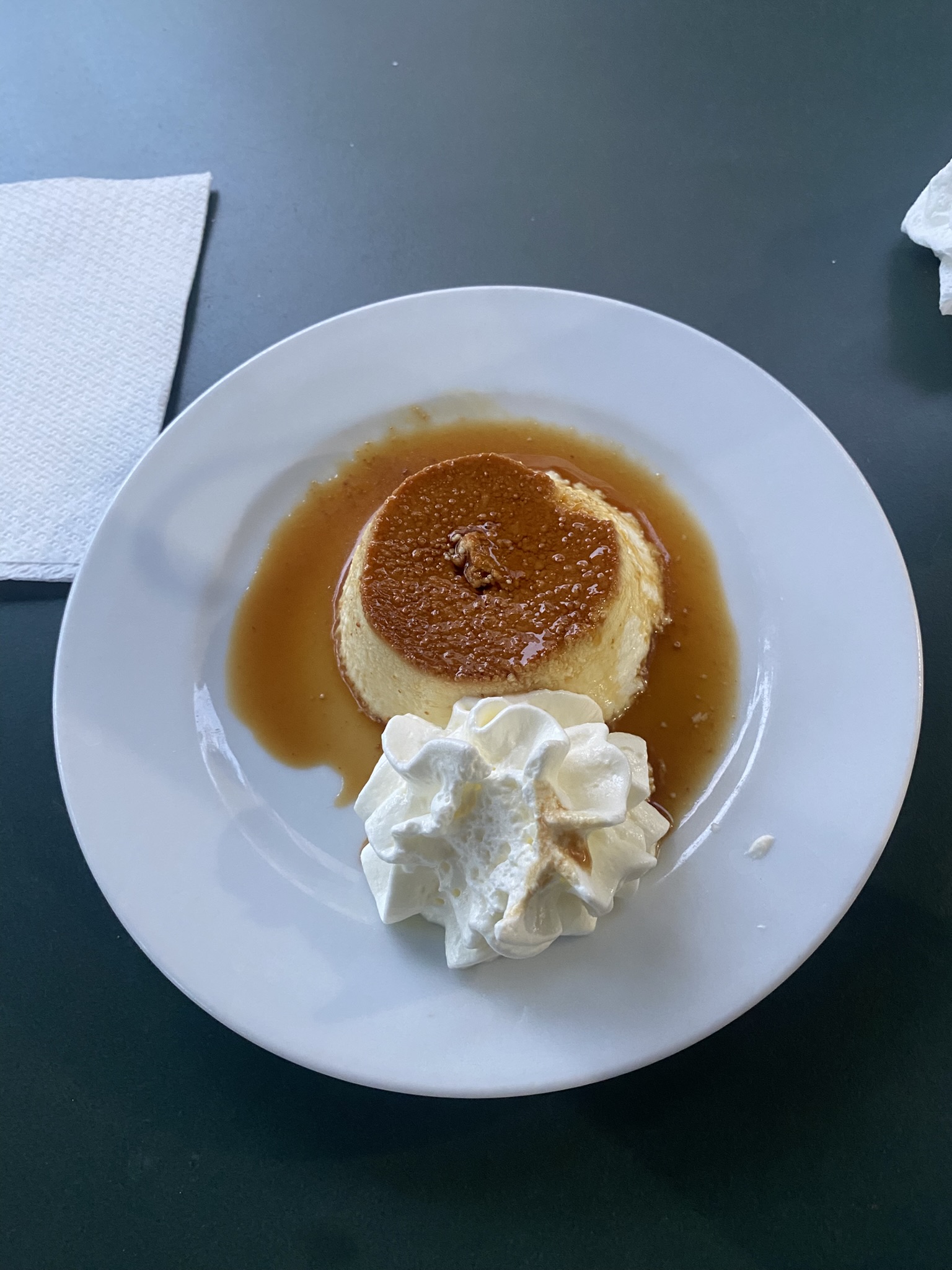
They serve a classic three-course Catalan home-style meal. I ordered the house salad, and it honestly blew me away: fresh, clean flavors, light yet well-balanced dressing, and a generous mix of ingredients. Quite possibly the best salad I’ve ever had. The main course was battered cod drenched in tomato sauce: crispy on the outside, tender and flavorful inside. And the dessert, a cheese pudding, was equally delightful.
After dinner, I returned to the hostel to rest. The next day, I took the high-speed train back to Madrid . I grabbed McDonald’s for breakfast at the train station. Surprisingly, European McDonald’s burgers actually come with fresh vegetables! Not as good as the ones in China, but definitely better balanced (and far superior to their American counterparts).
A Few Memorable Moments
On my first evening, while riding the bus to dinner, a tourist fainted from heat exhaustion. What struck me was how quickly people around jumped in to help—offering water, fanning her, holding her steady: everyone doing whatever they could. It was the first time I’d witnessed such organic, collective care in public. I had read about growing anti-tourist sentiment in Barcelona due to rising living costs, but throughout my trip, the people I met were consistently warm and kind. I never once felt unwelcome.
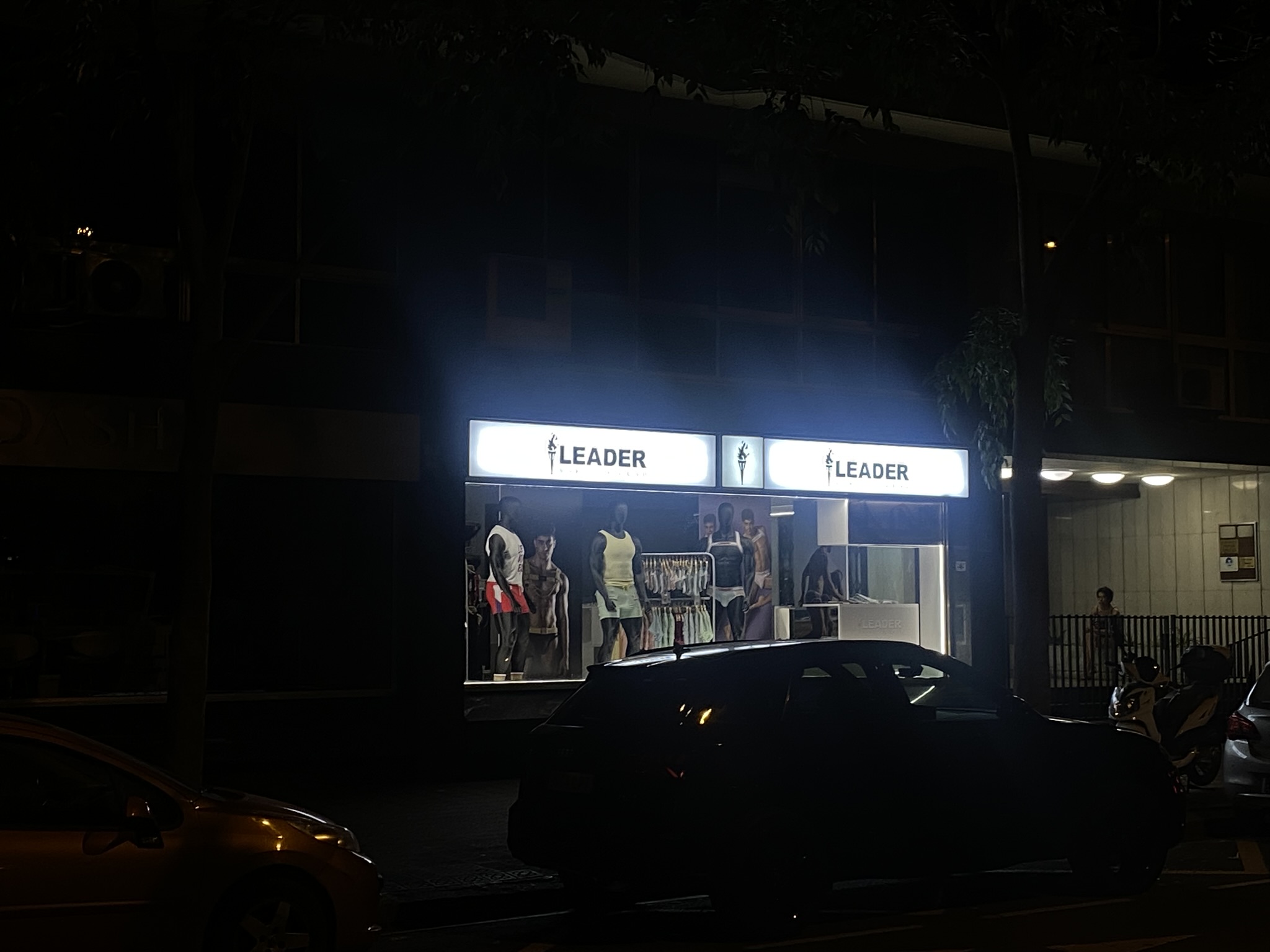
One especially fun encounter: I randomly met a guy (technically 40, but honestly still looked pretty young, lol). He’s of Pakistani descent, with immigrant parents from the UK, and runs his own underwear brand, I even happened to walk past his storefront. He told me he works with suppliers in Shanghai and Zibo. We had a great conversation. Even though we didn’t exchange contact info, I already know who he is online. Hopefully, we’ll cross paths again someday.
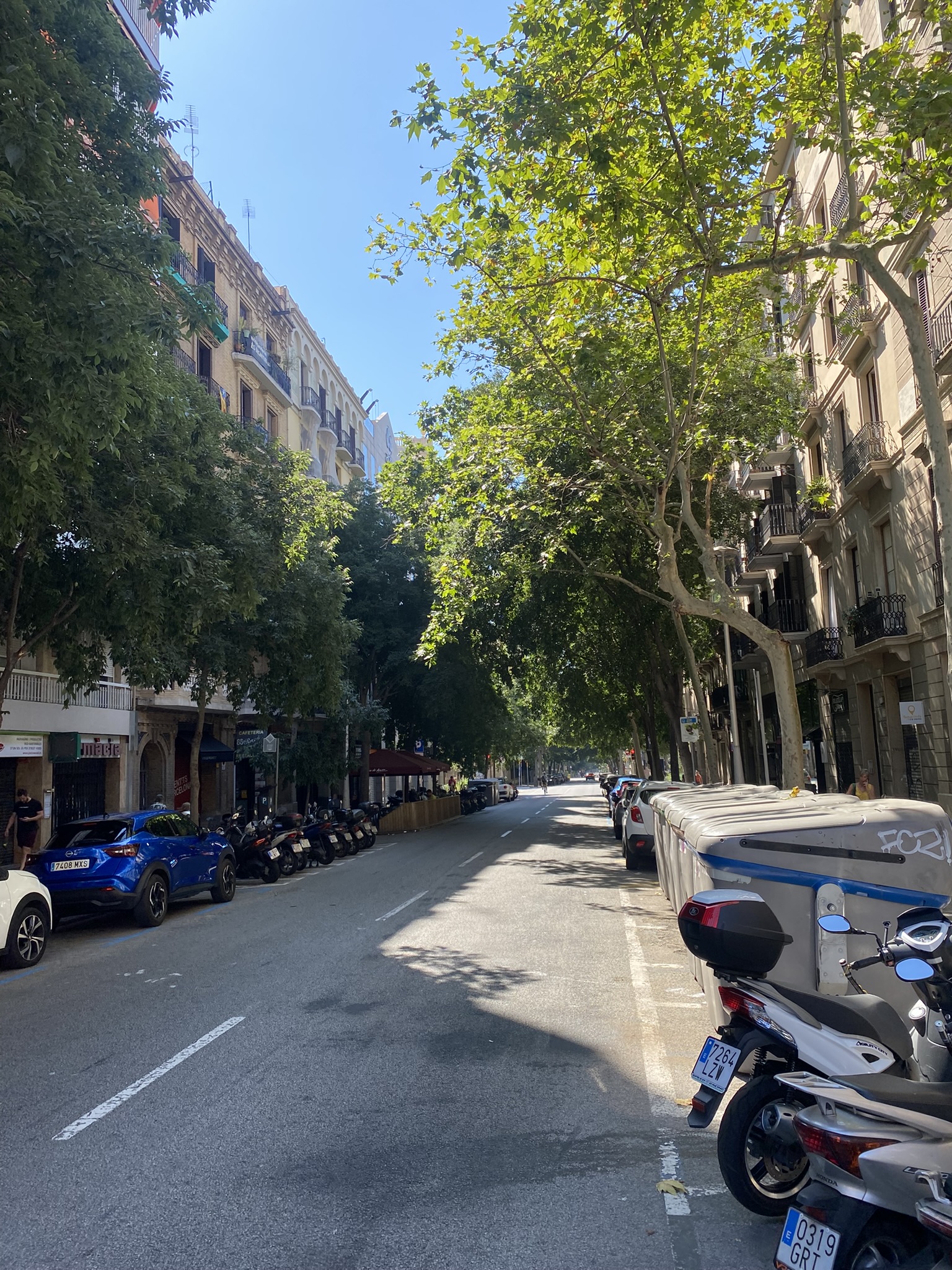
Barcelona gave me an intense sense of déjà vu—of Shanghai. I spent six years there during undergrad, and the city is deeply etched into my memory. In so many moments, Barcelona reminded me of the French Concession: the tree-lined streets, the relaxed elegance, the subtle rhythm of city life. If that district was the distilled essence of Shanghai for me, then Barcelona felt like an entire city built from that essence. Combined with its coastline and hills, it offered a layered, immersive experience that left me genuinely considering a return visit, or maybe even living here someday. (Might be time to brush up on my Spanish.)
My favorite moment of the trip? Biking alone through the city at midnight. It transported me straight back to those quiet, free nights I used to spend in Shanghai, and reminded me of the kind of life I want to live.