Madeira
2025-07-04
Trip
Before making up my mind to try this year’s DIS conference, I had never heard of this place. A quick search revealed that the island’s largest city, Funchal, is the hometown of Cristiano Ronaldo, and the conference hotel Pestana Casino Park is one of Niemeyer’s iconic works. It wasn’t until I arrived that I realized Madeira is a beloved vacation destination for many Europeans. The climate is truly pleasant: mild and spring-like all year round, with temperatures hovering around 20°C.
Talking with some local students, I discovered that the island offers much more than beach. Thanks to its varied microclimates, the landscapes shift dramatically depending on elevation and location. Funchal is a classic coastal town, but the caves up north, the misty fanal forests in the center, and the nearby rural scenery all present very different charms, each worth exploring.
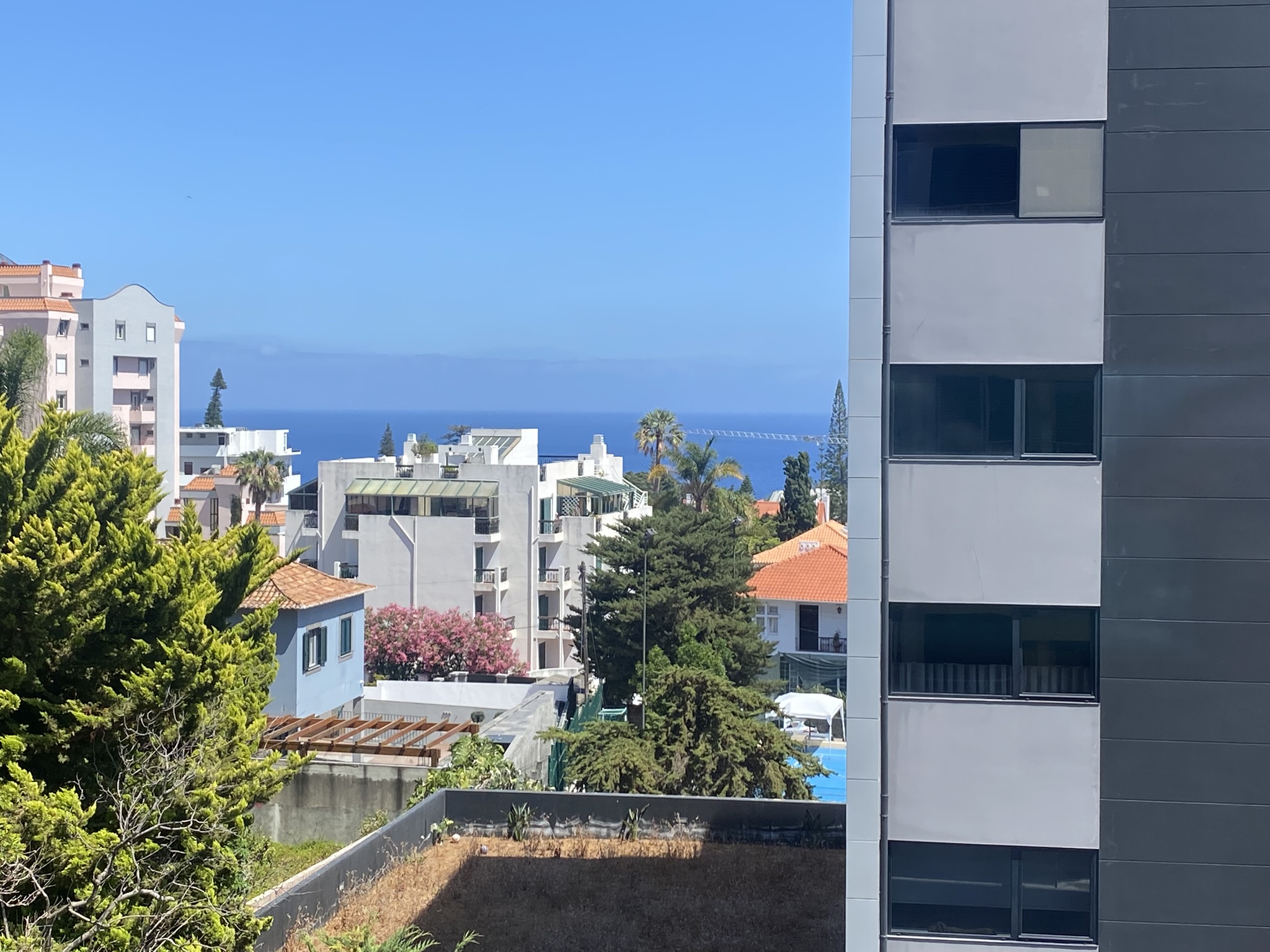
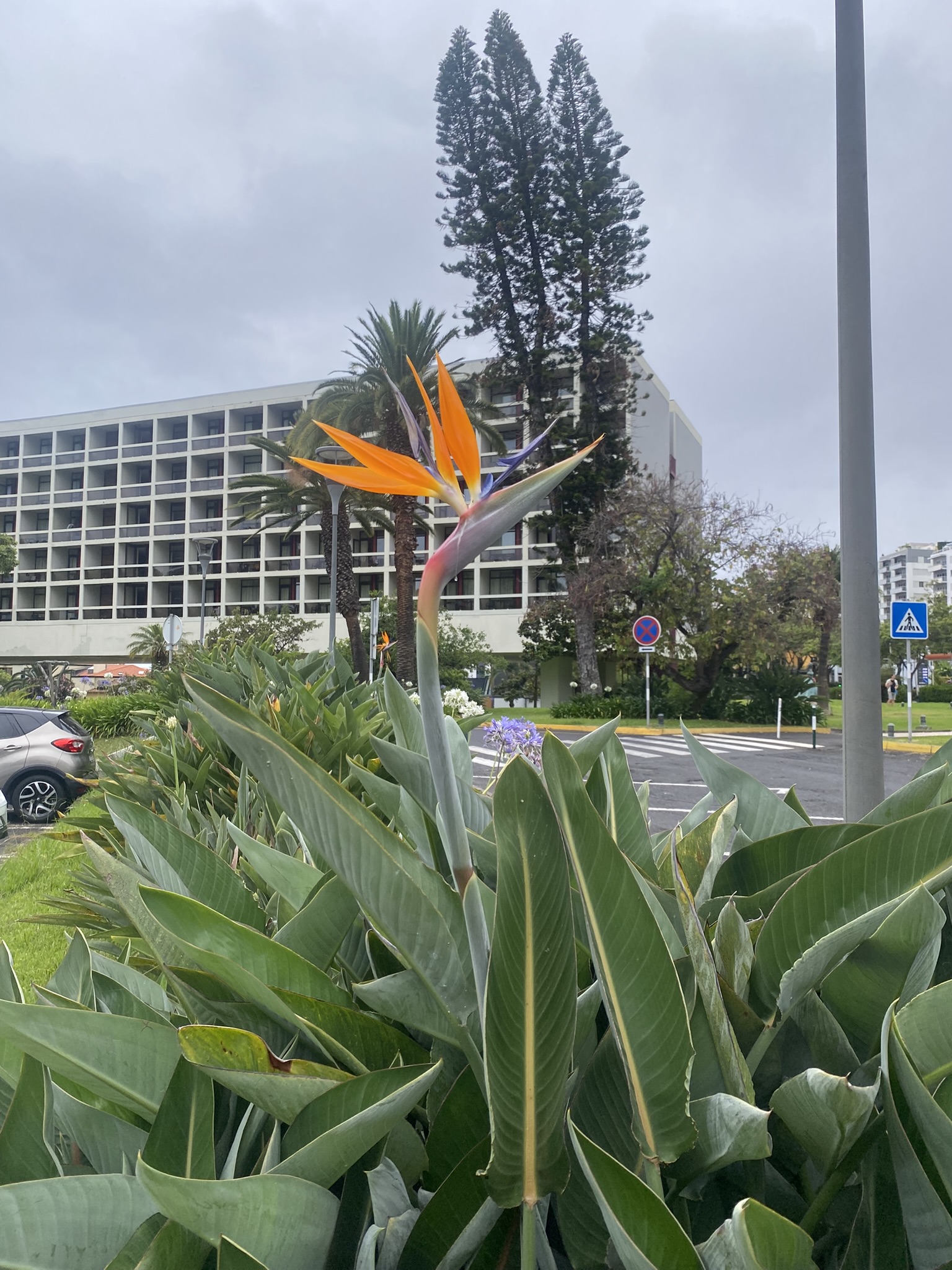
And yet, just like when I was in Porto, I couldn’t help but feel a subtle sense of familiarity. In many ways, it reminded me of places back home, especially Sanya. The deep blue sky and ocean, the blooming bougainvillea everywhere, and the low-rise houses scattered along the hillsides all felt oddly familiar.
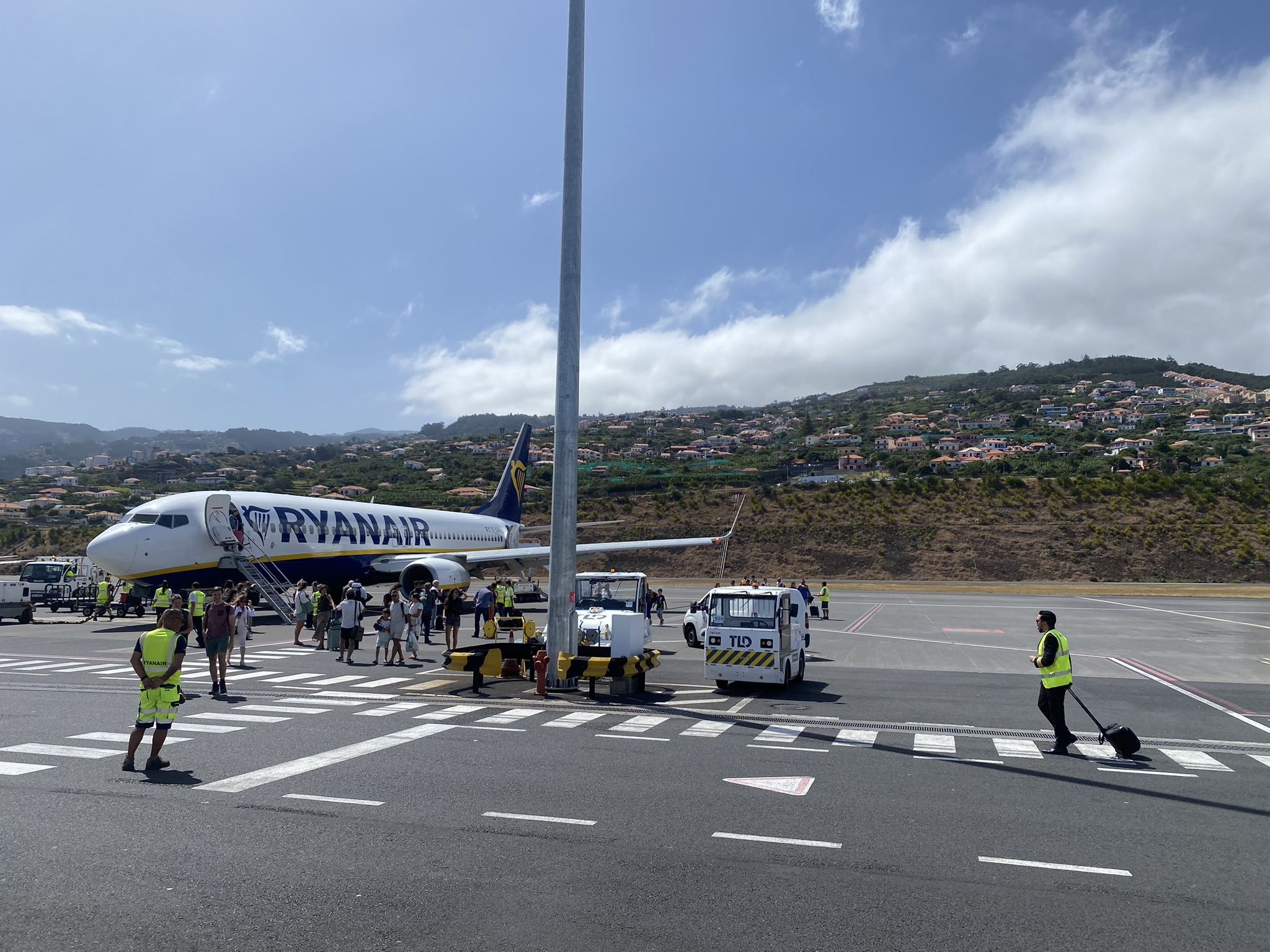
It wasn’t until right before departure that I learned about Madeira’s notoriously strong winds, which make landing there a real test of pilot skill. Many conference attendees weren’t so lucky: some flights had to turn back or divert to nearby islands. Fortunately, my flight landed smoothly. It was the first time I realized that “whether or not the plane can actually land” might be a real concern when traveling.
The ride from the airport to my Airbnb wasn’t long, but the scenery was breathtaking. Jagged coastlines, dramatic gorges, and drifting mist combined into landscapes that felt surreal and almost otherworldly.
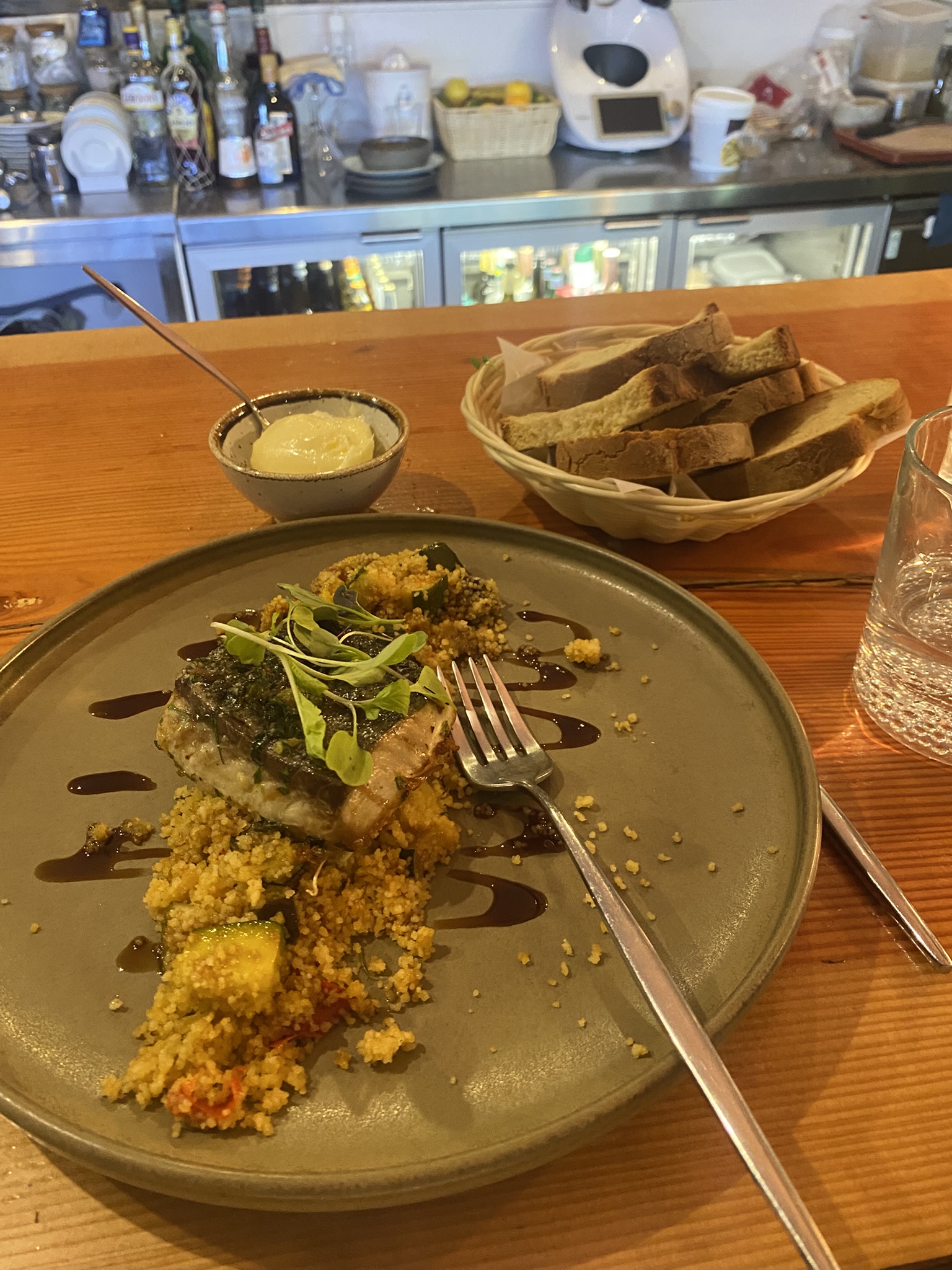
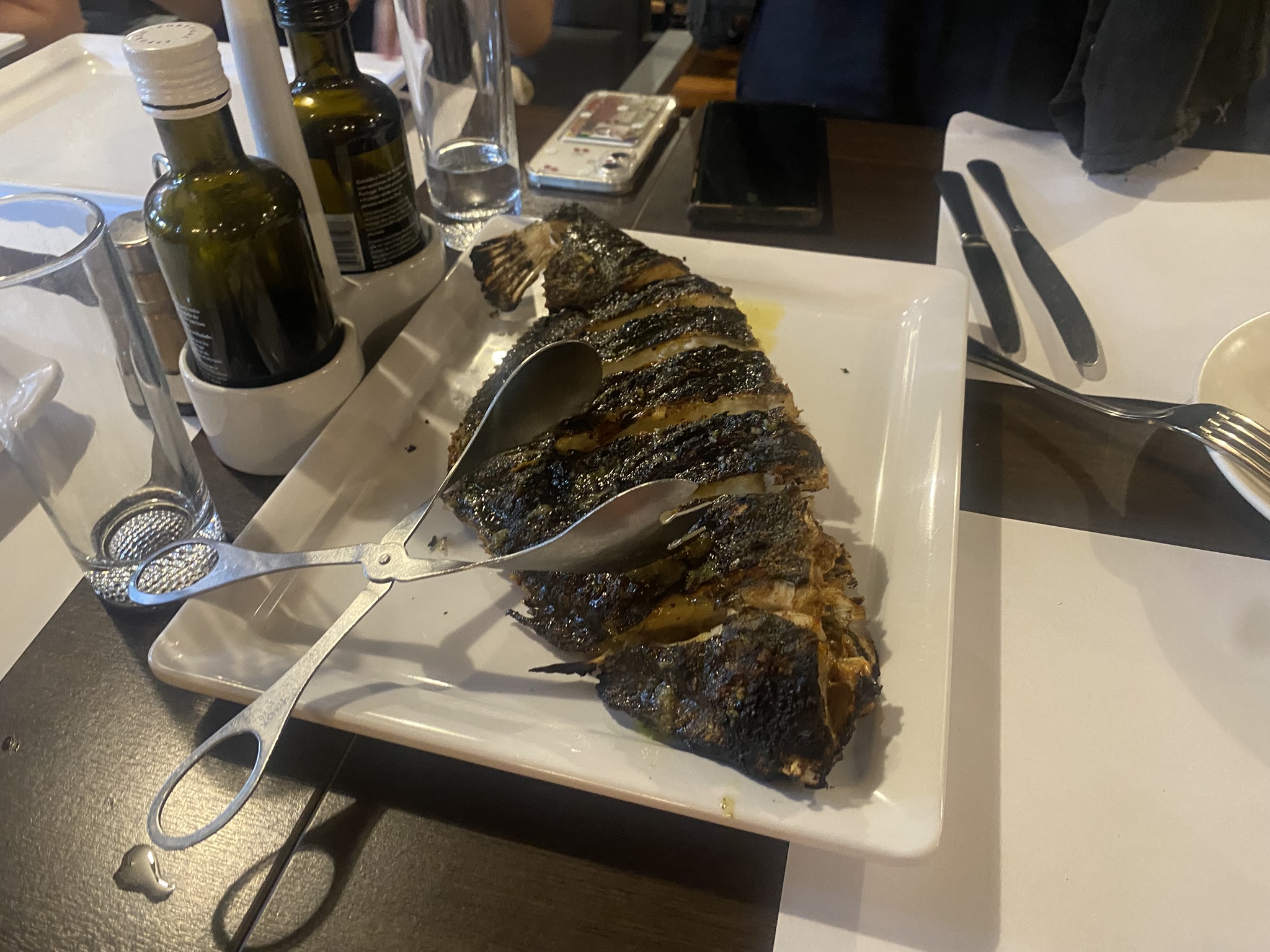
After an exhausting week of bouncing between two countries, I finally arrived and took the weekend to properly rest and recover. Like many tourist-heavy cities, prices here weren’t exactly cheap, and the local food scene didn’t leave much of an impression. I tried out a variety of restaurants, but to my surprise, my favorite meal came from the supermarket’s hot food counter. Honestly, it was quite good and I really loved it, but sadly no photos lol.
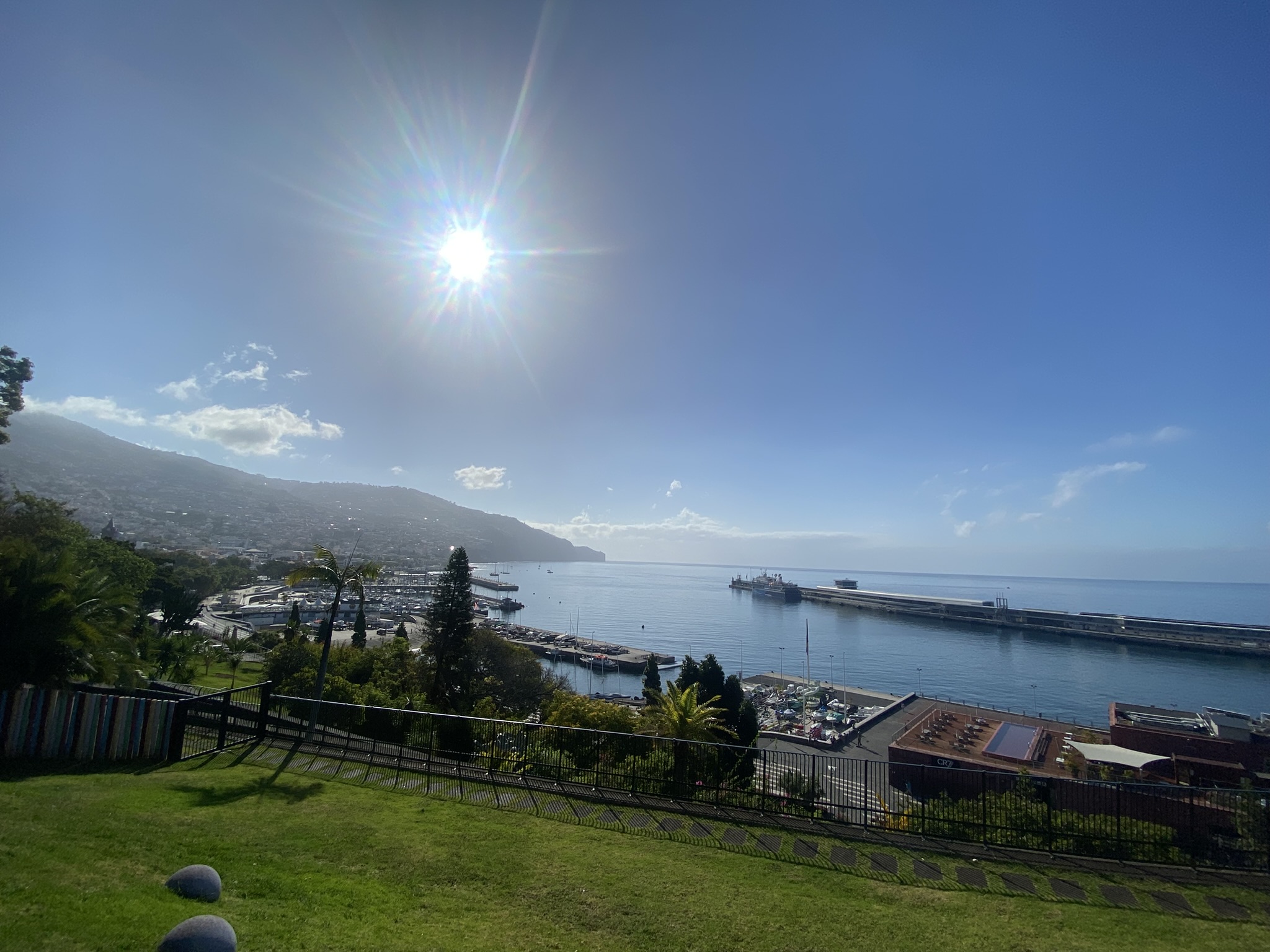
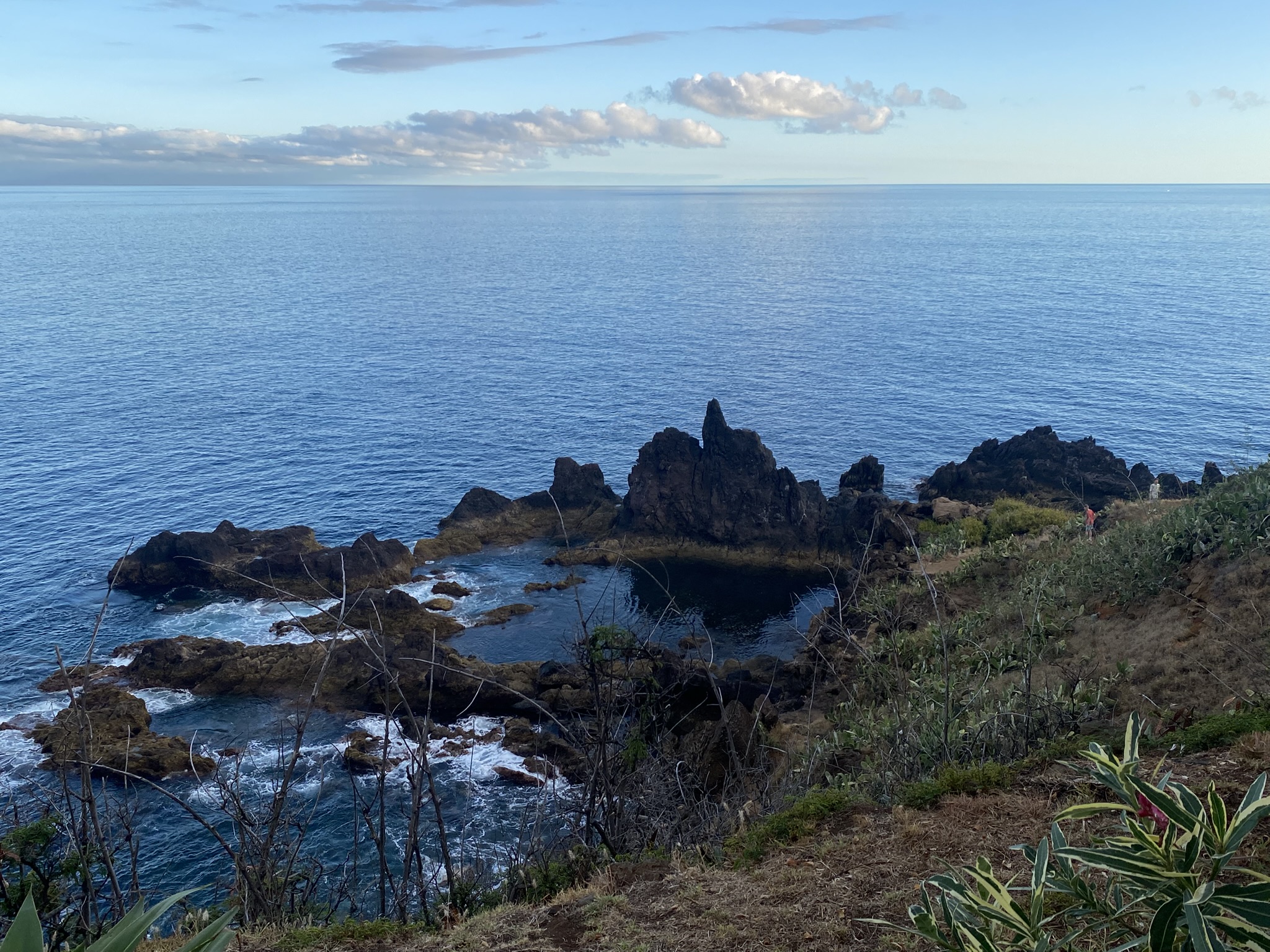
After hearing so much about the island’s rich travel offerings, I tried to set aside a day for a guided tour. Unfortunately, it was canceled at the last minute due to the guide falling ill, so I had to find an alternative. Just behind the conference venue was a small port, Cais de Cruzeiros. I took a quiet morning walk along the long coastline, all the while considering the only remaining option: joining a whale-watching trip offered on the island. Our guide, Fernando, was a local marine biologist. With her insightful explanations, we encountered Atlantic spotted dolphins and bottlenose dolphins: my first time seeing marine mammals up close. Although we didn’t spot any whales, I left feeling more than satisfied.
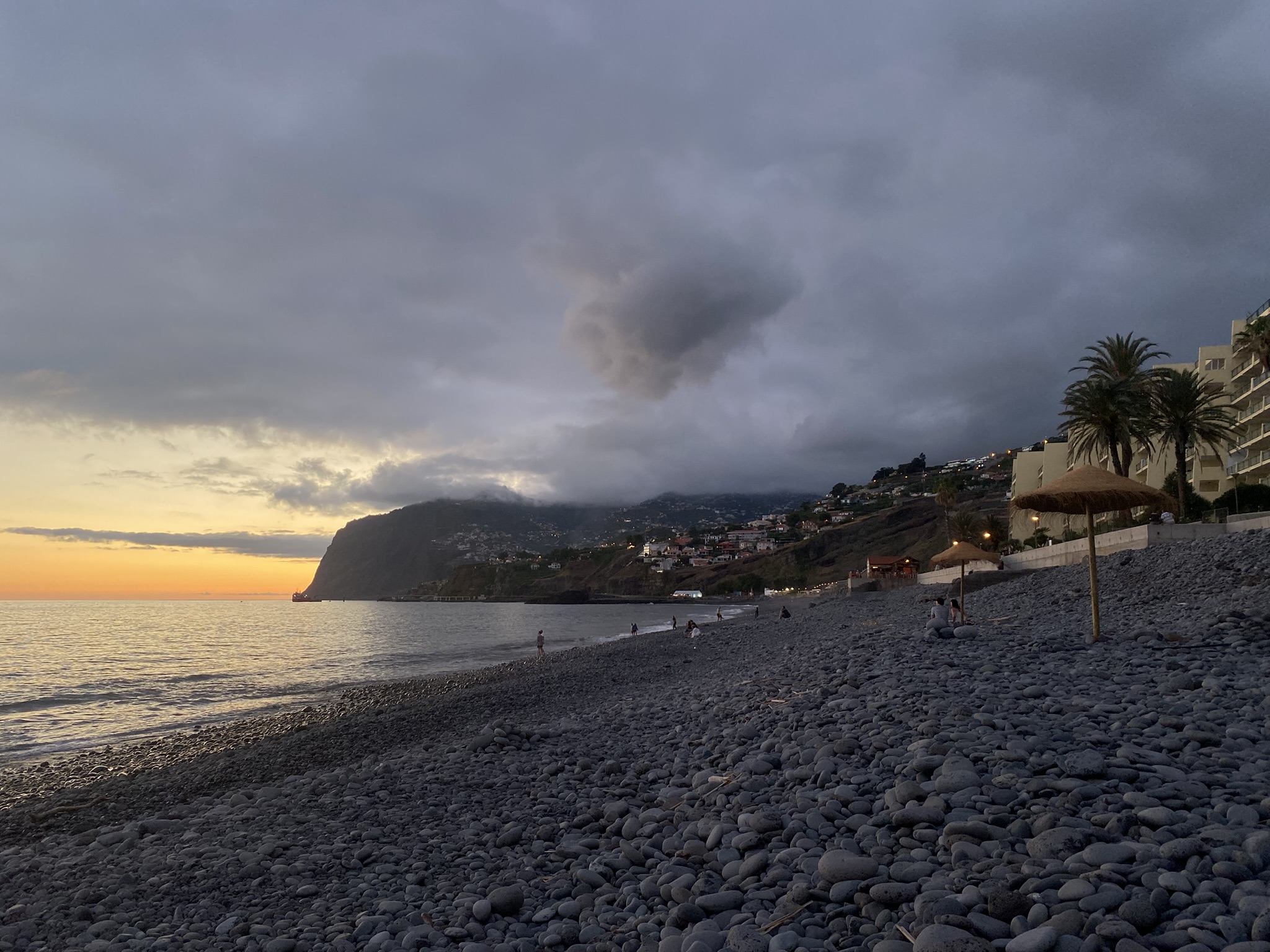
Most of my time during the conference was fully scheduled. But on the evening it ended, after dinner , I took a quiet walk along the Lido Promenade: a lively tourist area lined with hotels and resorts. At the end of a tunnel, the path opened up to a stony beach: Praia Formosa.
I sat on the giant pebbles, watching the sun slowly sink into the ocean. Mist began to drift over the mountain peaks of the island in the distance. And just like that, my short journey came to a quiet close.
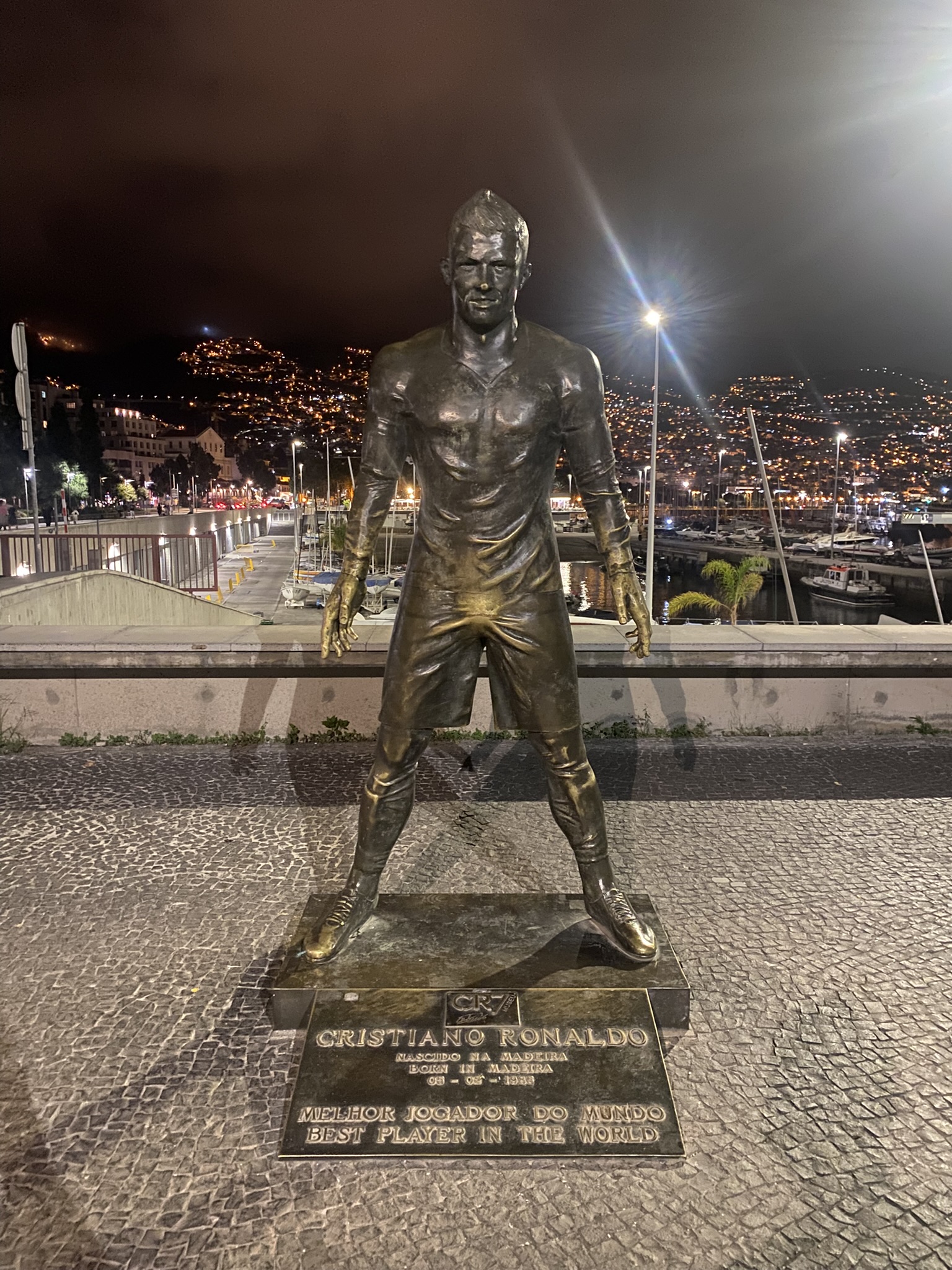
On my way back, I stopped by to visit the statue of Cristiano Ronaldo. As with statues everywhere, I noticed the same curious phenomenon: the private parts had been rubbed so much by tourists that they gleamed with wear. A strange but universal human quirk, it seems.
The Conference
As one of the conference volunteers, I got the chance to meet many new friends. Although some of the task assignments and activity planning felt a bit last-minute, the local students were incredibly warm and managed everything with impressive efficiency.
While my main purpose for attending was to “market myself” for next year’s PhD applications, what really mattered was connecting with fellow early-career researchers. I reconnected with many friends I met at last year’s C&C, and through them, got to know even more attendees. Even though I’ve already graduated and was the only one from CMU’s School of Design, I was quickly embraced by the HCII crowd and joined in their group activities, so I never felt alone.
I also ran into a few familiar faces from Computational Design, formally met Jieyu from the previous cohort, and even bumped into a old alum who’s now a professor at the University of Maryland. What surprised me, though, was how I wasn’t able to blend into the broader Chinese student circles. I tried initiating conversations, but most responses were either politely distant or clearly avoidant.
With my "introvert index” maxed out, I made efforts to socialize and meet new people. While I didn’t find anyone whose research closely aligned with mine, I did spot a few points of resonance in the work of some professors. Still, identifying a truly fitting research match remains hard.
I also attended an unofficial event called Pirate DIS, which offered a platform for researchers to present work that had been rejected from the main conference. As I expected, most of the projects were either fascinating or genuinely meaningful. Just goes to show,conference reviewing really can be quite a roll of the dice...
One unexpected highlight was learning about the strong HCI presence in Southern Europe. Both the hosting institutions, University of Lisbon and University of Madeira, as well as the Italian researcher I met at the banquet, are part of active, well-established HCI research groups. It made me realize how much my language limitations, and my US-focused perspective, might have kept me from discovering valuable work happening elsewhere. Strangely, if these researchers were relevant to my interests, I should have come across their papers before, but somehow, I hadn’t.
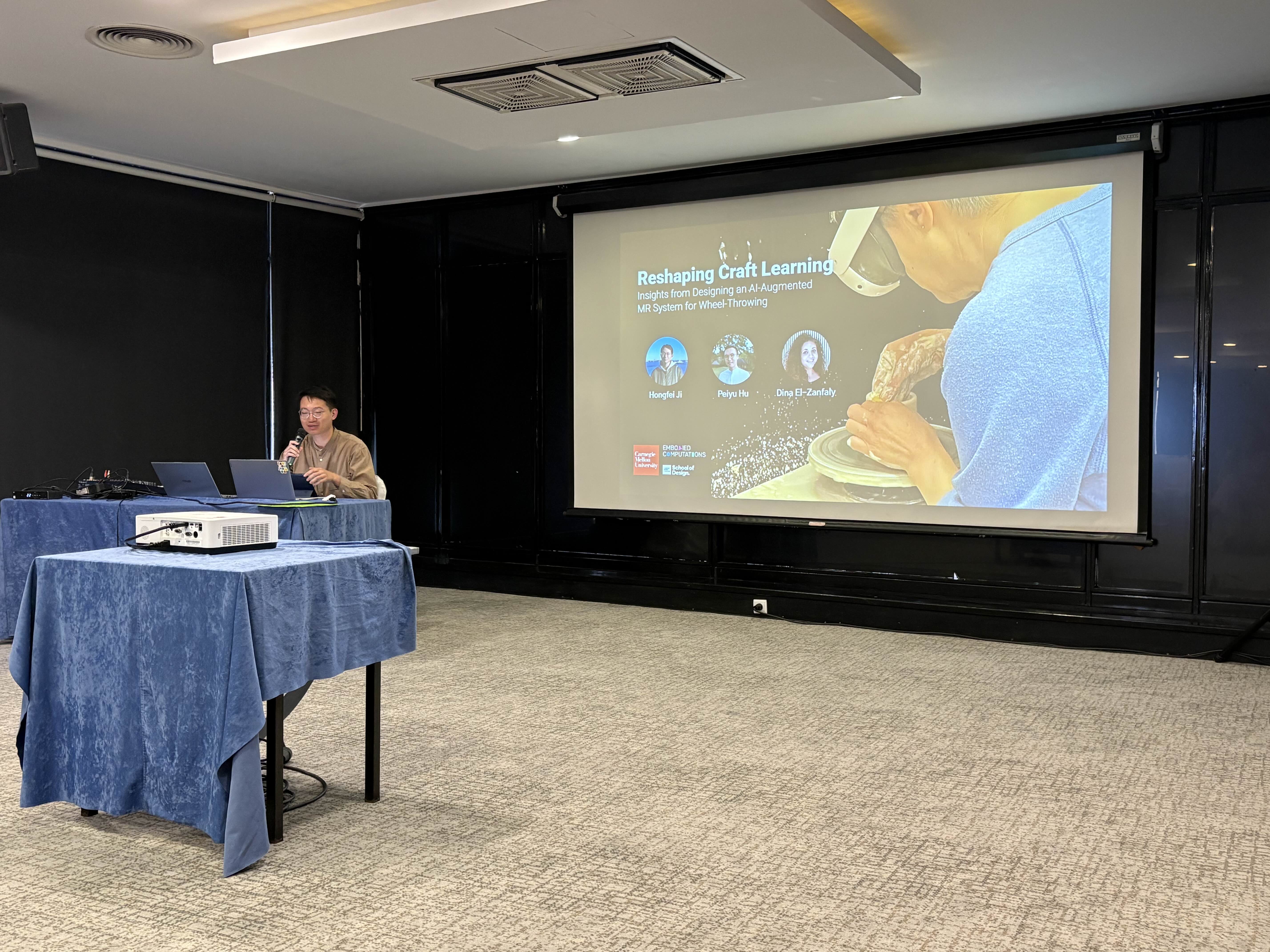
And finally, the main goal of my trip: I gave my first conference talk. After countless back-and-forths with Dina, I managed to deliver a talk that went relatively smoothly and left me feeling pretty satisfied. I’m not sure if I’ll have another chance to relive that moment, but hey, I’ve now published at a top-tier conference and stepped onto the academic stage. That counts for something, right? lol
Some thoughts
A friend recommended that I try some of the island’s tropical fruits. But honestly,whether it was papaya, cherimoya, or even the highly praised local bananas,they just didn’t taste as good as the ones back home. Despite the pleasant climate, the latitude isn’t truly tropical, and without intense heat, the fruits don’t develop the same sweetness or richness. I also tried monstera fruit, which had a distinct fragrance, but the texture was mushy, the taste bland, and the spiky bits made it painful to eat. There’s a reason it never became a mainstream fruit.
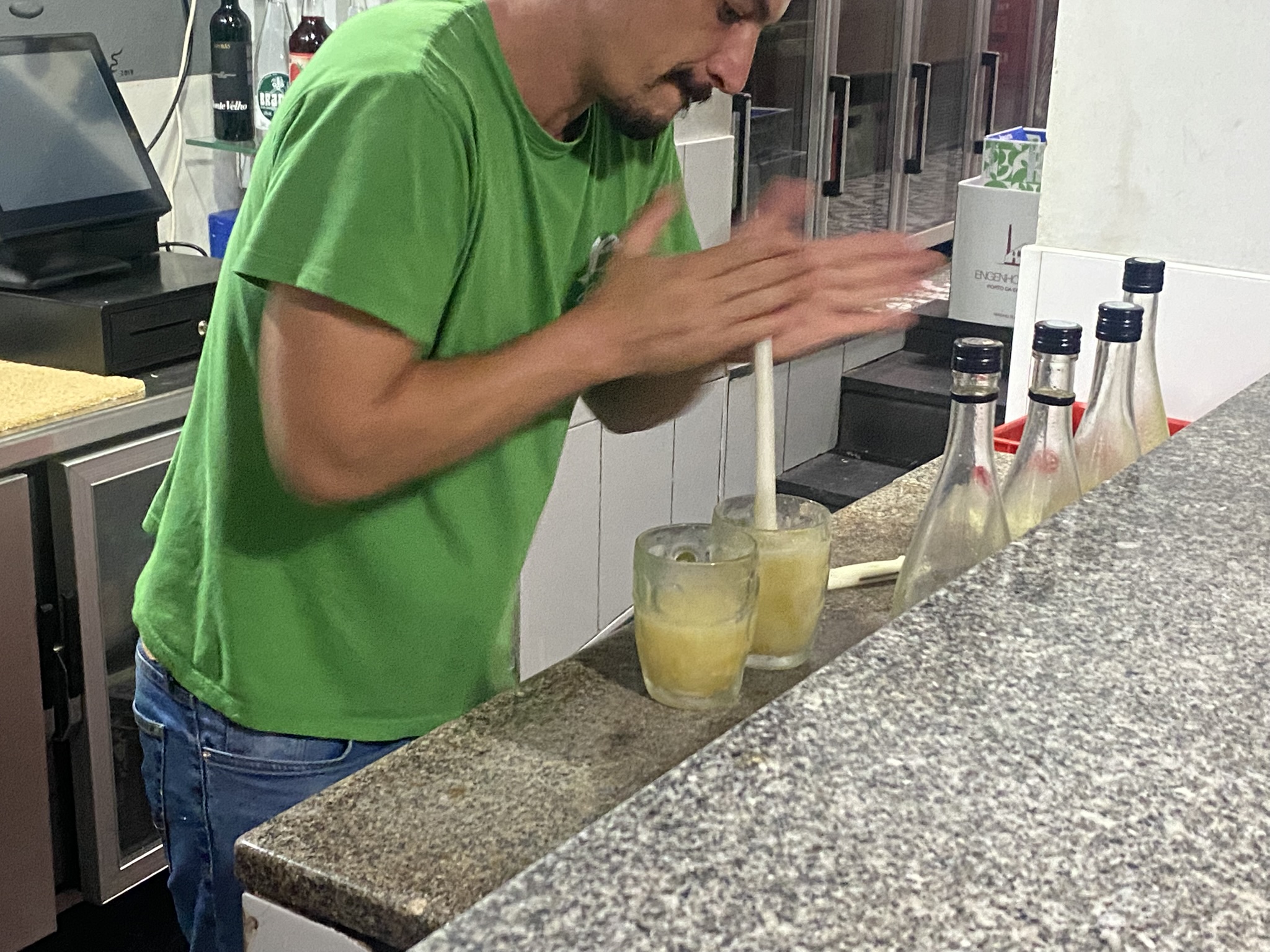
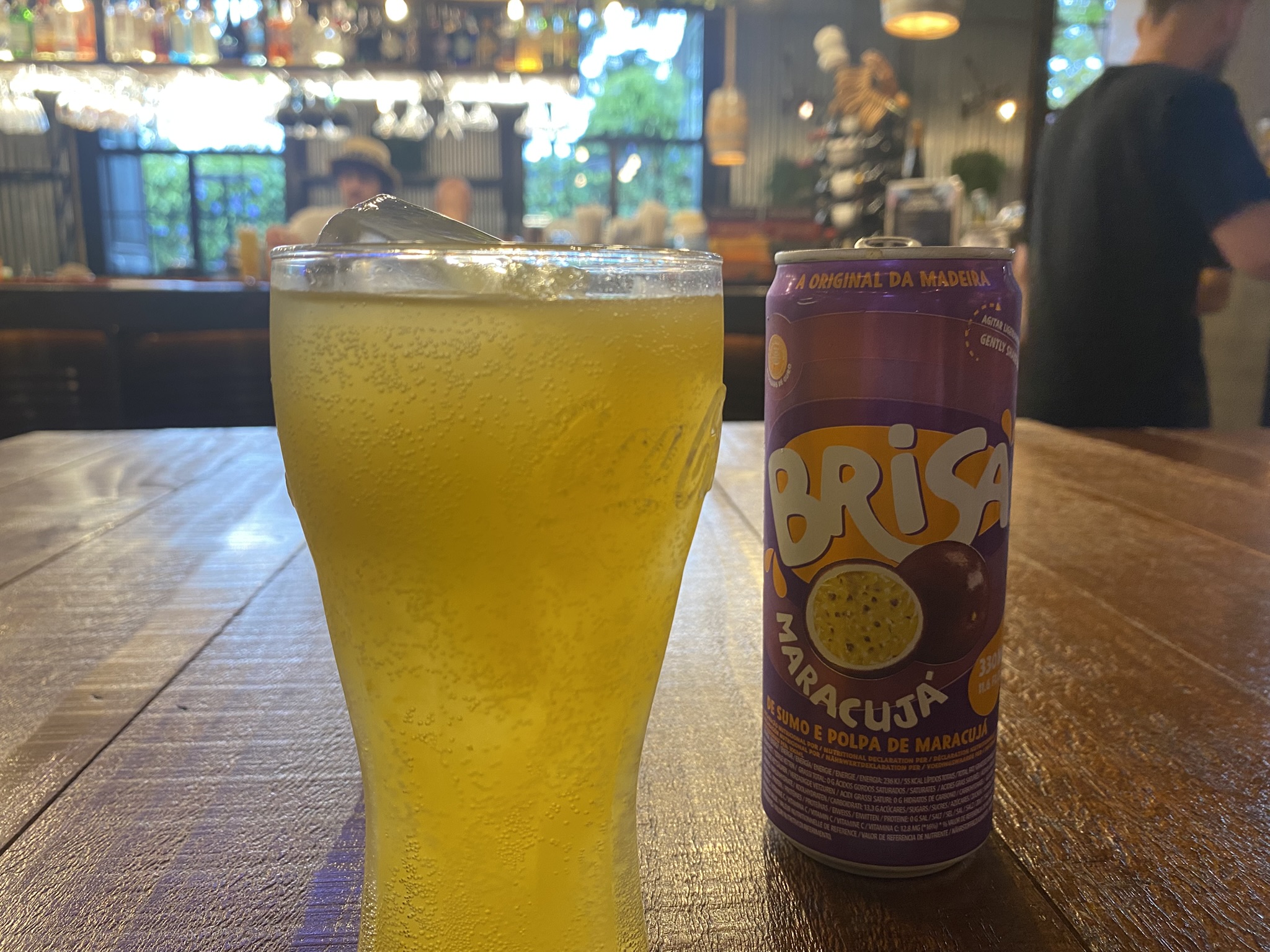
I’ve lost count of how many times I drank Poncha and Brisa. Poncha is a local alcoholic drink made from lemon, orange, or passionfruit juice, mixed with sugar syrup and rum. Brisa is a fizzy passionfruit soda. Since I’m not much of a drinker, Poncha didn’t really appeal to me, but Brisa was as good as they say.
I also picked up some cookies from a local bakery: Fábrica Santo Antonio, that local friends recommended, planning to bring them back as souvenirs. Unfortunately, I didn’t try them before buying. One batch turned out to be quite decent... the other, not so much. To those who received the wrong box: my deepest condolence.
Interestingly, there was an Evangelism conference happening at the exact same time and venue. Nuns were constantly passing by. Considering the size and visibility of the DIS Queer Community, I couldn’t help but wonder what their reactions would be if they found out what we are lol.
I also had a lovely conversation with the wife of one of the attendees. She’s Hungarian, currently based in London with her husband who’s doing his Ph.D. there, though they usually live in Paris. She works as a fashion magazine editor and travels a lot. Since Madeira is such a popular vacation destination, they turned the conference into their annual holiday.
Finally, I managed to take care of something small but meaningful: sending gifts to the professors who wrote me recommendation letters. I thought mailing things to the US. from here would be a pain, but it turned out to be much easier than expected. The postal staff were efficient, familiar with the process, and could communicate in basic English. I guess they’re used to dealing with tourists!