Porto
2025-07-03
I left Madrid and landed in Porto early in the morning. As Portugal’s second-largest city, Porto has only a few hundred thousand residents, yet its airport felt disproportionately large. Until that moment, I knew almost nothing about the city, but I was starting to realize it must be a major tourist destination.
Surprisingly, this small city has several metro lines. I took one into town and arrived at my accommodation. The city center is a historic seaside village: its architecture simple and weathered, nestled between hills and water.
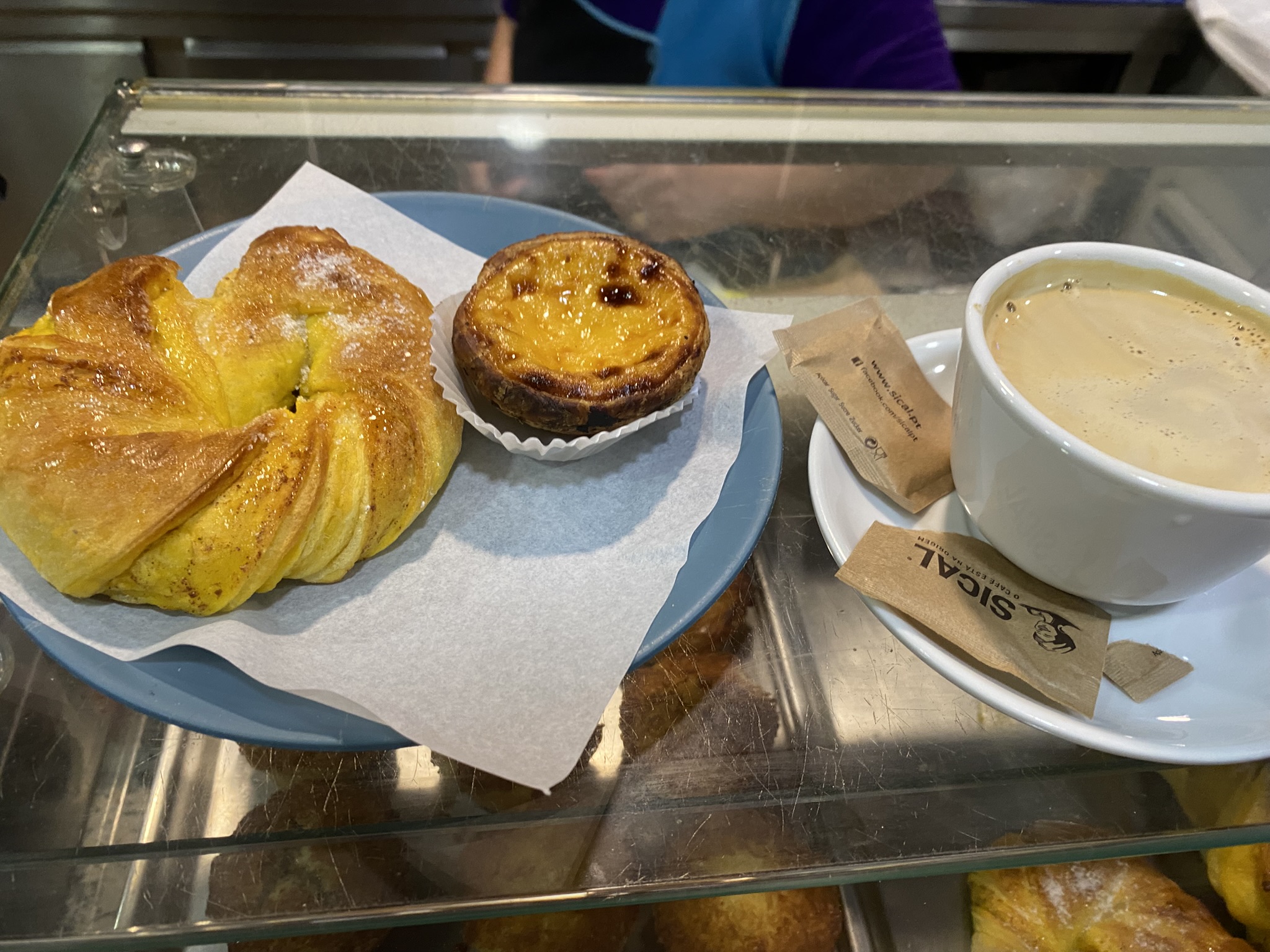
After dropping off my bags, I was IMMEDIATELY lured into a small bakery by the irresistible smell of fresh bread. It turned out to be an authentic local breakfast spot, so authentic that no one seemed to speak English. I stood there confused, unsure how to order, until a group of policemen who happened to be eating there stepped in to help. Other customers also kindly pitched in to walk me through the process.
I ended up eating at the counter, standing like the locals. The food wasn’t particularly amazing, but the experience: the confusion, the smells, the kindness, was rare and unforgettable. And maybe that’s what travel is really about for me: moments of unfamiliarity softened by unexpected warmth.
Since I only had one day in Porto, I set off right after breakfast for a self-planned pilgrimage to visit the works of Álvaro Siza. My sole impression of the city before arriving had been shaped by his legacy: Siza was born, educated, and practiced here, leaving behind many of his most iconic projects. Among them was the very first architectural case study I encountered as a student: the Casa de Chá da Boa Nova.
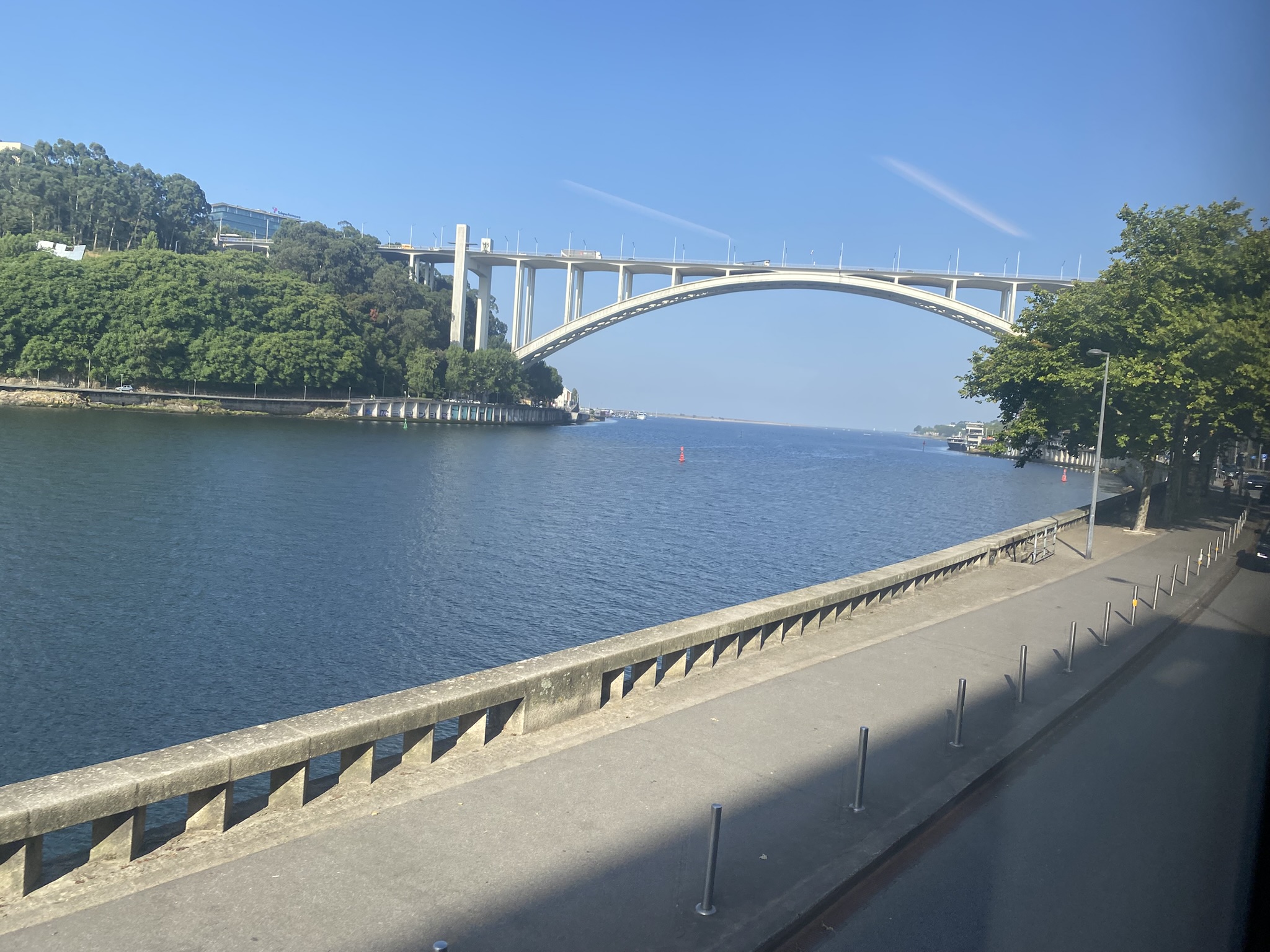
The destination was about an hour away from where I was staying. I boarded a double-decker sightseeing bus that cruised along the riverside and coastline, offering sweeping views of quaint towns, a majestic bridge spanning the river, and the vast, open Atlantic Ocean.
Even though it was a weekday, the bus was filled with children carrying water sports gear, apparently off on a school field trip. Their energy added a playful, carefree rhythm to the journey.
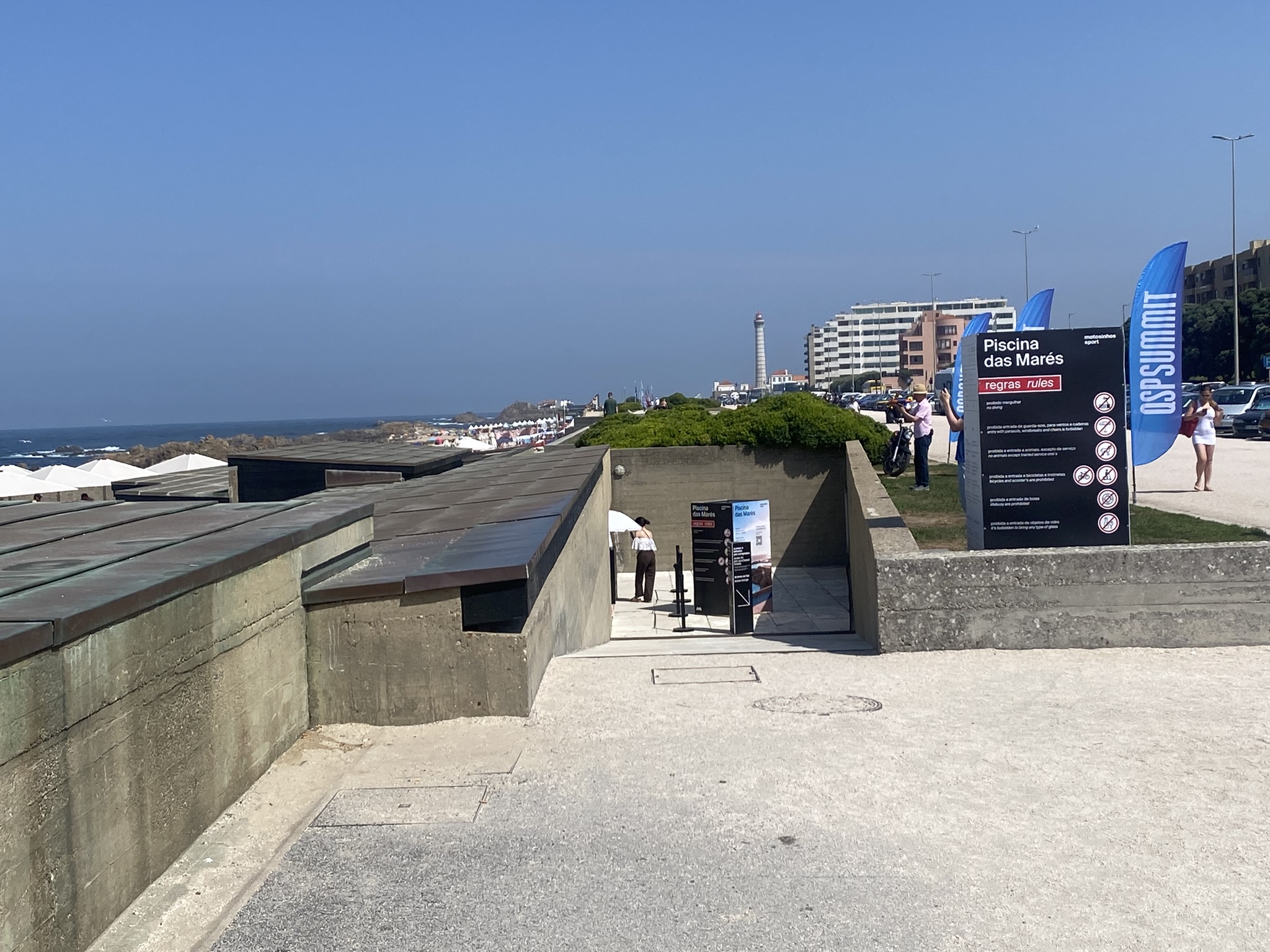
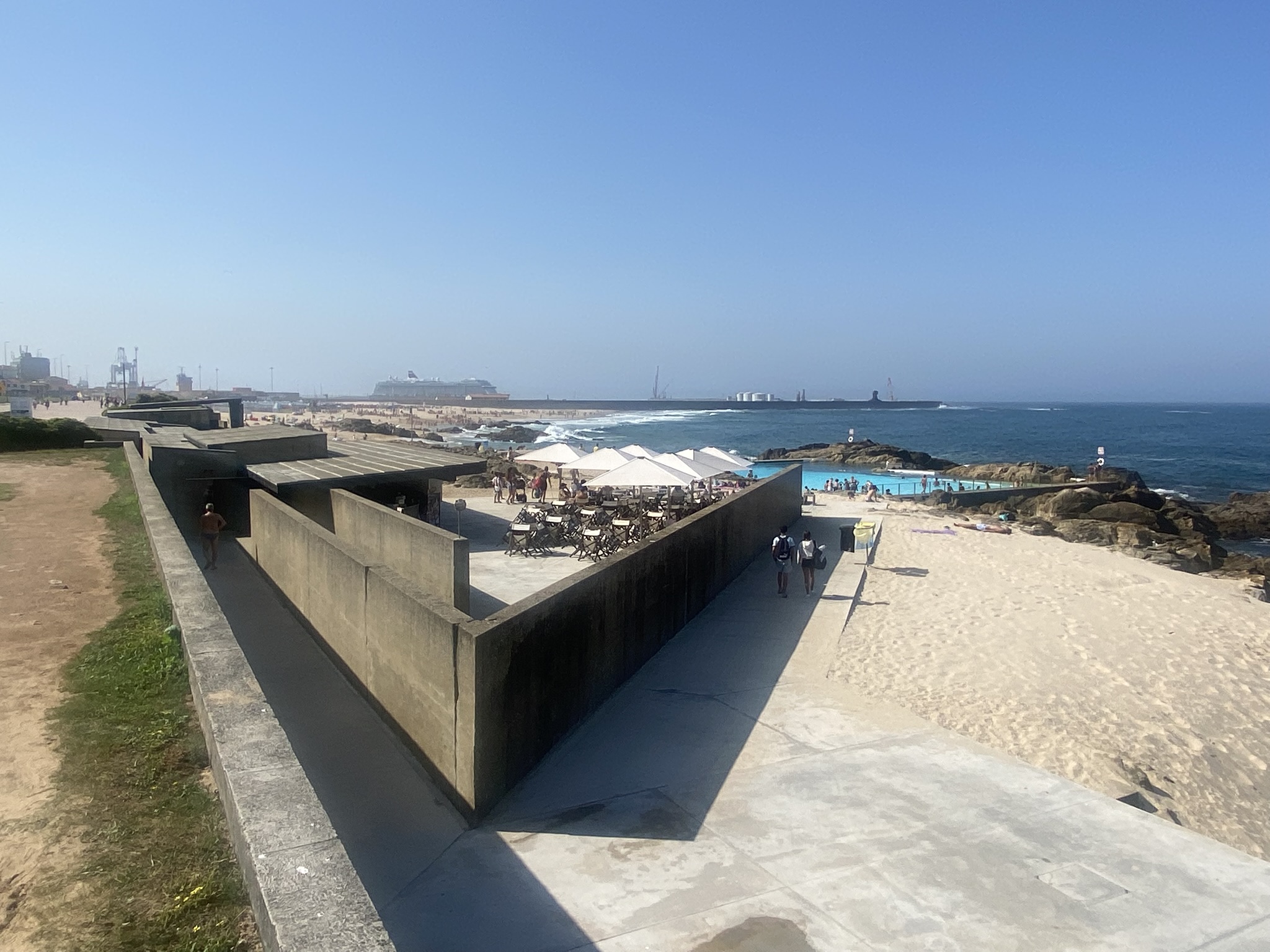
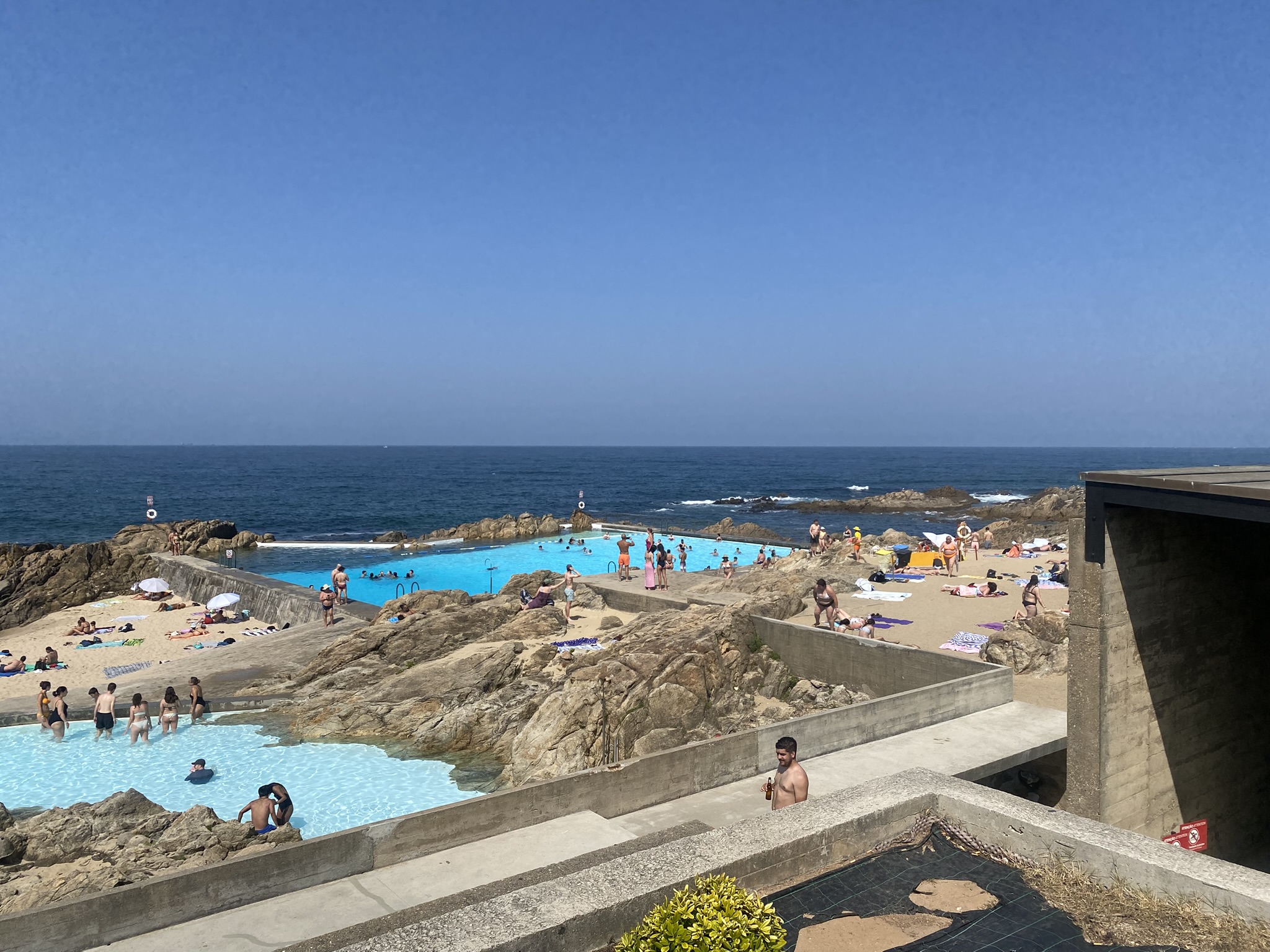
After getting off at the stop near my destination, I walked along the coast and soon passed by Piscina das Marés. I had always thought of it simply as a man-made pool by the sea, but seeing it in person completely reframed my impression. The true brilliance lies not in the pool itself, but in the carefully choreographed sequence: from the entrance and changing rooms to the internal views of the pool. That spatial rhythm, that subtle unfolding of experience, is exactly what defines Siza’s architecture. It was a bit of a shame I hadn’t brought swimwear. Otherwise, I could have gone inside to explore it more fully.
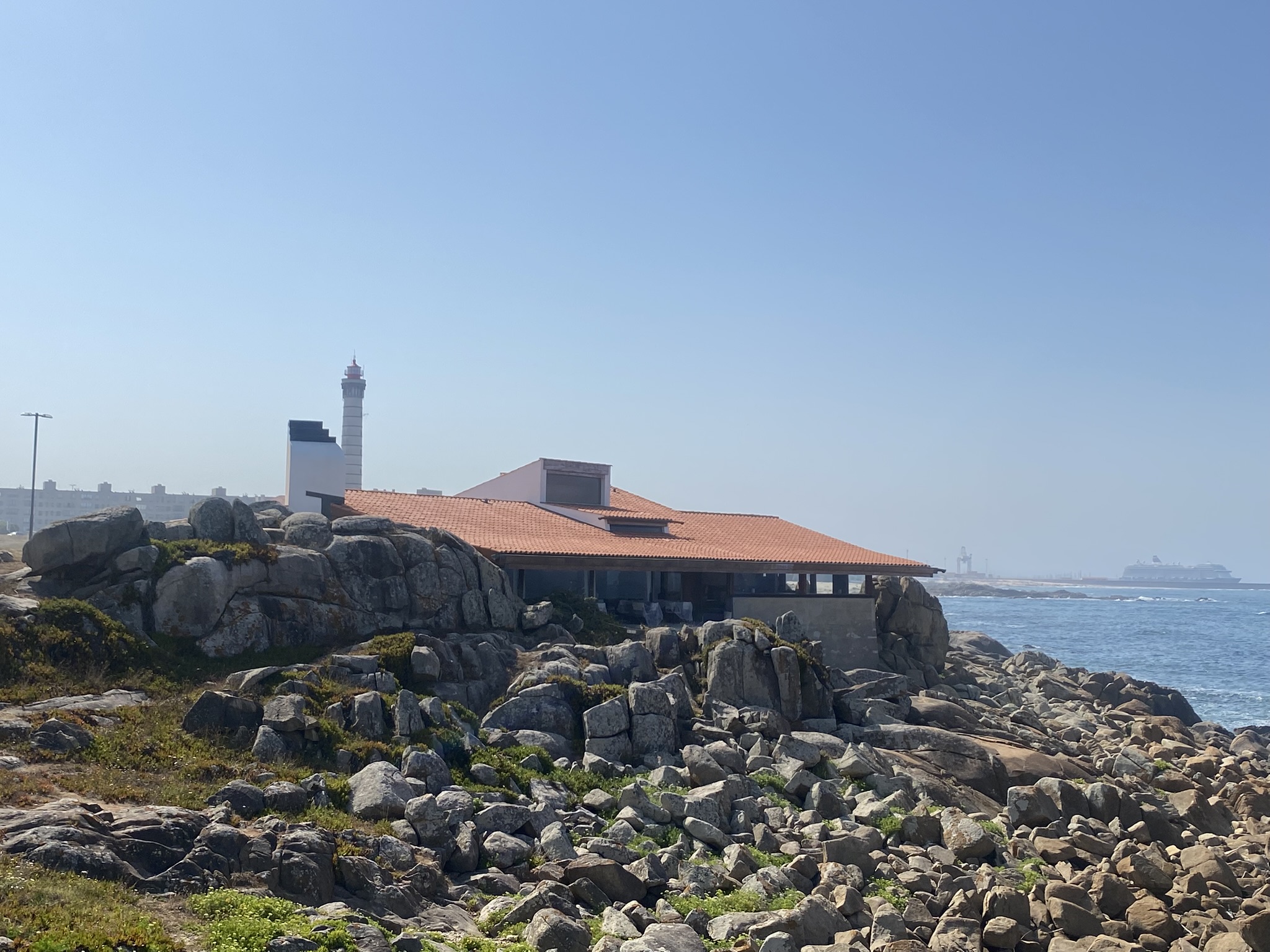
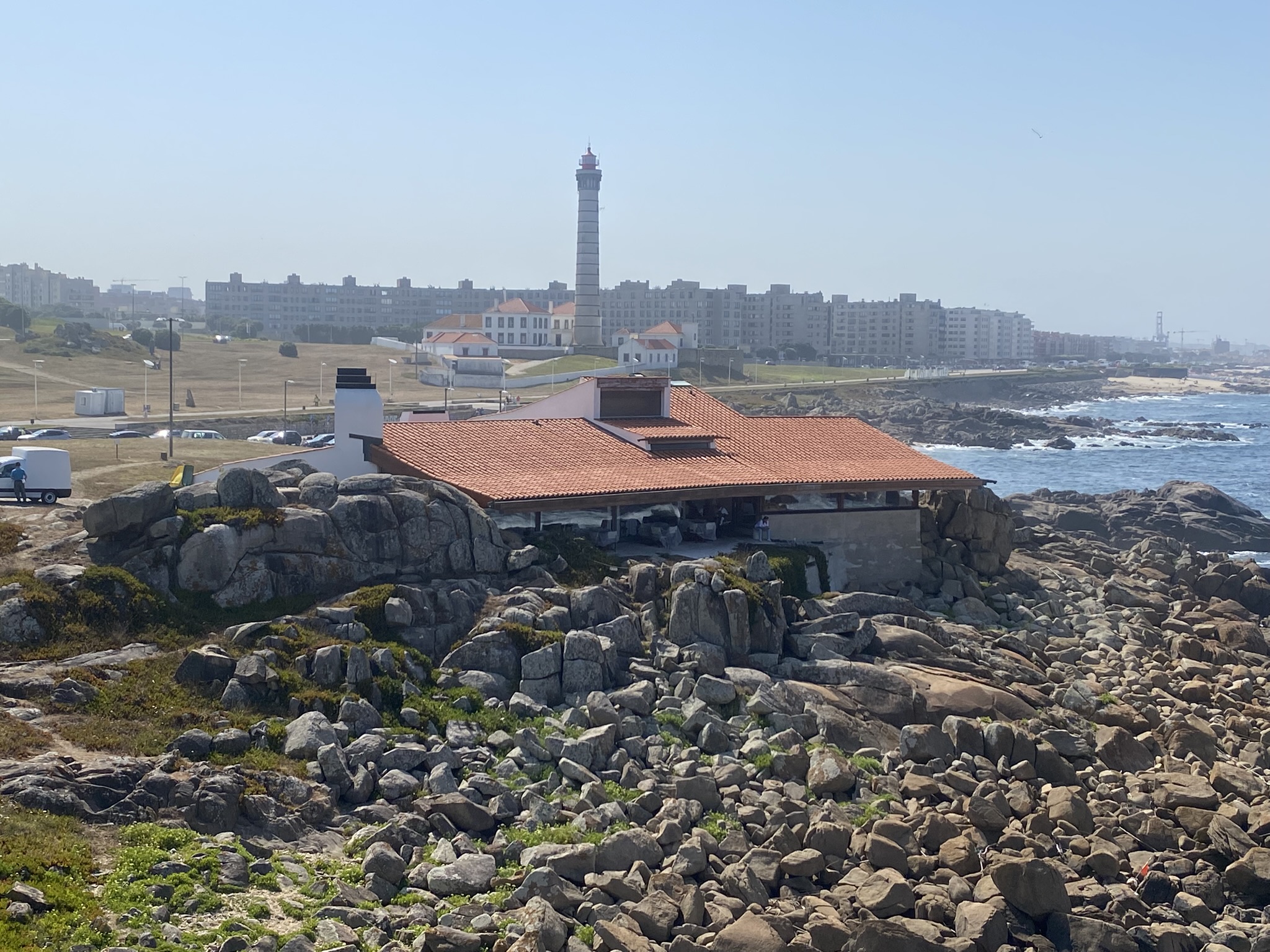
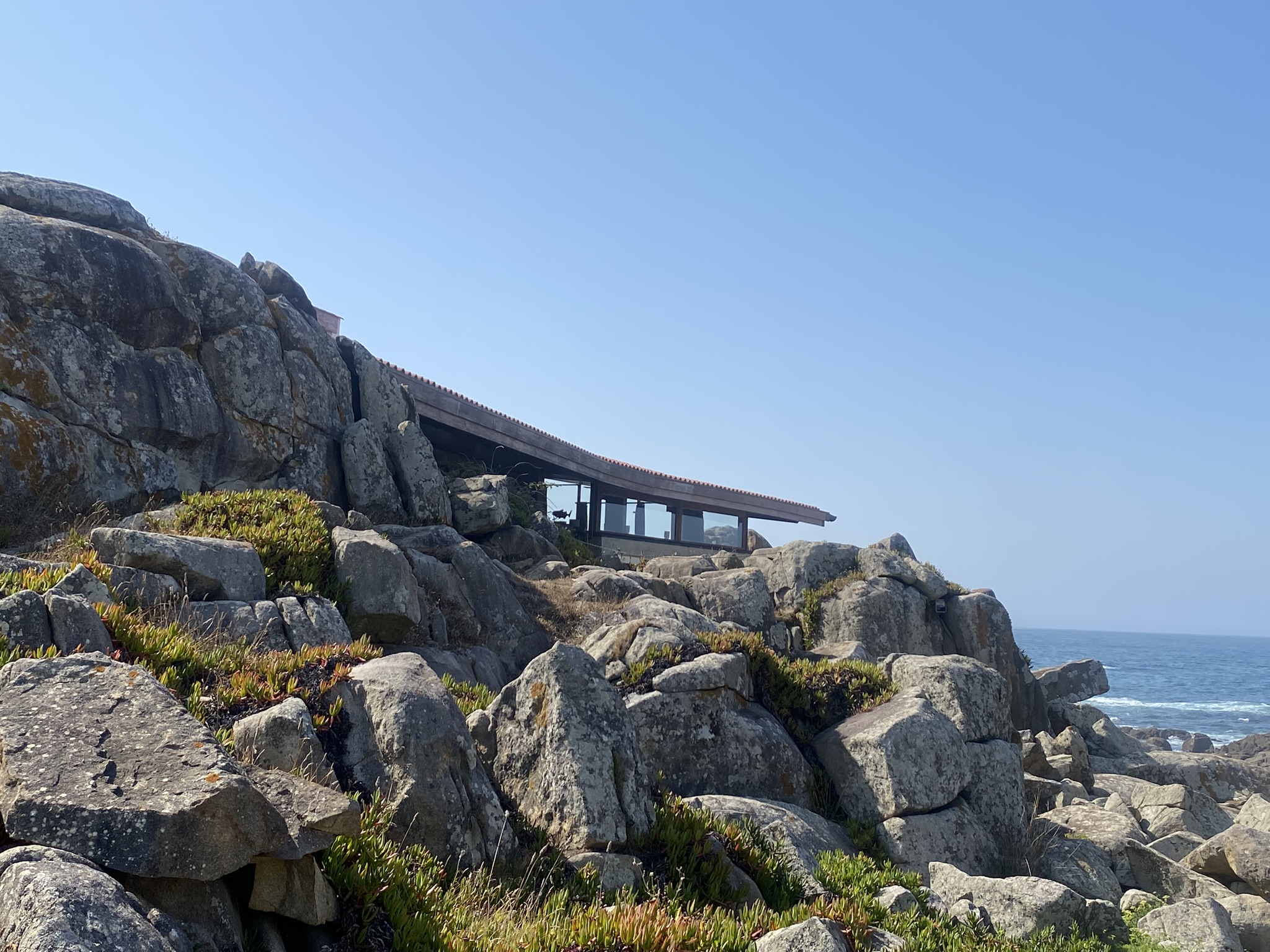
Continuing along the coast, I finally arrived at Casa de Chá da Boa Nova. It looked exactly as I had studied in architectural casebooks, yet standing before it in person, perched on the rocks, framed by the vast Atlantic. It felt even more harmoniously embedded in the landscape. The architecture didn’t just sit in nature; it belonged to it. The building has since been converted into a Michelin-starred restaurant. Sadly, with my current budget, I couldn’t afford to dine there. So I admired it from the outside, hoping one day I’ll return to experience the interior as well.
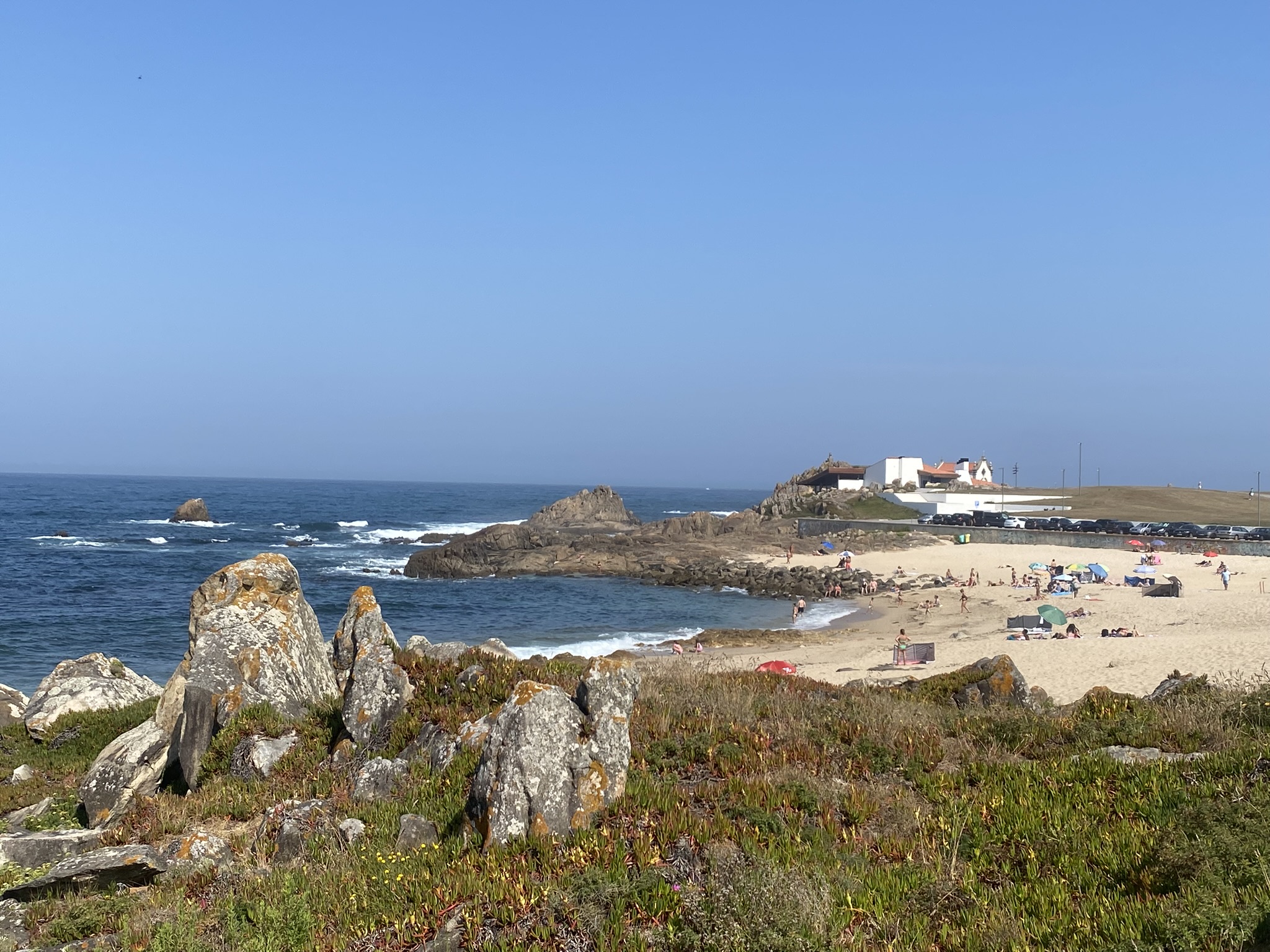
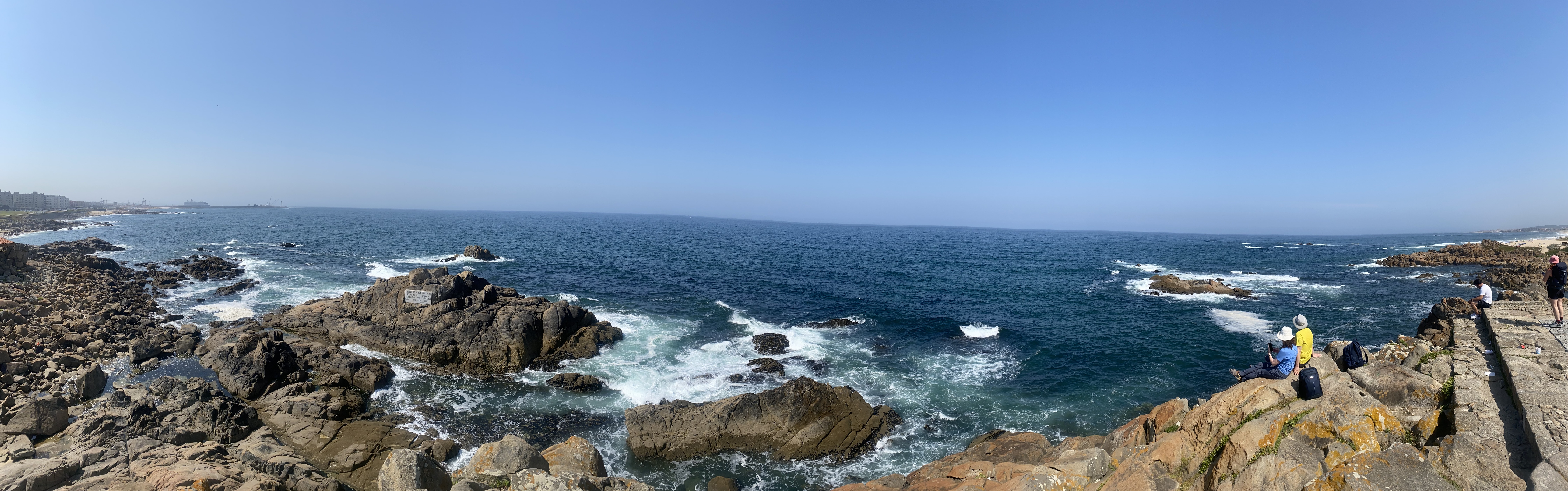
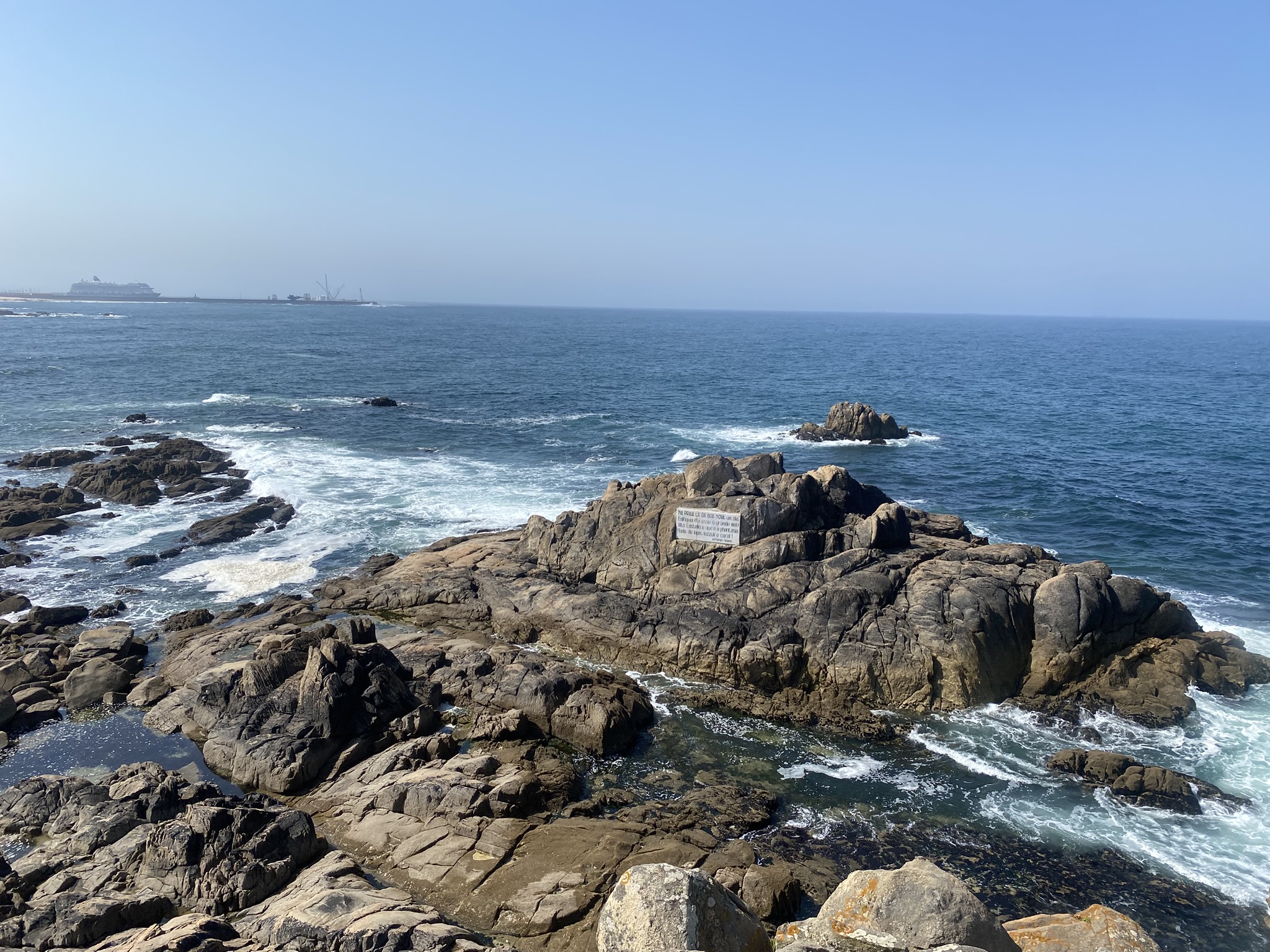
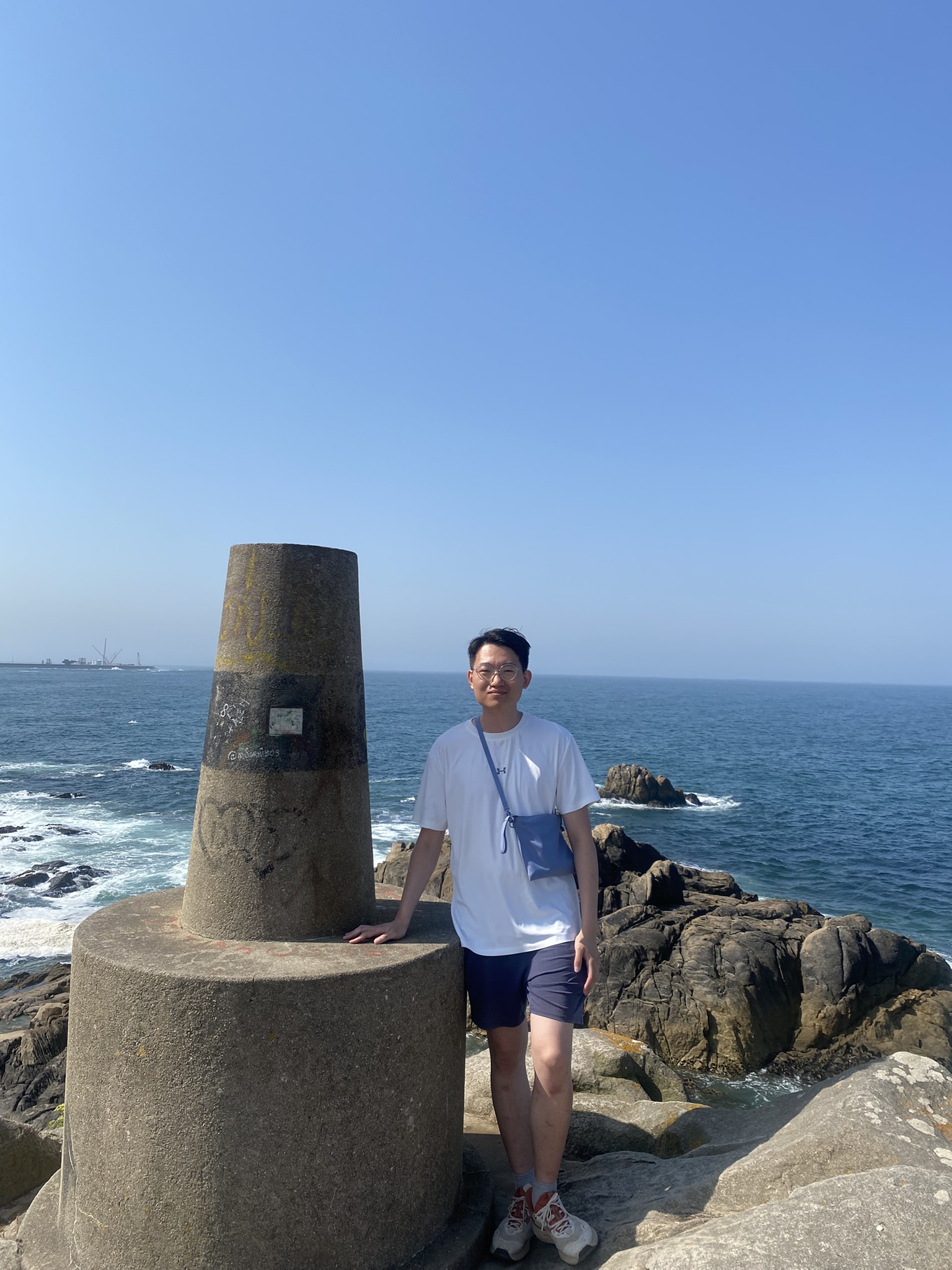
Next to the tea house stood a small chapel and a lookout point perched above the coastline. Although there were patches of sandy beach nearby, what truly suited the deep blue Atlantic were the jagged basalt rocks. Waves crashed relentlessly against them, sending white spray into the air, flashing bright in the sun. Compared to the tropical seas often found in postcards, I find this kind of raw, dramatic coastline far more compelling. I asked a passerby to take a photo of me on the overlook, standing above the endless deep sea. It was a moment that truly deserved to be remembered.
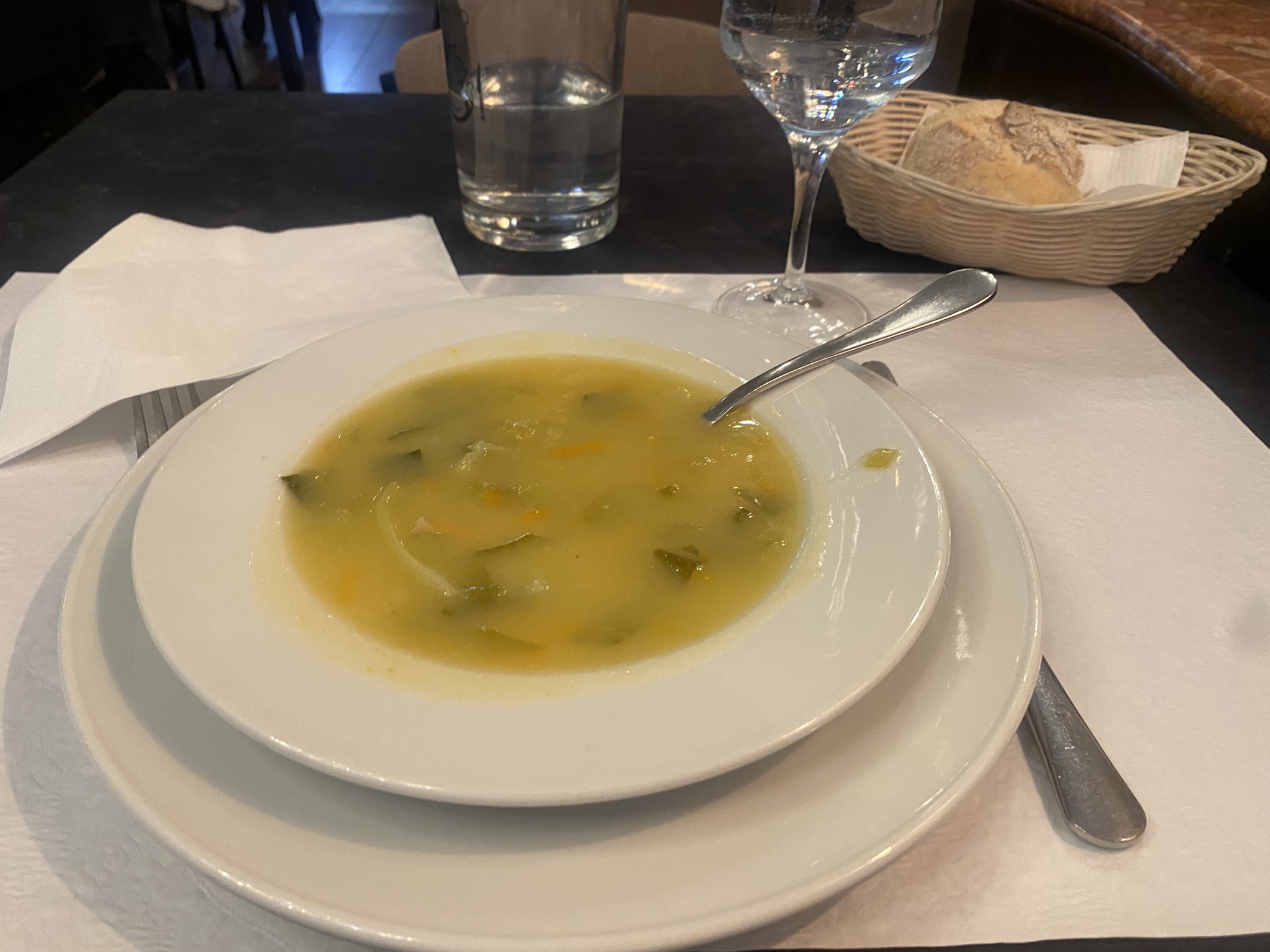
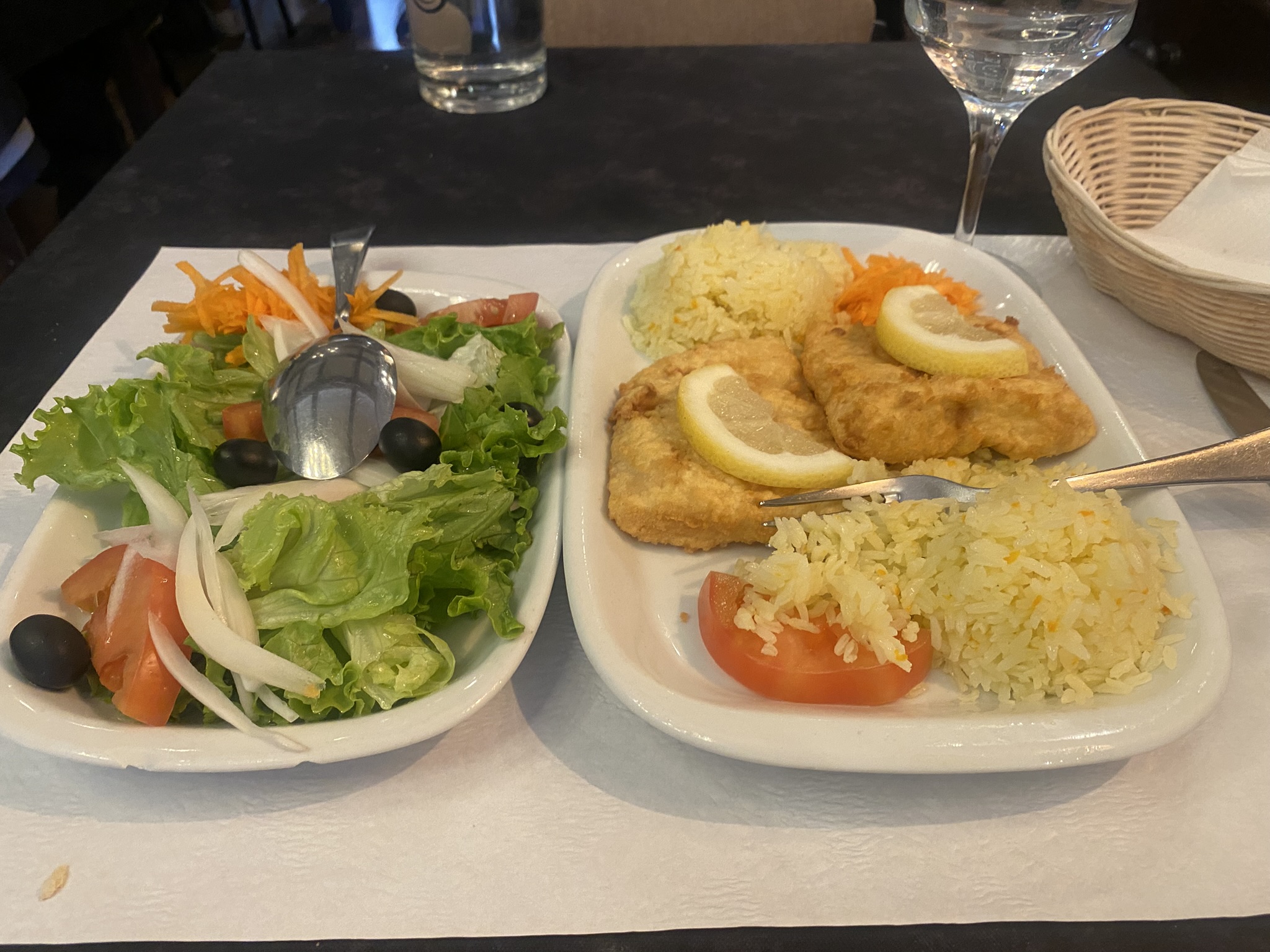
After a short rest back at my accommodation, I set out to find a place for lunch. I ended up at a restaurant called Augusto, conveniently located near my next destination. It had great reviews on Google Maps, but to be honest, the food was... painfully average.
I used to think the Portuguese food I had in Macau was just a tourist trap, but this trip has made me suspect that maybe Portuguese cuisine simply isn’t that bold in flavor to begin with. That said, this meal still offered a glimpse into the everyday Portuguese diet.
It started with a bowl of vegetable soup that tasted like someone had taken a hearty Northeast China stew and blended it into a smooth purée. Oddly enough, it was really good, especially comforting as I began to feel the early symptoms of a cold creeping in.
Then came the main dish: a massive plate piled high with assorted meats, salad, and rice. The rice was slightly undercooked, and the flavors across the board were pretty muted, but the portion size was so enormous it managed to shock even me, someone who grew up in a region known for generous servings.
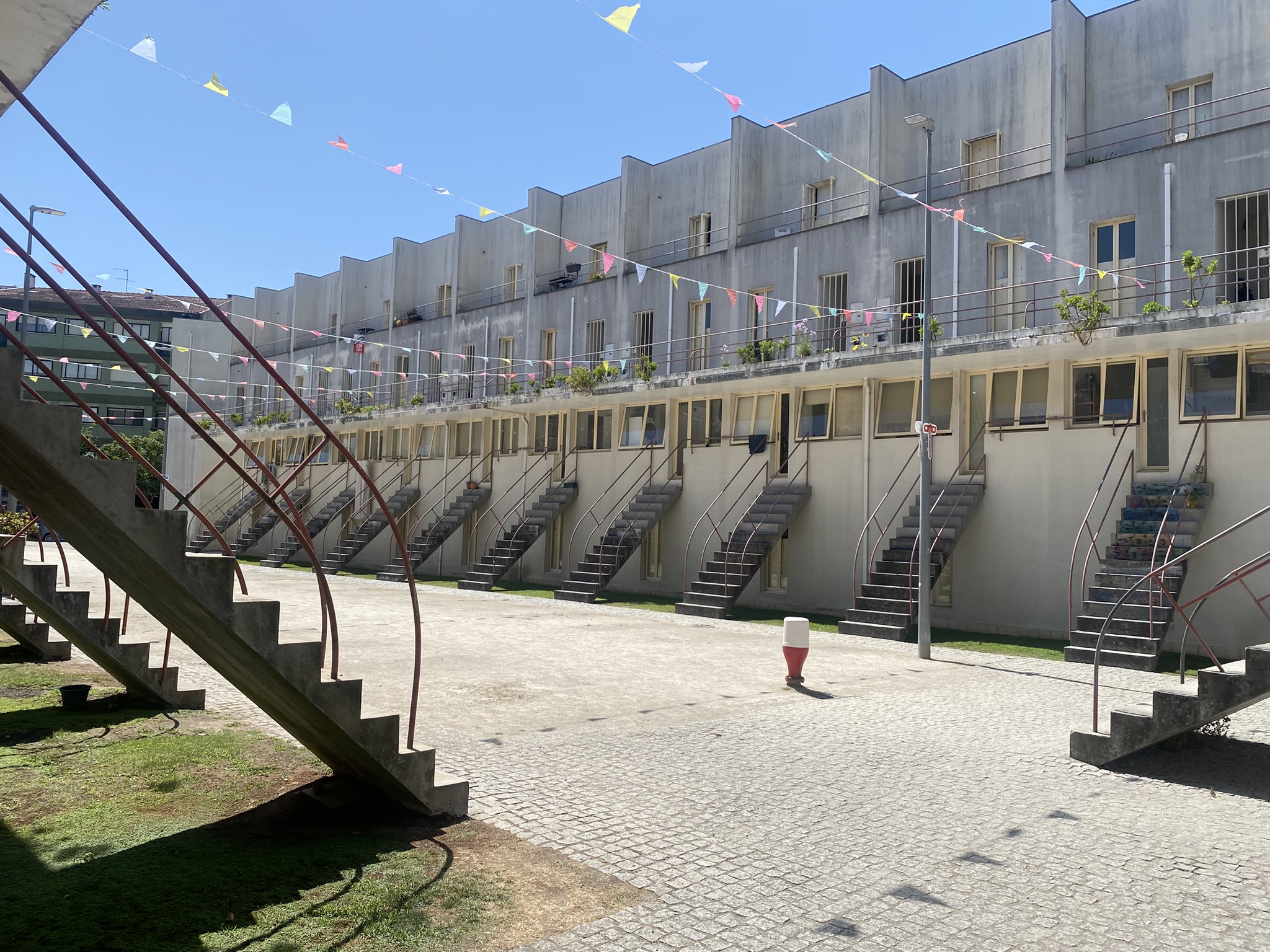
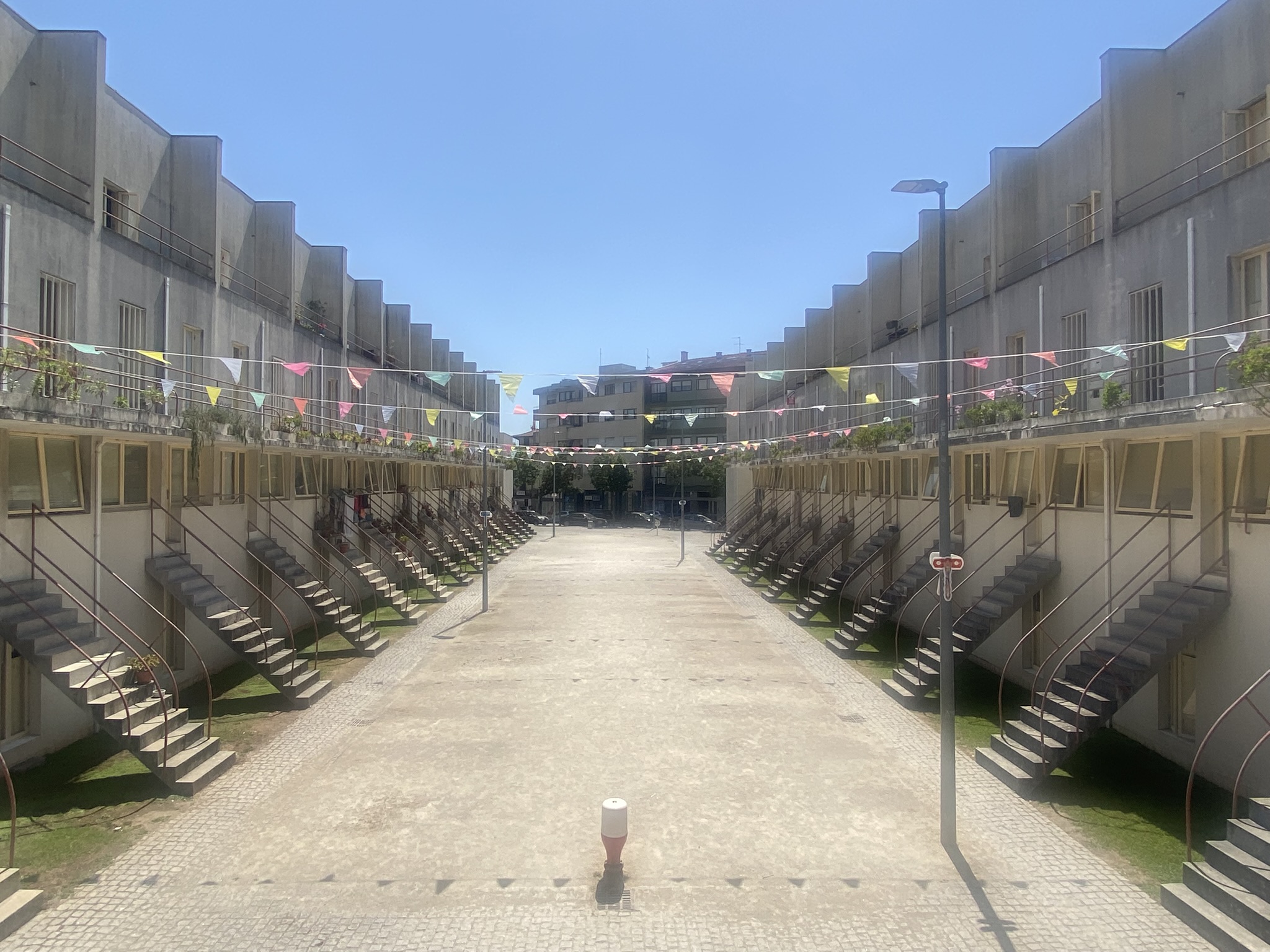
After lunch, I visited the Bouça Housing Complex, a social housing project designed by Siza. Rows of studio-type townhouses stretch in parallel lines, with two main buildings creating a long, narrow communal courtyard in between. But under the blazing summer sun, the courtyard stood completely empty. Not a soul in sight. The heat had driven everyone indoors, and the space, while thoughtfully designed, felt unusually still.
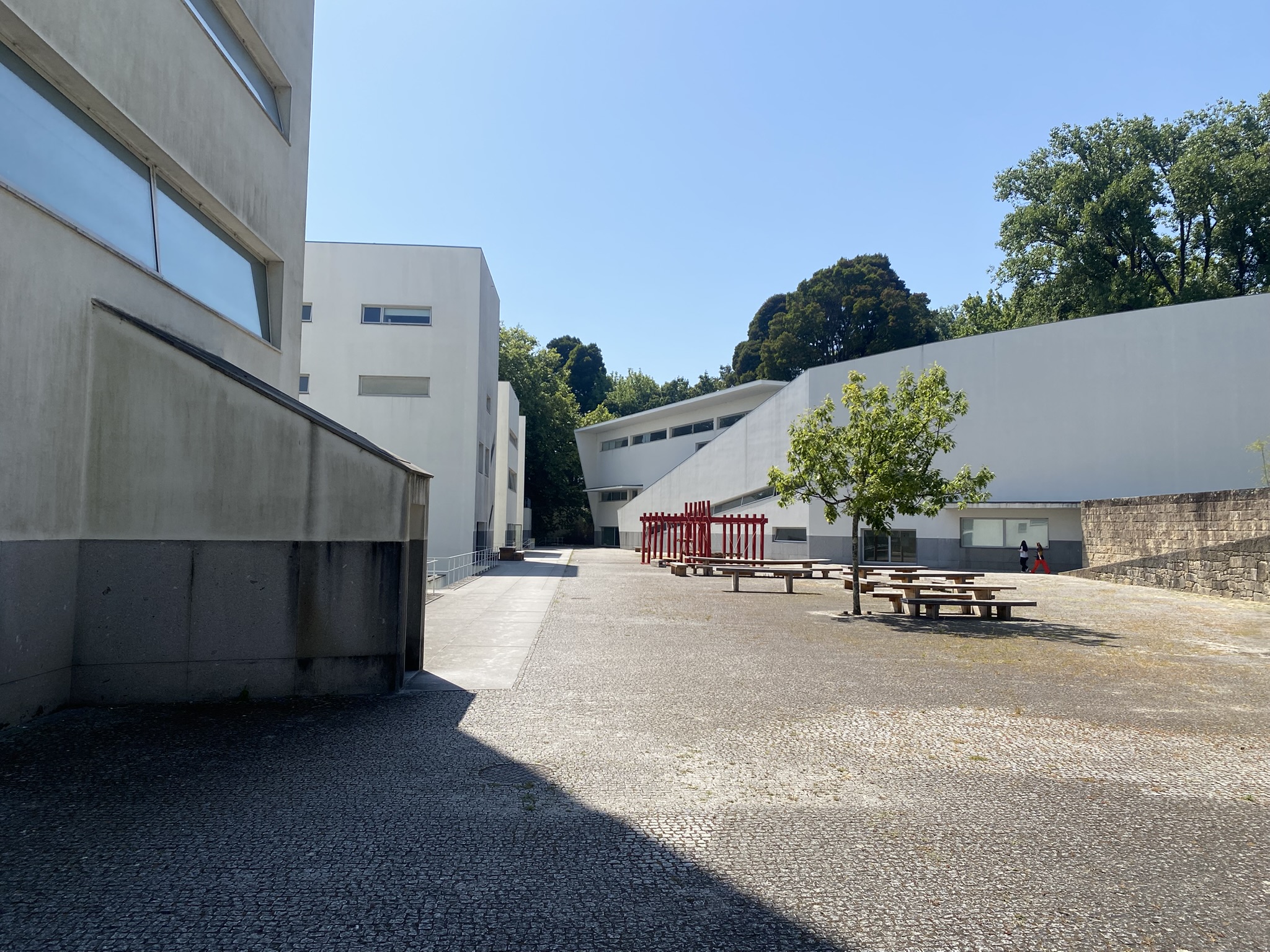
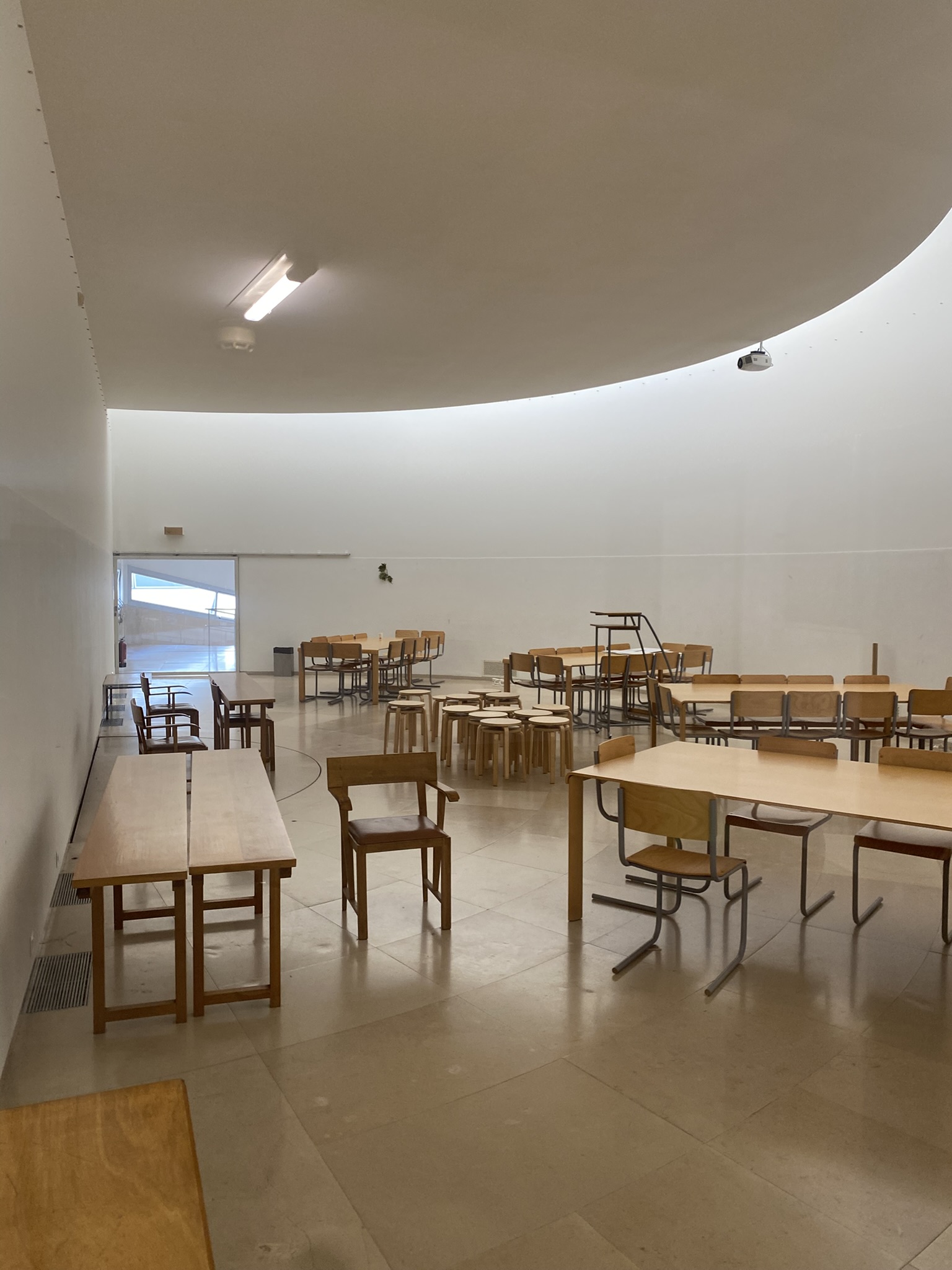
After a brief visit to the housing complex, I headed to the Porto School of Architecture, part of the University of Porto. The campus was under construction, and it took some effort to finally locate the architecture building tucked deep inside.
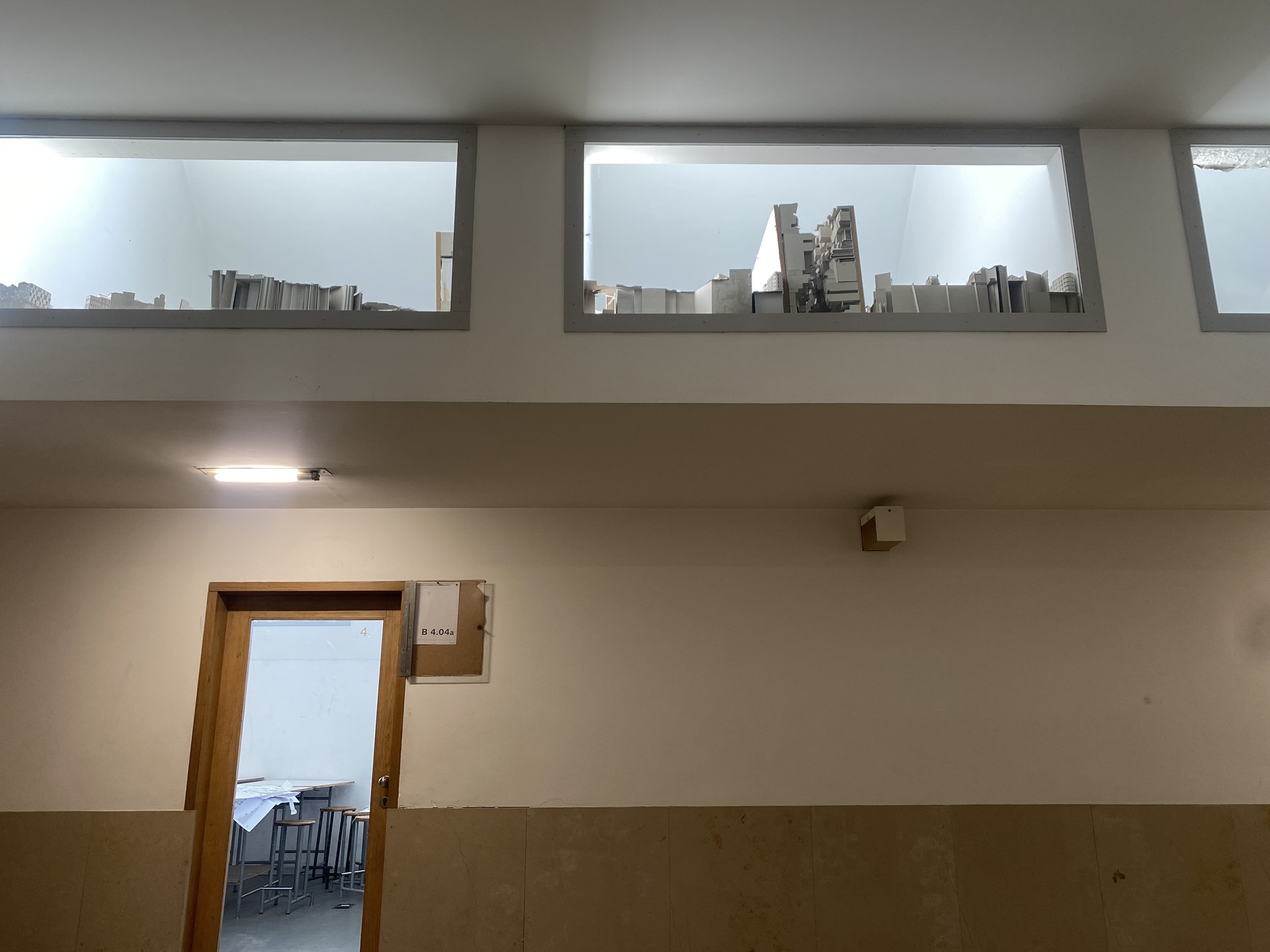
The building itself is so Siza. Signature curved forms, ramps, clean white volumes, and skylights that diffuse soft natural light: it was like walking through a checklist of Siza’s design language. Until now, I’d mostly seen these elements in his museum projects. But in a way, an architecture school also needs to function like a series of small exhibition spaces. Perhaps that’s exactly why the building feels so appropriate. To study architecture inside a Siza building: what a privilege that must be.
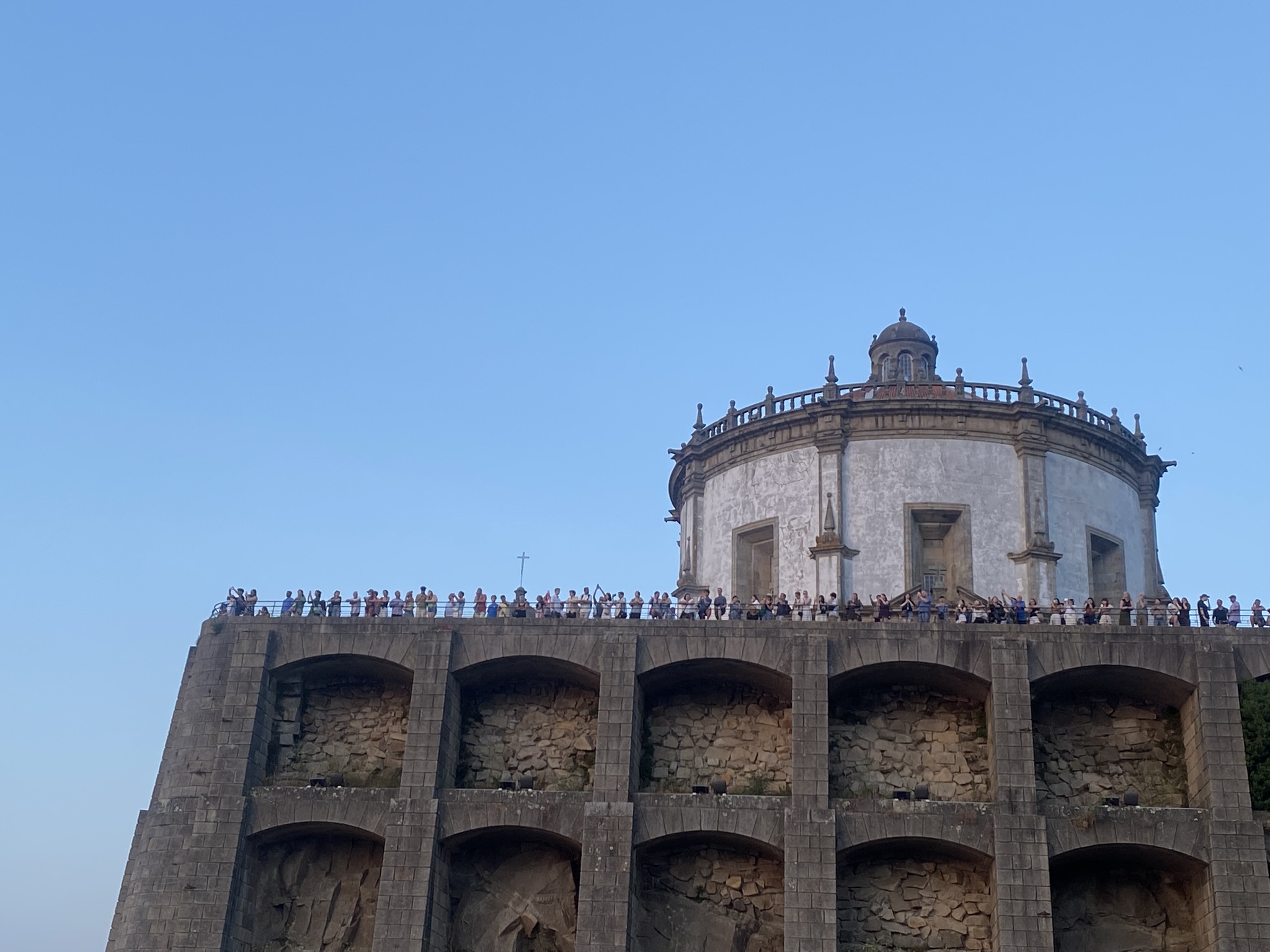
Back at my accommodation, I suddenly found myself wondering: what are all the tourists doing right now? A quick search revealed the answer: sunset viewing. So, despite my sore and battle-worn feet, I decided to join the crowd and go for one last climb.
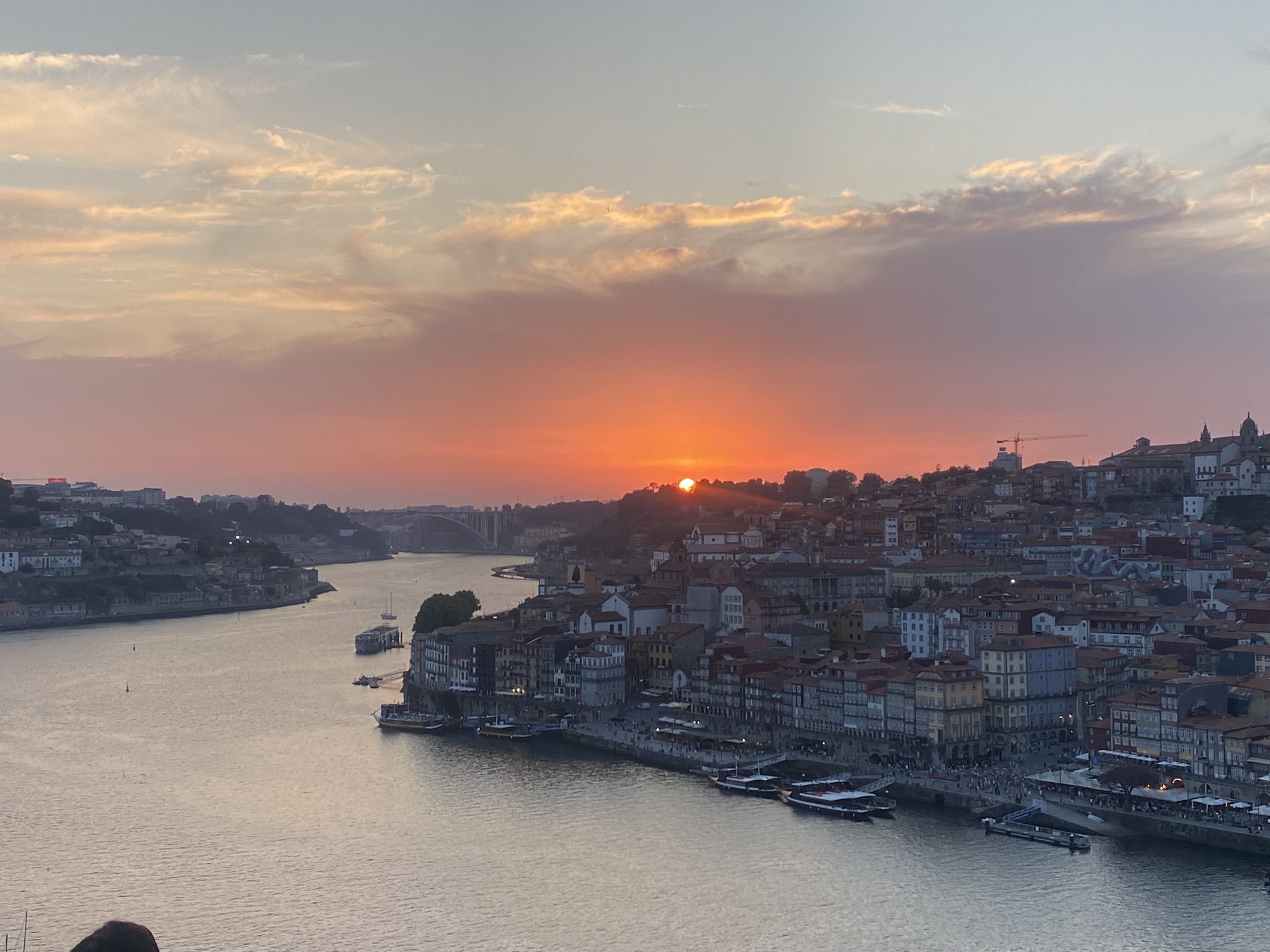
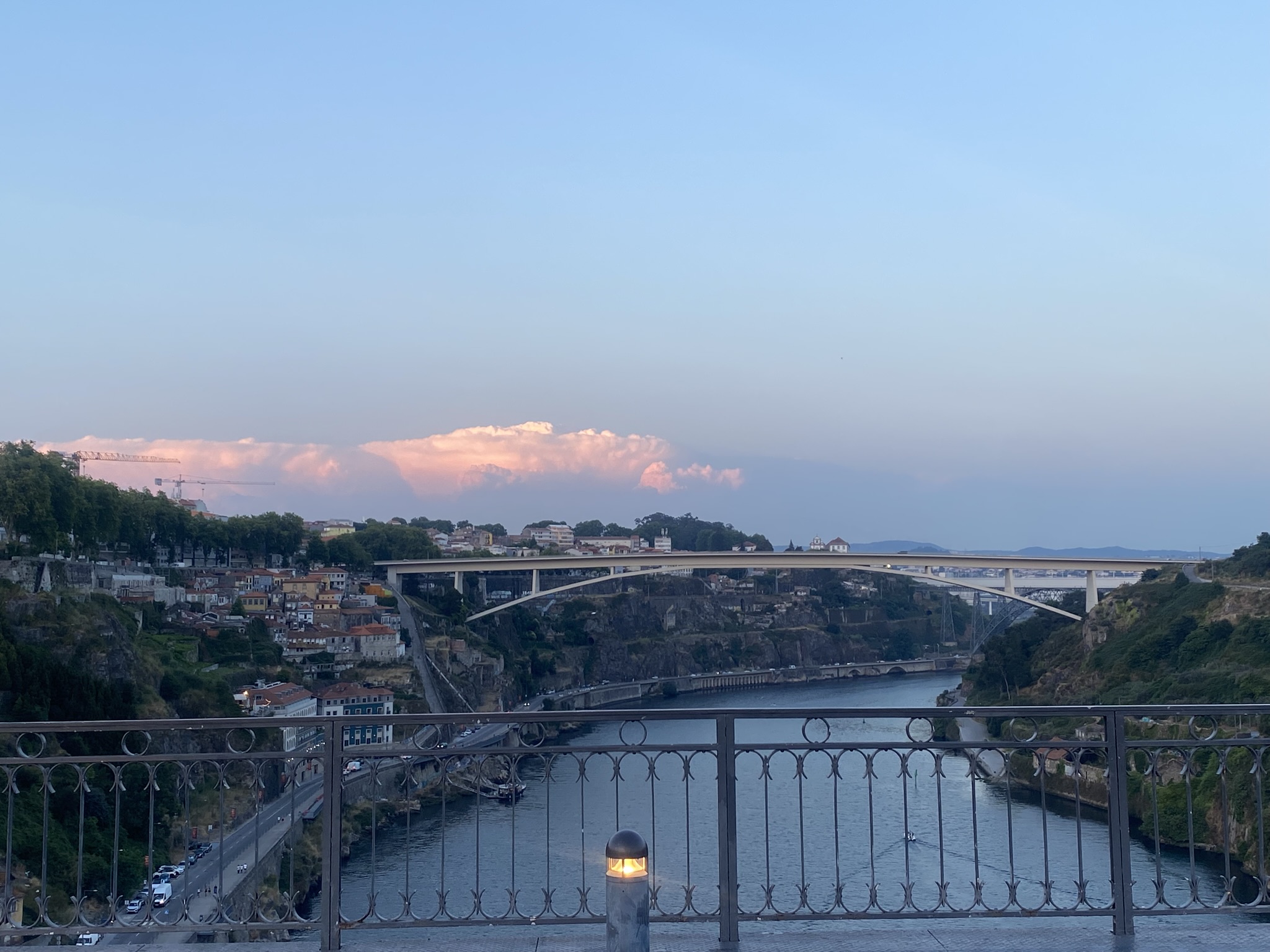
Just to the left of my building stood the towering Luís I Bridge, and beside it, a historic fortress perched high on the hill. I followed the stream of people upward, eventually reaching a viewpoint that overlooked the old town bathed in the light of dusk.
Unfortunately, the weather didn’t cooperate, just like in Barcelona, the sun seemed to vanish precisely when I needed it most. It wasn’t until it was nearly kissing the horizon that it made a brief appearance.
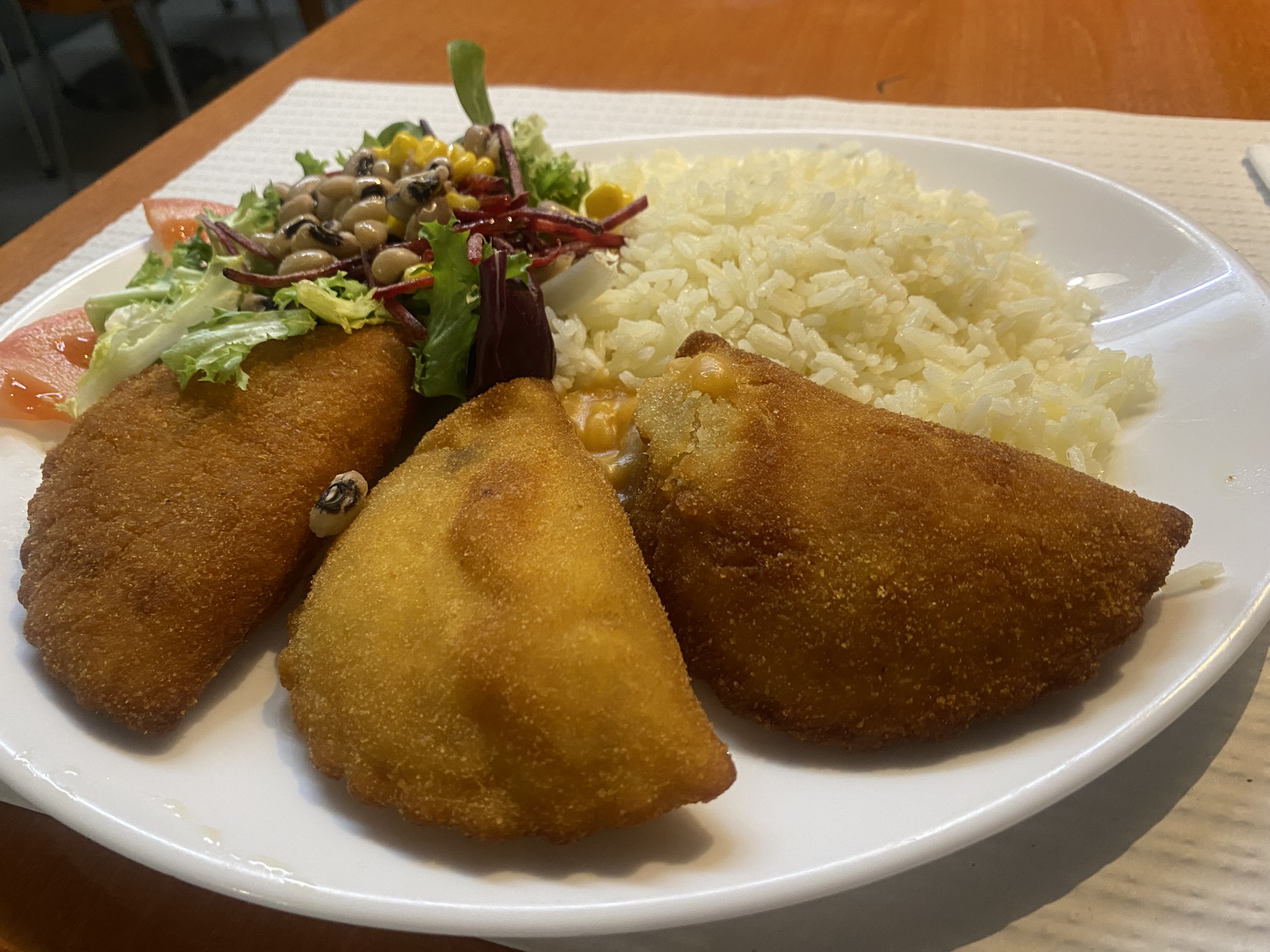
After sunset, I headed out for dinner and found a small restaurant on the map—Gostos & Paladares, act. hot. lda., remarkably affordable and highly rated. When I arrived, I realized it was similar to the homestyle tavern I’d seen in Barcelona: simple, no-frills, with a warm, gentle atmosphere. The owner was incredibly kind and even took the initiative to explain the menu to me. The food itself was, once again, nothing special. But under the soft, dim lighting, surrounded by a handful of locals quietly enjoying their meals, and with a local variety show playing on the television, I felt, for a moment, like I had stepped into the everyday life of someone who actually lives here.
After a much-needed night of rest back at my accommodation, I headed to the airport around noon the next day, officially beginning the next leg of the trip for the conference.
Some thoughts
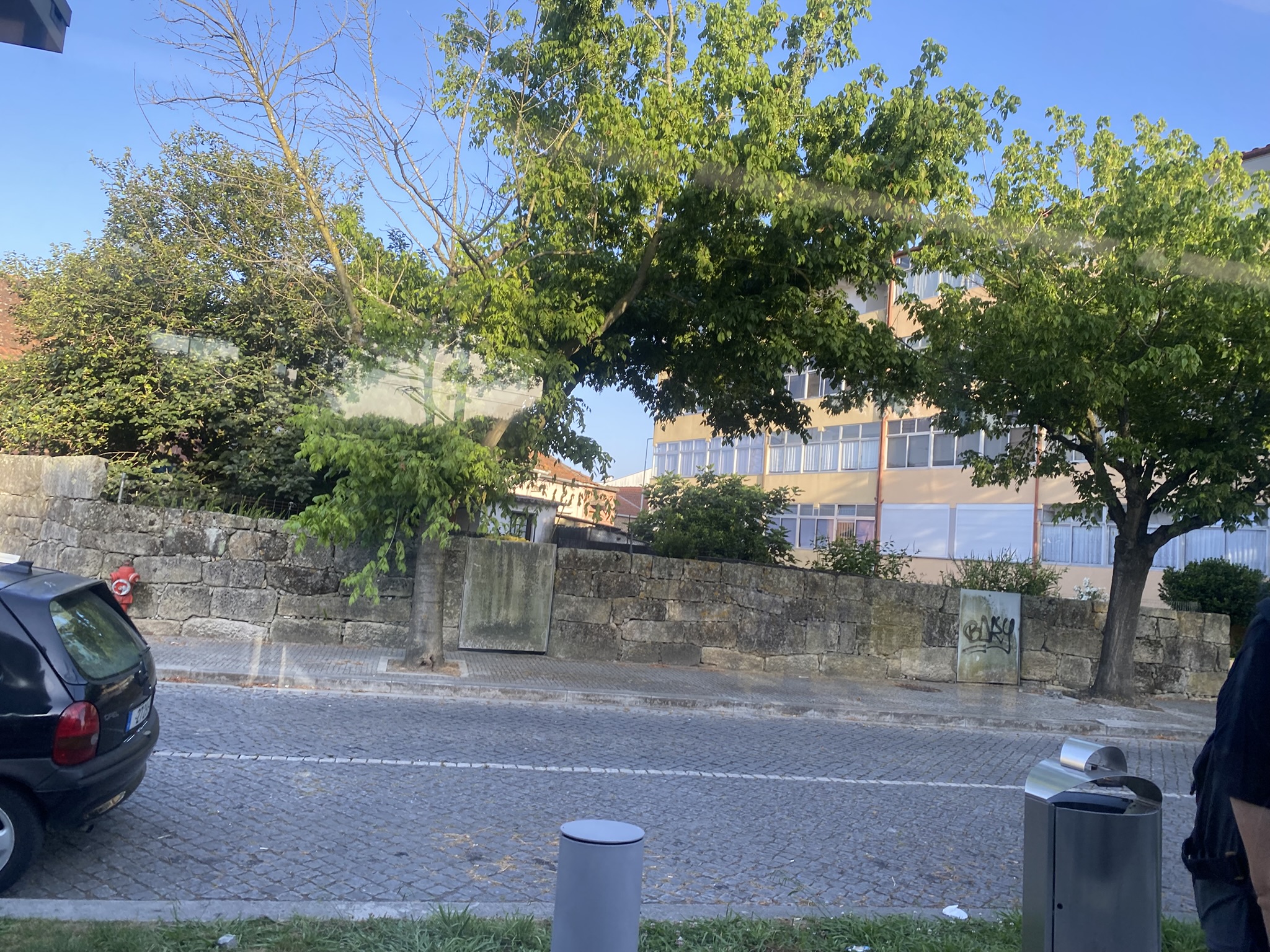
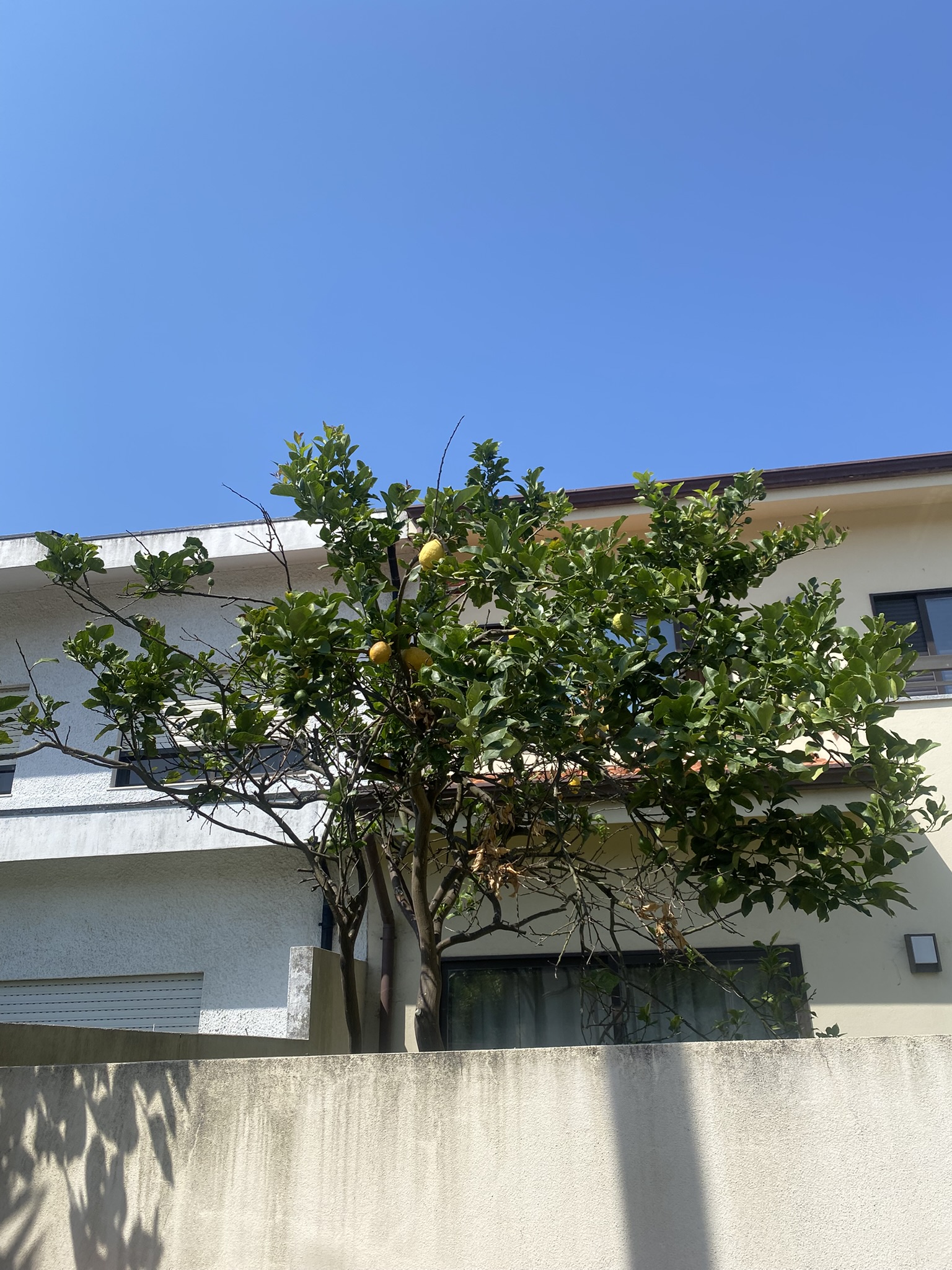
Why does Portugal feel so much like China? From the moment I boarded the metro, I was struck by how familiar everything looked—the roadside farmhouses, cornfields, and those low-rise apartment blocks that bore a striking resemblance to Khrushchyovkas. It all reminded me of rural towns back home.
I’ve heard Porto’s wine cellars are famous, but I don’t really drink. Maybe someday, I’ll find someone who does, and we’ll go together (you know what I mean).
Coincidentally, this weekend was also Porto’s annual architectural open house, when many usually-closed buildings are open to visitors. Sadly, I missed it. Another near miss. (First one is Madrid Pride)
But speaking of architecture, the city felt like it held a grand farewell ceremony for my time in the field. I got to see the very first case study I encountered as a student, standing there in real life. Even though I may never return to architectural design, those buildings remain, anchored by the Atlantic, quietly meeting the gaze of each new generation of architecture students and practitioners who come and go, all on their way toward vastly different futures.